As Malawi’s mining sector expands, a quieter boom in quarry mining is raising alarms over dust, blasting, respiratory illnesses and the safety of communities living in the shadow of quarry sites.
A mining expert, however, blames the challenges facing the industry on weak legislation, regulation and overlapping government responsibilities.
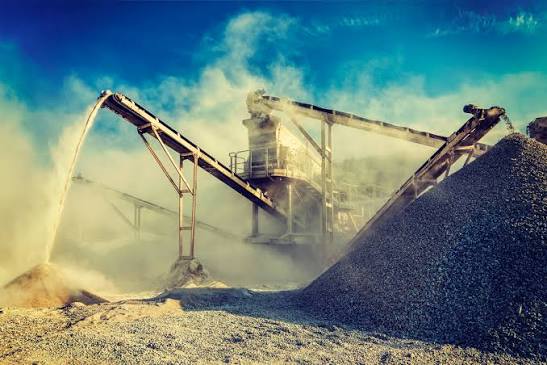
Nation on Sunday’s visits to some quarry operations, ranging from small to medium scale nationwide, show activities are expanding faster than regulation, leaving workers and residents exposed to health and safety risks.
The scale of activity is evident around Nathenje in Lilongwe, where we observed more than 10 commercial outfits operating within a few kilometres of the city.
While Malawi’s aggregate and mining sectors are legally bound by robust statutory frameworks—specifically the Mines and Minerals Act and the Environmental Management Act—these pieces of legislation have struggled to bring sanity to the country’s chaotic and expanding quarry sites.
In the absence of decisive enforcement by oversight bodies, informal operations thrive unchecked, leaving workers to labor without basic personal protective equipment (PPE).
This leaves miners to directly inhale dense clouds of crystalline silica dust kicked up by blasting and crushing rock, which experts say causes silicosis, one of the leading occupational respiratory threats in the industry.
According to the African Journal of Thoracic and Critical Care Medicine, previously the South African Respiratory Journal, silicosis is one of the ancient diseases yet to be conquered.
This debilitating, slow-acting disease severely compromises lung function and leaves miners uniquely vulnerable to tuberculosis (TB), while immediate, fatal physical hazards—such as catastrophic pit cave-ins and machinery accidents—remain a daily reality due to non-existent workplace safety oversight, studies show.
This regulatory vacuum extends far beyond the quarry gates, where surrounding rural communities pay the heavy environmental and human collateral of unmitigated extraction.
Because statutory bodies such as the Malawi Environmental Protection Authority (Mepa) struggle to effectively curb illegal setups, operators routinely violate conditions by abandoning deep, open pits without executing mandatory land restoration plans.
During the rainy season, these fractured landscapes transform into toxic, stagnant craters that pose severe drowning hazards for local children and livestock, while serving as prime breeding grounds for malaria-carrying mosquitoes.
Uncontrolled, acidic runoff continuously leaches into adjacent streams, contaminating vital communal water sources used for farming and drinking. Ultimately, because women and children are heavily involved in the manual processing of crushed stone, the systemic failure to police these legal frameworks entrenches a generational crisis of chronic respiratory illnesses and long-term health hazards across Malawi’s rural regions.
For villagers in Bwemba and Mtung’amba under Traditional Authority Chadza, the consequences go beyond cracked walls.
Residents routinely flee their homes ahead of scheduled blasts, guided by a boy who alerts the community about 30 minutes before detonation. Twice‑daily explosions have become part of life.
Kadzakumanja Chimangeni described the situation as frightening: “We live dangerously here. My house is cracked. We have lived here all our lives, but the companies that have boomed over the past 10 years are threatening us.”
Mercy Chikula, who lives less than 40 metres from a quarry mine, said dust from blasting and crushing has worsened respiratory problems: “Coughing seems to be the order of the day. Our land has become uninhabitable.”
Village head Bwemba said a company called Sinosky even wants to relocate two villages to expand operations, leaving about 100 families uncertain about compensation.
Sinosky lawyer Madalitso Kausi confirmed the company has applied to government for expansion, insisting it complies with mining laws.
Kausi said Sinosky has operated in Malawi for several years and has complied with laws governing the mining sector.
Energy and mining expert Grain Malunga argued that there is widespread disorder in the mining sector and that the government lacks a clear direction for managing quarry operations.
He added that the chaos stems from weak regulation and overlapping responsibilities between the Ministry of Mining and the Ministry of Transport and Public Works.
Officials from both ministries did not respond to queries, though Director of Mining Burnet Msiska dismissed claims of lax oversight, insisting quarry mining is regulated like other mining activities.