Until 2020, Chipiliro Makunganya of Magombo Village in Chiradzulu District, like most Malawian women, was just a housewife and stuck in poverty.
“I was not economically active and depended mostly on my husband to feed me and our three children,” she recalls.
Makunganya wanted to help her husband to provide for their household, but they could not afford the capital to explore business ideas.
The mother of three and other poor households with labour in Traditional Authority Likoswe were enrolled in the Climate Smart-Enhanced Public Works Programme (CS-EPWP), a government safety net for the poor, under the Social Support for Resilient Livelihoods Project (SSRLP) in 2020.
The project is being implemented with funds from the World Bank and the Social Protection Multi-Donor Trust Fund with facilitation through the National Local Government Finance Committee
They have been engaged in erecting water and land management technologies to conserve the environment, enhance resilience to the effects of climate change, and increase food production.
The participants erect water harvesting structures such as eyebrow basins, deep trenches, stone bunds and swales on their crop fields, open and idle spaces. Each participating household receives monthly wages of K48 000 for the work.
Makunganya says the programme has brought blessings to her life.
“The water and land management activities have helped the area to have conducive weather, which has increased food production. It introduced us to Comsip Cooperative Limited, which has equipped us with financial literacy and business management skills for a better life,” she says.
About 19 participants, including Makunganya, were mobilised to form Kachere Comsip Cluster, where they save part of their earnings and get soft loans to start businesses. The development is under the Livelihood support component of the SSRLP.
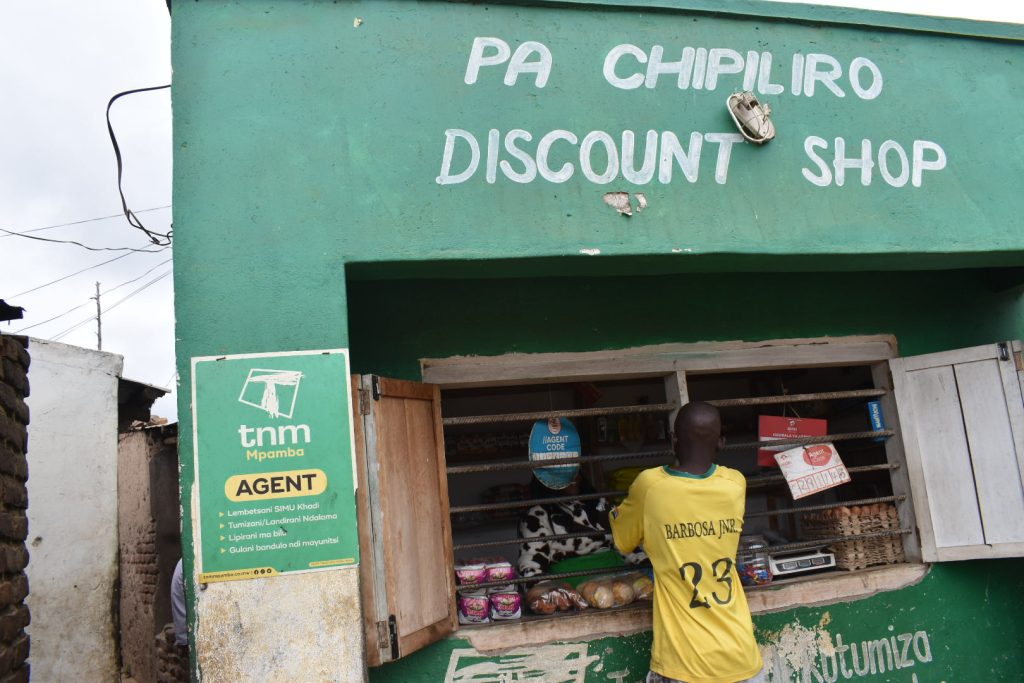
She opened a grocery shop at Nguludi Turn-Off Trading Centre in the district with a K200 000 loan from the cluster.
“My dream came true. With expertise from Comsip, I grew my shop, and I help my husband with buying fertilisers and paying fees for our children, among other basic needs,” she says.
In 2024, Comsip provided the cluster with a K600 000 revolving fund for members to boost their businesses after the Cyclone Freddy disaster.
The development made her capital rise from K240 000 to K5.4 million.
With a fully stocked grocery and a food-secure household, Makunganya says she has triumphed over poverty courtesy of the programme
The woman plans to sustain her status by diversifying sources of income by selling farm produce.
So far, Kachere Comsip Cluster has K7.2 million that the members will share as dividends by the end of November.
Chiradzulu District Comsip coordinator, Catherine Kawerenga, said they are pleased with the economic strides the CS-EPWP participants have registered.
“Their lives have improved for the better. Once they join Comsip clusters, they are exposed to multiple grants to curb poverty, such as graduation packages, value addition training, and youth skills challenge with start-up tools, among other initiatives to empower them economically and be productive,” she says.
Chiradzulu District project facilitator Emmanuel Daka says the initiative has restored 12 000 hectares of degraded land in the district.
“We have 17 000 participants conserving the environment in 15 catchments. The water and land management technologies have enhanced their resilience and improved people’s welfare. They have established committees and forest protection bylaws to sustain the interventions that have brought blessings to their families,” he says.