Government faces a test of its mining transparency pledge as it reviews a law allowing companies to keep information submitted under mining licences confidential, amid civil society demands for greater public disclosure.
The review, through the Mines and Minerals (Amendment) Bill, 2026, will determine whether Government narrows the confidentiality provision or retains a framework that civil society organisations say entrenches secrecy in a sector involving public resources and community interests.
The debate pits demands for disclosure against the mining industry’s argument that commercially sensitive technical and scientific information must be protected.
Natural Resources Justice Network (NRJN) national coordinator Kennedy Rashid said the law should make disclosure the default position, with confidentiality allowed only in clearly justified circumstances.
“The starting point of the law should be disclosure, with confidentiality treated as a clearly justified exception rather than the default position,” he said in a WhatsApp response on Thursday.
In its September 28, 2026 submission on the amendment Bill, NRJN, a consortium of 45 local and international civil society organisations, argued that the proposed reforms must go further to dismantle secrecy surrounding the management of mineral resources.
Rashid said mining agreements, licensing decisions, environmental assessments, production records, royalty payments and community development commitments affect public revenue, environmental protection and the livelihoods of communities hosting mining operations.
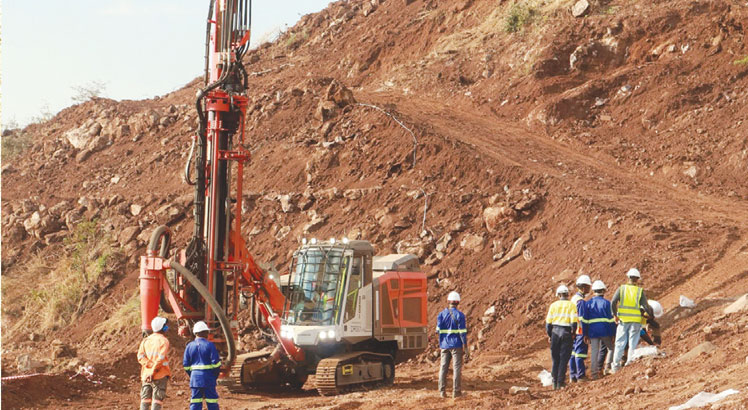
Citizens, he said, need access to such information to assess whether companies are meeting their obligations and whether Government is securing a fair return from mineral exploitation.
However, Malawi Chamber of Mines and Energy national coordinator Grain Malunga, who is also a director on the board of Lotus Africa Limited, operator of Kayelekera Uranium Mine, defended the confidentiality provision.
He said it protects proprietary technical information rather than mining agreements or other documents of public interest.
“This is the law. We support it. It protects proprietary technical information and not general information,” he said.
Malunga argued that raw scientific data and processing technologies generated during exploration and mining should remain confidential because they involve investment and commercial risks.
He maintained that mining development agreements, environmental and social impact assessments (ESIAs) and community development agreements are public documents.
“These are public documents. They are not confidential,” he said, adding that Kayelekera’s mining development agreement was already publicly available.
The Chamber has submitted comments on the amendment Bill to Government and maintains that section 41(5) should remain unchanged.
Malunga said exploration generated valuable information that companies needed to protect to recover investment risks and costs.
“Exploration stage generates a lot of information that needs to help pay back risk investment through royalties or sale of exploration data,” he said.
The legal background
Section 41(5) of the Mines and Minerals Act, 2023 states: “Unless otherwise specified in this Act, any information submitted by a mineral tenement holder shall remain confidential for as long as the licence is valid and two years after the expiry or termination of the licence.”
The provision first appeared in the 2015 revised Mines and Minerals Bill before becoming section 38 of the Mines and Minerals Act No. 8 of 2018. It was subsequently carried into section 41 of the 2023 Act.
The 2023 Act, assented to on June 7 and published on June 16 that year, has not yet commenced. The confidentiality provision currently in force is therefore section 38 of the 2018 Act, which took effect on September 1, 2019.
NRJN argues that the wording is too broad because it does not distinguish clearly between commercially sensitive technical information and documents that should be available for public scrutiny.
The network cites the 2024 Malawi Extractive Industry Transparency Initiative (Mweiti) Contract Transparency Study Report and Implementation Roadmap, which identified the provision as a potential obstacle to contract disclosure and recommended its removal or amendment.
Disclosure versus accessibility
Malawi has made some progress in opening up mining information. The Mining and Minerals Regulatory Authority (MMRA) website carries the Mining Development Agreement between Government and Lotus Africa Limited for Kayelekera Uranium Mine, alongside community development agreements for Kayelekera and the Kanyika project.
The country also has a public mining cadastre and Mweiti contract-transparency and beneficial-ownership platforms, launched in 2024.
However, disclosure has been uneven. The original Kayelekera Uranium Mining Agreement, signed between Government and Paladin Energy in February 2007, was not made public until 2016, when the Department of Mines released it following Malawi’s participation in the Extractive Industries Transparency Initiative.
The 2024 Mweiti study also found that the Kanyika niobium agreement with Globe Metals had been published as a scanned PDF, making it difficult to read, search and use electronically. It further recorded concerns that some technical, financial and fiscal information had been excluded.
Rashid said transparency should go beyond simply uploading documents onto government websites.
Communities left in the dark
The issue is particularly important for communities living alongside mining projects, whose livelihoods, land rights and environment can be affected by mining decisions.
At Songwe Hill in Phalombe, residents have raised concerns about their limited understanding of documents governing the proposed rare earth mining project.
In September this year, Songwe Mining Action Group leader Josta Namonde said many community members did not know what was contained in the ESIA for the Songwe Hill Rare Earth Project, approved in 2023.
Mkango Resources spokesperson Alex Lemon, however, said the company conducted stakeholder engagement during the ESIA consultation process, met the relevant authority’s requirements and used appropriate local languages.
The contrasting accounts highlight the challenge of ensuring that published mining information is not only available but also understandable to affected communities.
The 2030 commitment
Under the World Bank-supported Malawi Metals and Minerals Country Compact, Government has committed to mandating public disclosure of mining contracts, ESIAs, resettlement action plans and community development agreements by 2030.
The Compact provides a framework for cooperation between Government, the World Bank and development partners but is not itself legally binding.
In September, NRJN called for enactment of the Mweiti Bill to establish mandatory disclosure requirements and enforceable consequences for non-compliance.
The network has proposed redrafting Section 41(5) to presume that mining information held by regulators and Government is public, subject only to narrowly defined and legally justified exemptions. The debate comes amid increased regulatory scrutiny of mining companies.
The amendment Bill will therefore test whether Government is prepared to translate its transparency commitments into enforceable legal obligations, allowing citizens to scrutinise how mineral resources are managed, what companies promise and whether those obligations are fulfilled.
Both the Ministry of Mining and the MMRA were yet to respond to our questionnaires by press time.