The World Bank has warned that it will cancel development projects under Governance to Enable Service Delivery (Gesd) Phase Two that fail to meet agreed timelines, and reallocate the funding to other sectors.
World Bank country manager Abdul Muwonge issued the warning during the launch of the $80 million (about K80 billion) Gesd 2.0 programme in Lilongwe on Tuesday.
He said implementing agencies would be held accountable for delays and that the bank would introduce monthly reviews with government ministries to monitor progress and identify bottlenecks.
“I will not hesitate to cancel a project and move the resources from one sector to another, from one project to another,” Muwonge said.
He added that implementation delays were wasting valuable resources and undermining Malawi’s development ambitions.
Muwonge said the monthly review meetings with line ministries would track project activities, agreed timelines and implementation progress, and establish the reasons for any delays.
Poor implementation, he said, does not only affect individual projects. It also undermines broader national development ambitions, including investments expected to stimulate economic growth, boost exports and generate foreign exchange.
Gesd 2.0 has a reduced allocation compared with the $100 million (about K175 billion) committed to the first phase.
Muwonge said the reduction did not signal reduced World Bank commitment to decentralised development.
He attributed the funding level to competing strategic investments the bank is undertaking with government, and argued that the focus should be on whether councils deliver results and use public resources efficiently.
He said additional funding could be considered within three or four years if the programme achieves its targets.
Gesd 2.0 builds on the first phase, which used performance-based grants to strengthen service delivery, public financial management and accountability in local authorities.
Muwonge said performance scores among participating councils had risen from about 47 percent in the early stages of Gesd 1.0 to more than 90 percent, demonstrating the potential of linking funding to results.
He also challenged councils to strengthen their own-source revenue mobilisation instead of relying solely on central government transfers.
He cited digital revenue collection systems and updated property valuation rolls as opportunities for councils, particularly Lilongwe, Blantyre, Zomba and Mzuzu, to broaden their revenue bases.
Minister of Local Government and Rural Development Ben Phiri said Malawi qualified for Gesd 2.0 based on its performance under the first phase. He dismissed suggestions that the World Bank had withdrawn from the programme.
He said Gesd 2.0 would complement the reformed K5 billion Constituency Development Fund (CDF), with both financing mechanisms guided by community priorities and district investment plans to avoid duplication.
“Decentralised development is now demand-driven, with communities identifying their needs before proposed projects are incorporated into district investment plans,” Phiri said.
Citing his Thyolo Central Constituency, the minister said a double-storey primary school block initiated under Gesd 1.0 was complemented by another block funded through CDF, while Gesd 2.0 would finance a further block at the same school.
He said government had also addressed some implementation weaknesses experienced during the first phase, including delays, procurement challenges and inadequate supervision, by ensuring that councils had qualified district engineers.
Gesd 2.0 Task Team manager Eva Mellis said the programme was jointly designed with government ministries, the National Local Government Finance Committee and councils.
She said the first phase had demonstrated the value of combining financial resources with performance incentives and technical support, but stressed that the ultimate measure of success would be whether investments translated into functional infrastructure and improved public services.
Gesd 1.0 was approved in April 2020 with a $100 million World Bank grant aimed at strengthening the capacity of 28 district councils to manage public resources and improve service delivery.
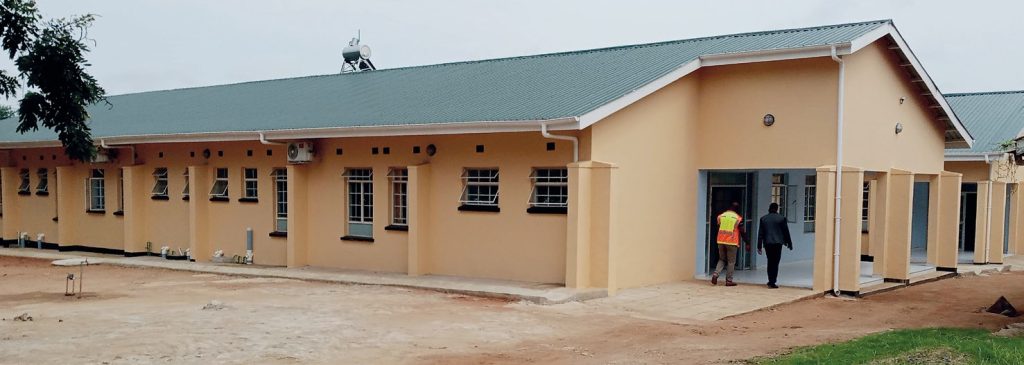
The programme financed classrooms, health facilities, maternity wings, markets and irrigation schemes through performance-based grants tied to councils’ performance in financial management, procurement and accountability.
Implementation, however, faced several challenges, including project delays, poor workmanship and weak supervision. A May 2024 assessment reported defects in 166 of the 327 inspected projects, representing 51 percent. Government also reduced the third funding cycle allocation from $25 million to about $10 million after some councils failed to adequately utilise and account for previous funds.
In January 2026, government centralised procurement under the final funding cycle amid concerns that delays by councils could jeopardise project completion and result in funds being returned to the World Bank.