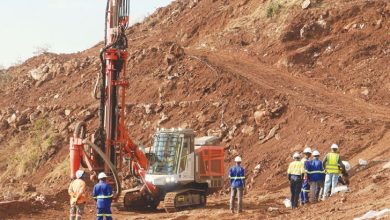
Large-scale miners will now pay up to K10.15 million in licence fees following a sweeping review of charges by the Mining and Minerals Regulatory Authority (MMRA), with small-scale operators also facing substantial increases.
In a notice dated November 5 2026, MMRA acting director general Lloyd Muhara said the revised fees vary according to the type and size of the mining licence.
Under the new schedule, a non-exclusive prospecting licence will cost K315 000 per district, while a reconnaissance licence will attract a fee of K525 000.
An exploration licence will cost K1 575 000, while a retention licence has been pegged at K8 million.
Small-scale mining licences will cost K350 000, compared with K30 000 previously, while medium-scale licences will attract K5 077 900.
Large-scale mining licence fees range from K5 603 000 to K10 155 000, depending on the size of the licence area. A reserved minerals licence will cost K525 000.
The new charges represent significant increases from the application fees previously indicated on MMRA forms.
For instance, the fee for a non-exclusive prospecting licence has risen from K10 000 to K315 000 per district, representing a more than 30-fold increase.
The retention licence fee has increased from K1.5 million to K8 million, while the small-scale mining licence fee has risen from K30 000 to K350 000.
“All stakeholders are further informed that details regarding the fees, including annual ground rents, export permit fees and transfer charges, are set out in the complete schedule of the regulations available on the MMRA’s website,” reads the notice signed by Muhara.
MMRA lists revenue collection among its functions, alongside regulating the mining sector, monitoring licence holders and overseeing mineral exports.
In March this year, the Parliamentary Committee on Natural Resources and Climate Change proposed increasing annual mining licence fees from K10 000 to K1 million, arguing that the low charges were limiting the authority’s revenue collection.
The committee also observed that most players in the sector were foreign-based companies.
According to the 2026 Annual Economic Report, MMRA licensed 1 222 companies last year and is projected to collect K2.2 billion in the 2026/27 financial year, rising to K2.5 billion in 2027/28.
“The operationalisation of the Mining and Minerals Regulatory Authority (MMRA) marks a significant milestone in strengthening sector regulation,” reads the report.
It further says MMRA has finalised subsidiary regulations, upgraded the Mining Cadastre towards an online platform and strengthened its financial accountability systems.
The fee review comes amid a broader government drive to tighten oversight of the mining industry through a moratorium on new mining licences, an audit and reorganisation of the sector, and a ban on exports of raw and unprocessed minerals.
Government says the measures are intended to promote local processing, create jobs, improve transparency and ensure Malawi derives greater economic benefits from its mineral resources.
The export ban, announced through an Executive Order, covers key minerals, including uranium, rare earth elements, graphite, coal, gemstones and gold.
The need for stronger regulation was also highlighted by the Operation Samala Mgodi report, which followed raids on seven illegal mining hotspots between March and April.
The report exposed weaknesses in the regulatory system, including inadequate regulatory presence in mineral-rich districts and cases of individuals continuing mining operations after their licences had expired.
Minister of Mining Thoko Tembo said the moratorium was necessary to ensure appropriate regulations and legislation were in place to guide both Government and mining investors.
However, the restrictions have also affected Government revenue from the sector.
The World Bank’s June 2026 Malawi Country Private Sector Diagnostic warned that unpredictable regulatory changes and inadequate stakeholder consultation could undermine efforts to attract investment into the mining sector.
Mining companies have also argued that the moratorium on new licences is slowing investment and delaying activities that could generate employment and foreign exchange.
In August this year, Malawi Chamber of Mines and Energy national coordinator Grain Malunga said lifting the suspension would enable mining companies to resume operations and contribute more to the economy, particularly through foreign exchange generation.
He said the chamber was also working with mining firms to promote compliance with legislation and restore public confidence in the sector.