A year after his return to power, President Peter Mutharika’s fidelity to good governance and Malawians’ aspirations has come under scrutiny, but the opposition seems non-existent or scarcely audible. Is the opposition doing justice to the Democratic Progressive Party (DPP) leader’s struggles to deliver his promises? Our News Analyst WYCLIFFE NJIRAGOMA engages governance expert Clemence Alfazema to run the rule on the Simplex Chithyola-led opposition bloc. Excepts:
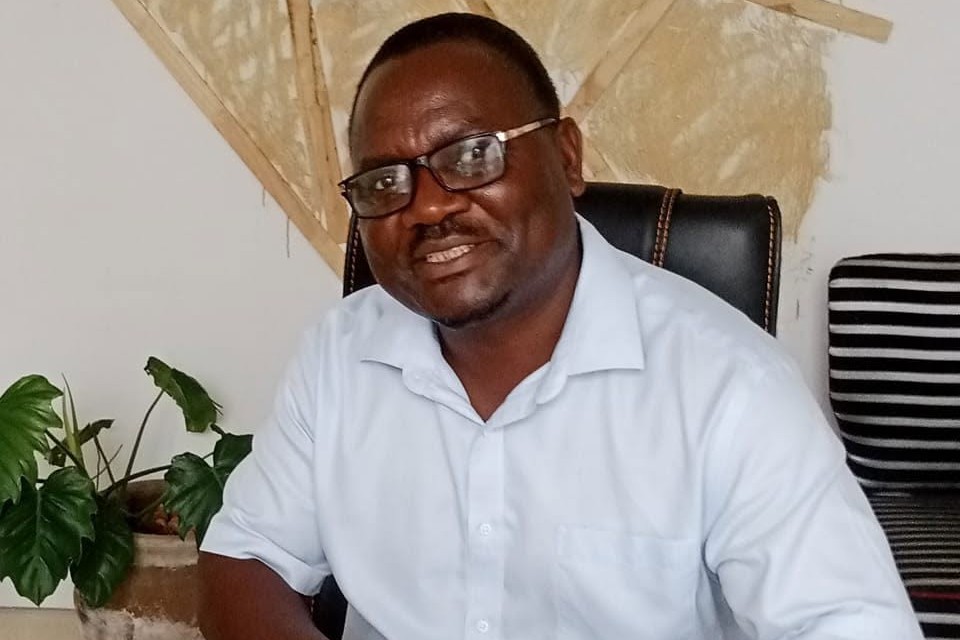
Q: It’s been a year since Mutharika’s comeback. How do you rate the opposition’s performance in terms of its role to hold the government to account?
A: To be frank, the opposition has been a passive lot. It has not been effective in holding the government to account. Government has been doing its business free of real opposition.
Q: Has the opposition succeeded in keeping issues that matter to ordinary Malawians at the centre of the national political agenda?
A: Not at all. In fact, the best they have come close to doing that is when they react to events, albeit ineffectively. Most of these parties still stick to a ‘wholly’ constituency agenda and much less a national agenda.
Q: Has the past 12 months provided any evidence of the opposition putting forward practical alternatives to the DPP’s policies and explaining how those alternatives would work? In other words, can voters identify a distinct political and policy alternative emerging from the opposition?
A: Offering a policy alternative is very important in the work of opposition parties, but this has been absent because Malawi’s political parties have never had any distinct political ideologies. This is a characteristic of a fragmented party democracy that has many parties plus independents, but no distinctive ideology. All of them front short-term policies like farm input subsidies without real developmental purpose, Constituency Development Fund and loans without safeguards. A serious party should front policies that would end with developmental goals, boosting production so the country can obtain the much-needed forex.
There hasn’t been any evidence of the opposition putting forward practical alternatives to the DPP‘s policies. MCP is the main opposition party and should have been at the forefront, offering alternative policies; but then, what alternative policy can they bring if all the current patrimonial practices are just a continuation of what they left? They had a chance to introduce novel things as their manifesto of 2019 was based on strong agricultural production policies whose subsidies were aimed at mechanisation and strengthening extension services, among others, as well as some conservative approaches to management of government business. They came in and only adopted rent-maximising or stealing practices from the 2014-2019 DPP. The hands are simply too unclean to come to equity. Smaller parties like the UTM Party have lacked cohesive approaches that would, with the chaos in DPP and ‘guilt’ in MCP, afford them open space to sell themselves as new kids on the block. UTM president Dalitso Kabambe has of late tried this, but he seems to be an island in a sea.
Q: Looking back over the DPP’s first year in office, has the opposition missed any significant opportunities to strengthen its role or influence national debate? If so, what could it have done differently to make better use of such opportunities?
A: I can cite recent events in DPP where the Speaker of the National Assembly apparently made proposals on inquiries into suspected mismanagement of several sectors. The opposition should have flexed their muscles and rallied behind the Speaker. If they did, then such actions were barely audible.
Q: Malawi now has several opposition parties in Parliament, alongside a sizeable number of independent MPs. Has the opposition bloc worked together effectively enough to influence government decisions and provide a stronger parliamentary check on the Executive?
A: We have seen sporadic efforts through the oversight work of parliamentary committees, but it’s been weak. Otherwise, overall, the opposition has not worked together. MCP, as the lead opposition, is mired in its own infighting as incumbents cling to positions and other members try to influence re-organisation of the party. UTM doesn’t seem to get the identity right that could distinguish it from other parties. The other parties are simply absent to reappear towards the 2030 elections
Q: Beyond responding to what the DPP government is doing, should we by now be seeing opposition parties developing themselves as credible governments-in-waiting? If so, what would that preparation look like and are you seeing enough of that?
A: Yes, and they should do this soon enough, revisit reasons for their poor performance in the previous elections and start strategising and reviving grassroots support. Let Malawians own the parties and make contributions, resources and ideas.
Q: What would the opposition need to change over the next four years to become more effective in holding government to account and presenting itself as a credible alternative?
A:They should look beyond chasing current benefits like tilting CDF to favour their positions. They should prioritise the needs of the poor Malawian who needs the capacity to change his or her status from that of perpetual poverty. The parties should go back to the drawing board and rethink what they stand for. Such an identity would create followers and they would not need a lot of effort and handouts to lure people to vote for them in 2030 or anytime they have by-elections in constituencies. Opposition parties should know their functions, which include grooming and featuring candidates for elections and aggregating interests in line with their ideologies, values or interests.