‘Mutharika’s media approach raises concerns’
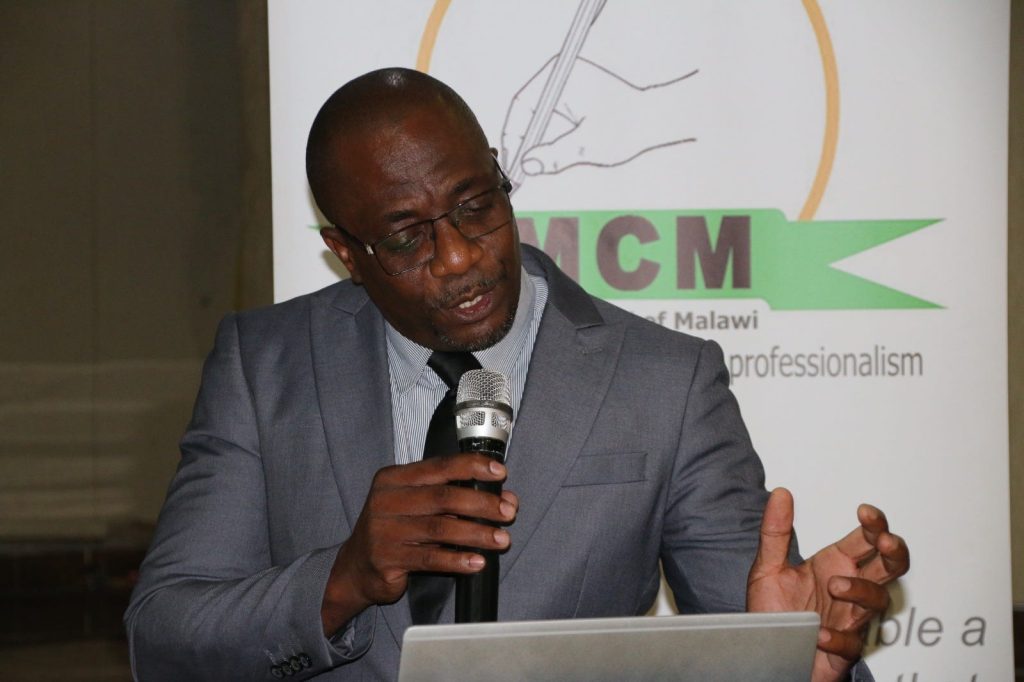
In this interview with our Assistant Lilongwe Bureau supervisor SUZGO CHITETE, Media Council of Malawi chairperson Dr Jolly Ntaba, who heads the Journalism and Media Studies Department at the Malawi University of Business and Applied Sciences, says President Peter Mutharika’s decision to limit presidential interviews to State House press secretary Cathy Maulidi and the State broadcaster denies Malawians direct access to their leader and leaves journalists struggling to establish facts about his private visits. Excerpts:
Q: For the fifth time, we have seen the President going for a private visit and returning, only to communicate through his press secretary. Should Malawians be concerned?
A: Definitely, it does raise concerns. When you look at how the media works in Malawi, we know it serves different interests. Sometimes, when interviews are given only to the public media, it sends the wrong signal. It creates an impression that there is something authorities do not want the public to know. We have always known the role private media have played in our democratic dispensation. They provide alternative views.
Every time we conduct an interview or somebody speaks, there is an interpretation. It is therefore important to get crucial information, especially on matters of national importance, directly from the source. Going through a press secretary may not always be in the best interest of the public because we are dealing with interpretations. We are gatekeepers. Even a press secretary is a gatekeeper. There may be information that the source, in this case the President, would communicate differently. But the press secretary is also human and has a job to do. They may not provide exactly the same information the President would want to give the public. Several people would want to hear from the President himself. They want an opportunity to interact with him and establish whether he is aware of the situation on the ground and the broader community of the media can ably do that.
Q: In May and October this year, the President granted interviews to MBC. Is he really engaging the media if MBC is the only media house he faces?
A: I would leave that to the public to judge. I think the public would be in a better position to make that assessment. When we talk about engaging the media, who exactly constitutes the media in Malawi? We have private media, community radio stations and the public broadcaster. If you give an audience to only one section of the media, which is the public broadcaster, we know what it does—it serves the government of the day. In my understanding of journalism and mass media, that is not engaging the media.
Q: What is your take on Chief Secretary to the Government Justin Saidi’s argument that the there is no need for press briefings as the President’s private visits are private?
A: Again, it is subject to interpretation. What do we mean when we say a private visit? How many private visits should the President undertake [in a year]? As Malawians, I think we need to interrogate what these private visits mean. A private visit is a private visit depending on who is looking at it. But here we are talking about a public servant who is serving the people. Every time you use the term private visit, it is easy to interpret that perhaps there is more to it than just a private visit. As public servants, the word private carries many connotations. I do not think the public necessarily appreciates the repeated use of that term when explaining the President‘s movements. It can begin to acquire a negative connotation. There is already public debate around this issue, so an engagement with the wider media community may help to provide answers to these questions.
Q: Are journalists failing to tell the story of the President‘s private visits or they are just victims of a public system’s failure to provide information?
A: Journalism thrives when everybody else within the system is also playing their role. This is why journalism has different branches, including investigative journalism. But there are several things journalists must take into consideration. One of them is that we do not want to speculate. Look at the stories circulating on social media. The human mind is never an empty vacuum. If you do not provide certain information, something else will fill that gap. Journalists are therefore being put between a rock and a hard place. You cannot speculate. What is an ingredient of a good story? It is evidence and sources that you can point to. When journalists approach people who should provide the information needed to tell a story, they are often told that the matter is private and that they cannot get the information. As a result, journalists do not have enough ingredients to give the public a good account of what is happening. I, therefore, feel both the public and journalists are being shortchanged because those who are supposed to provide information are not forthcoming.
Q: Can Malawians use the Access to Information Act, enacted during President Mutharika‘s first term, to address the culture of secrecy?
A: Absolutely. A system is only as good as the people implementing it. We can have very good laws and policies. We can have everything written down. But if people are not willing to implement what is supposed to be implemented, then all those things remain a white elephant they exist only on paper.
The Access to lnformation law is a very good tool that journalists can use. But you will agree with me, as a journalist with experience, that it is difficult. Even with the provisions the law gives journalists seeking information, the reality is that it is not working as it should. People may criticise journalists in Malawi, but I have to be honest. On paper, we can say journalism is being practised freely and that journalists are free to write whatever they want. However, when you look at what journalists need to practise their profession, you realise that things are not working as they should.
You can invoke the Access to Information Act and approach the relevant authorities, reminding them that the law requires them to provide certain information. But if those responsible are not forthcoming, what do you do? Do we go ahead and speculate? Do we quote unreliable sources? No. We also want to remain credible because, in the environment we are operating , mainstream journalism is what people rely on for the truth. That puts journalists in a very precarious position.