Malawi Local Government Association (Malga) has faulted Parliament and other stakeholders for dipping into the Reformed K5 billion Constituency Development Fund (CDF) allocation and prompting councils to finance their monitoring exercises.
The reaction comes in the wake of recent expenses local councils incurred, including footing five-day allowances for Local Government Service Commission (LGSC) officers who conducted recruitment of CDF officers as well as for Department of Human Resource Management and Development staff who undertook personnel audits.
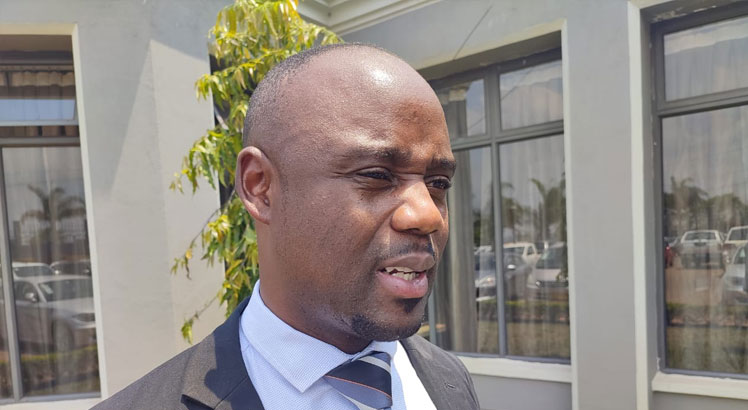
for desk officers. | Nation
The councils also funded LGSC officials during installation of traditional leaders.
In the recent case, Parliament has joined the fray by asking local councils to financially support the Parliamentary Committee on Local Authorities and Rural Development on monitoring visits to Ntcheu today, Chiradzulu tomorrow and Blantyre later on.
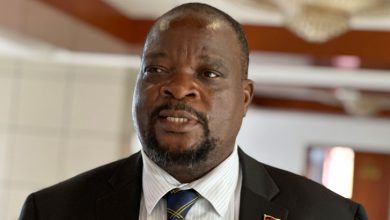
In an interview yesterday, Malga executive director Hadrod Mkandawire said the K500 million administration component includes K25 million for central government monitoring and supervision across the financial year.
He said: “This amount is meant for monitoring and supervision by desk officers from the Ministry of Local Government and Rural Development and financial verification by the National Local Government Finance Committee.
“There is no specific budget line at the moment for parliamentary committees. It should be noted that the K500 million in question is also meant for salaries of CDF officers, procurement of equipment and assets including motorcycles and vehicles.”
Mkandawire said the financial requests from councils reflect a classic example of budget implementation challenges they face.
“These expenditures contribute to cost overruns we normally encounter and at times contribute to inter – borrowing. We call upon the central government to pay a serious attention to this matter,” he said.
Commenting on Malga’s concerns, Ministry of Local Government and Rural Development spokesperson Chimwemwe Njoloma justified the expenditure requests, saying installation of chiefs is the responsibility of councils.
She said: “If they invite people, including the minister, they have to cater for fuel and allowances. There is no double dipping because those invited don’t get allowances elsewhere.
“As for the parliamentary committee visits, what I have been told is that councils have invited them, so they have to foot the bills as well.”
However, Mkandawire denied that councils invited the parlimanentary committee.
Sources privy to the trip said it will cost about K13 million for Ntcheu and K14 million for Chiradzulu to foot these trips. Given that the monitoring allocation is K25 million per year, this means councils will remain with about K10 million for the exercise.
In a separate interview yesterday, Speaker of the National Assembly Sameer Suleiman said Parliament is responsible for funding committee activities.
He said: “However, depending on the urgency of the matter and also meetings that are not budgeted for by Parliament, stakeholders do come in to assist with our oversight work.
“This is, however, discouraged by this leadership because it does not sit well with the oversight mandate we have. We do accept it if the issues to be discussed are straightforward and not investigative.”
For the Ntcheu visit, committee chairperson Edward Chileka-Banda said 18 legislators and six secretariat staff will visit. He said they have since asked Ntcheu District Council to pay each member K100 000 daily for three days in addition to 100 litres of fuel.
He said secretariat staff will receive K80 000 each daily while two secretariat vehicles will require an additional 70 litres of fuel to be met by the council.
In a correspondence to Chiradzulu, Chileka-Banda said 12 committee members and four secretariat officials will attend and requested the council to consider fuel reimbursement from Lilongwe and subsistence allowances at council rates for them.
When contacted yesterday, he justified the arrangement, saying the visits were intended to monitor CDF implementation, particularly absorption rates and challenges causing delays rather than burden councils without an identified funding source.
Chileka-Banda argued that CDF has a 10 percent administration and monitoring window of K500 million.
“This money goes to councils and not to Parliament and therefore it is justifiable for councils to support the monitoring activities by the responsible parliamentary committee as it is in this case,”he said.
Public finance management queries
Meanwhile, public finance management (PFM) expert Marvin Banda has said the development is disappointing, describing it as evidence of weak individual, collective and institutional accountability.
He said councils are “not simply cash boxes belonging to the central government”, noting that constitutional and legal frameworks recognise local government as a distinct level of government with approved budgets and responsibilities.
Said Banda: “If a government department is conducting a personnel audit, its budget should ordinarily provide for that function. If a commission is conducting recruitment, its operational costs should ordinarily be reflected in its own financial arrangements.
“If Parliament establishes a committee to conduct oversight, the resources required for that oversight should ordinarily be provided through Parliament’s own budget.”
Centre for Human Rights and Rehabilitation executive director Michael Kaiyatsa said councils already face inadequate resources for basic services and should not automatically finance activities initiated by central institutions and parliamentary committees.
“Treasury and the ministry responsible for local government should give councils clear guidance on what they are required or allowed to finance for other public institutions,” he said.
Accountability expert Willy Kambwandira said parliamentary monitoring has become largely ceremonial visits that consume scarce council resources through allowances, fuel and logistical support.
“The principle should be straightforward; the institution that undertakes an oversight function should budget for and bear the cost of that function, with clear rules against duplicate allowances and cost-shifting between public institutions,” he said.
Catholic Commission for Justice and Peace national coordinator Lewis Msiyadungu said every public institution, including Parliament should finance its own activities transparently.
Each of the country’s 229 constituencies will receive K5 billion for implementation of development projects, translating into a potential national envelope of roughly K1.145 trillion. Previously, the CDF amount was K200 million.