Malawi’s small businesses are struggling to remain afloat as persistent electricity outages disrupt production, shorten working hours, spoil stock and push up the cost of keeping businesses running.
A study on energy access and firm performance among 362 small and medium enterprises in Lilongwe, Blantyre, Mzuzu and Mangochi, found that 90 percent of the enterprises had experienced power interruptions.
The study ‘Energy access and firm performance: Evidence from Malawi’s small and medium enterprises (SMEs)’, which examined productive use of energy among SMEs, found that grid electricity accounted for 80 percent of energy access among the enterprises, but supply was widely unstable, with the impact of interruptions ranging from severe to low.
Charles Siyalo, owner of Vilela Welding Shop in Ndirande Township, Blantyre, said the outages were making it difficult for his business, which has operated since 1990, to meet production capacity and deadlines.
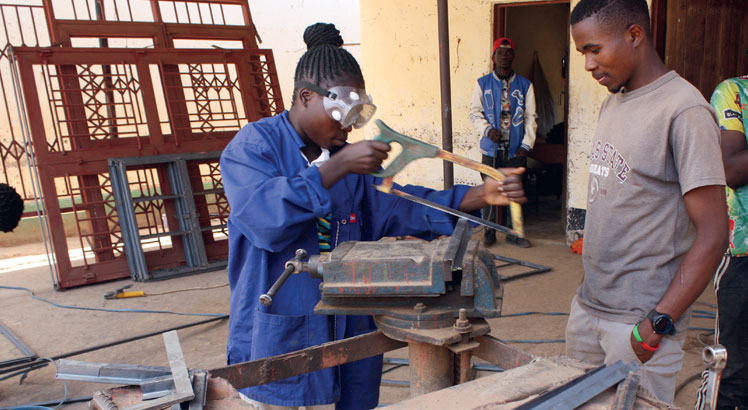
He said: “We are failing to meet production capacity because of persistent power outages, two times a day in the morning and in the late afternoon each averaging three hours.
“We would have loved if the power outages were restricted to once a week during weekends so that we are able to make ends meet and take care of our families.”
Similar pressure is also being felt by meat products trader Bridget Banda of Chirimba Township in Blantyre, who said she has been forced to sell stock without profit to avoid losses, while some products were thrown away after going bad.
“We cannot afford a generator and with little sales, it is becoming difficult to maintain the business,” she said.
Speaking separately, Malawi Union of SMEs president James Chiutsi said the SMEs, who contribute about 40 percent of gross domestic product (GDP), are losing sales, throwing away spoiled goods and halting production as outages average six hours a day.
He said some businesses are spending up to 30 percent of operating costs on diesel, with monthly expenditure rising from K80 000 to more than K400 000, while the Malawi Confederation of Chambers of Commerce and Industry has cited high electricity tariffs and intermittent supply among challenges affecting manufacturing.
Said Chiutsi: “Entrepreneurs are surviving by sharing generators, shifting working hours to Electricity Supply Corporation of Malawi windows, using small solar for lights, and cutting stock.
“Without a reliable power timetable and affordable alternative energy support, livelihoods and businesses are at risk.”
On his part, Small Scale Business Operators Association of Malawi general secretary Tennyson Mulimbula said small-scale businesses are being hit by fuel scarcity and frequent power outages, which have raised transport costs, disrupted operations, forced early closures and caused losses of perishable goods, eroding profits.
He urged the government and traders to diversify into alternative energy sources such as solar and ensure adequate forex for continuous fuel procurement.
Electricity Generation Company data show that available generation capacity stands at 370 megawatts against installed capacity of 454.67MW while peak demand stands at 451.61MW, according to Electricity Supply Corporation of Malawi.
Escom has been implementing load-shedding mitigation measures, including demand-side management, load shifting and encouraging conservation during peak periods.
Meanwhile, Minister of Energy Jean Mathanga is on record as having said the target is to stabilise the grid and ensure Malawians experience more reliable power supply before this December, while saying the government is stocking up on spares to address machine breakdowns.
With only 25.9 percent of the population having access to electricity, including grid and off-grid connections, Malawi remains far below its 70 percent access target for 2030, despite having 564.2MW of installed capacity from hydro, diesel and solar sources.