Economists have raised concern over an International Monetary Fund (IMF) call for further fiscal and monetary tightening as a prerequisite to Malawi to get a new programme, saying it will undermine investment and recovery.
In a statement marking the end of negotiations with the Malawi Government between September 22 and October 6 in Lilongwe, the IMF team from Washington DC said Malawi needs to sustain medium-term fiscal consolidation while “strengthening and tightening monetary policy” as part of a policy package to underpin a new Extended Credit Facility (ECF) deal.
IMF mission chief for Malawi Justin Tyson said Malawi has made progress on major reforms to restore macroeconomic stability under the National Economic Recovery Plan (Nerp), further noting that in line with the K10.9 trillion 2026/27 National Budget targets, domestic revenue is increasing while expenditure has been tightly controlled.
He said in a statement: “It will be important for execution of the budget to remain on track. The authorities have also taken decisive actions such as fuel and sugar pricing reforms, which helped improve market functioning. Discussions are advanced on measures to reduce the burden of high public debt. Inflation has been moderating in recent months, supported by low food inflation, though non-food inflation remains high.”

However, the IMF mission did not announce a staff-level agreement, saying discussions will continue to finalise that policy package, a development that raises questions over the scale and pace of further adjustment and how Malawi can restore macroeconomic stability without further constraining an already weak economy.
Scotland-based Malawian economist Velli Nyirongo in an interview said while further fiscal consolidation was necessary given the fiscal deficit, high debt-service burden and limited fiscal space, but stressed that the composition of the adjustment was as important as its size.
He said the government should target inefficient and non-essential spending, strengthen revenue mobilisation and improve public financial management rather than disproportionately cutting productive investment and essential social services.
On monetary policy, he cautioned that “tighter” policy should not automatically translate into substantially higher interest rates.
Nyirongo said the Reserve Bank of Malawi (RBM) should maintain sufficiently restrictive conditions to contain inflation and stabilise expectations, but aggressive tightening could increase financing costs, suppress credit demand and discourage private investment.
In a separate interview, University of Malawi economics lecturer Edward Leman was more categorical, saying monetary policy had already tightened sufficiently.
“I think we have tightened enough, and the current stance is increasingly affecting investment and economic growth,” he said.
But Leman said significant gaps remained in fiscal consolidation, particularly wastage, and called for tighter expenditure controls and greater allocation of resources to growth-enhancing activities.
While the economists broadly accept the need for further fiscal adjustment, Leader of Opposition in Parliament Simplex Chithyola-Banda has questioned whether Malawi should pursue a new ECF under what he described as difficult conditions.
He said focus on home-grown economic solutions that will help address problems and putting much attention on productive areas should be a viable option.
Chithyola-Banda, who presided over a shambolic economy as minister of Finance in former president Lazarus Chakwera’s Cabinet, advocated for increased agricultural production and investment in mining, including quantifying the country’s mineral deposits to attract investment.
The IMF and Ministry of Finance, Economic Planning and Decentralisation were yet to respond to The Nation questions on the claims by press time.
Malawi’s previous $175 million ECF, approved in November 2023 under the Malawi Congress Party administration, expired in May 2025 without completion of a programme review after only an initial disbursement.
The government did not come out clearly on the collapse of the programme, simply stating it was by “mutual agreement” while Chakwera and Chithyola-Banda suggested ‘rigid’ conditionalities under the deal limited the country’s ability to spend on essential services.
But the Economics Association of Malawi and an individual economist are on record to have said the suspension reflected deeper governance challenges.
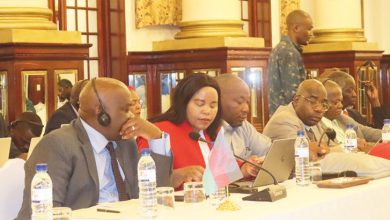
The recent IMF team met Minister of Finance, Economic Planning and Decentralisation Joseph Mwanamvekha, RBM Governor George Partridge, Secretary to the Treasury Cliff Chiunda, RBM Deputy Governor for economic services Henry Mathanga and other senior government officials.