The warning signs are becoming increasingly difficult to ignore. At St John of God Hospital, an average of four people seek treatment every day for gambling-related psychological distress, while dozens more struggle with severe addiction, according to the facility’s services director Charles Masulani.
Yet inside Malawi’s betting shops, life goes on seemingly oblivious to the threat.
On a bustling Saturday morning in Mtandire, for instance, Oceaus Malizeni joins a stream of punters clutching betting slips and dreams of instant wealth. Having just wagered K2 000 on a blend of local and international football fixtures, he is convinced that this could be the weekend his luck finally changes. It is the same belief that keeps thousands returning, even as experts warn of an escalating addiction crisis.
A bicycle taxi operator, Malizeni can earn up to K10 000 on a good day, much of which routinely finds its way back across the betting counter.
“I cannot say I am addicted, but I have been betting for two years. I place bets of between K2 000 and K10 000. The most I have ever won is K80 000. I remain hopeful when I hear in the news that someone has won millions. I just hope my day will come and I will win too,” he said.
Malizeni’s quiet gamble reflects a growing national obsession. Across the country, what began as casual recreation has evolved into a multi-billion-kwacha industry, drawing thousands of citizens into sports betting and other games of chance in pursuit of life-changing jackpots.
For an increasing number of punters, however, the dream of wealth ends in addiction, mounting debt and financial ruin.
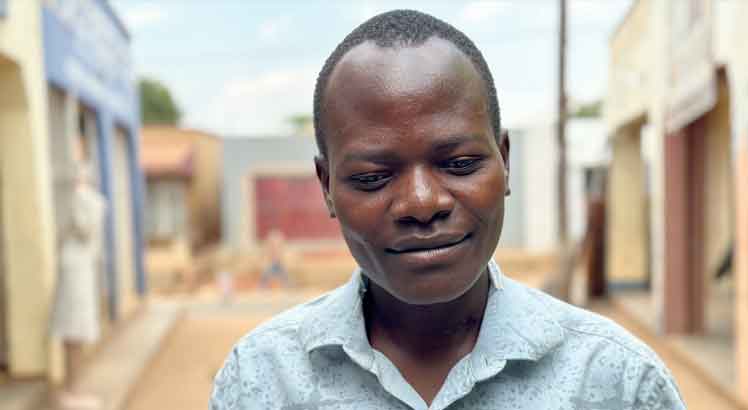
The human cost is laid bare in the testimony of Isaac (not his real name), a university graduate and private-sector employee whose compulsive gambling habit cost him his business and pushed him to the brink of despair.
“Suicidal thoughts kept crossing my mind. I was lucky to pull myself out of that situation. After some months, I came back stronger. It could have been worse,” said Isaac, who is now planning to become an advocate against gambling addiction after completing a gruelling rehabilitation process.
Clinical authorities warn that Isaac’s experience is far from isolated.
Masulani revealed that St John of God treats an average of four patients daily for gambling-related psychological distress, with roughly 20 individuals formally admitted for severe addiction.
“Both men and women are into gambling. The problem is deep, and we need to address it. Our facilities are assisting those who are addicted through admissions and other services. It is important for people to understand that betting is a sport, not an investment,” Masulani cautioned.
Yet, even as families grapple with the social consequences, Malawi’s gambling sector continues to expand.
Fresh statistics from the Malawi Gaming and Lotteries Authority (Magla) show that the industry generated K25.84 billion in gaming levy revenue during the first six months of the current financial year, representing a 51 percent increase compared to the corresponding period last year.
Sports betting remains the primary driver of this growth, supported by 11 active operators, three incoming companies and five more awaiting licences. Physical betting outlets have increased by 64 percent to 807 nationwide, up from 491 in 2025. The casino industry is also expanding, with three operational land-based facilities and three more under development.
Behind the impressive revenue figures, however, lie significant regulatory challenges.
Magla chief executive officer Mutchanakwayi Mpuluka acknowledged that the proliferation of illegal offshore online gambling platforms poses a serious threat to market integrity and consumer protection.
“Online betting is the dominant channel for gambling participation in Malawi. Although this has increased convenience and market growth, it has also created new regulatory challenges, including cross-border gambling activities, increased cybersecurity threats, heightened compliance risks, and greater exposure to money laundering and terrorism financing,” Mpuluka explained.
He said Magla is prioritising advanced digital regulatory tools and strengthening enforcement through collaboration with the Malawi Communications Regulatory Authority, the Reserve Bank of Malawi and the Financial Intelligence Authority.
Furthermore, Mpuluka stressed that the authority is cracking down on predatory advertising by requiring all gambling promotions to obtain prior approval, display clear minimum-age warnings and avoid targeting children or other vulnerable groups.
Despite these regulatory efforts, parliamentary oversight bodies remain concerned.
Parliamentary Committee on Commissions, Statutory Corporations and State Enterprises chairperson Sylvester Ayuba James argued that the State’s monitoring capacity remains inadequate.
“The capacity to monitor is not well developed. Magla has only 32 monitors, yet there are several gambling service providers. I am glad to hear there is a partnership with the National Intelligence Service that could help strengthen monitoring,” James said, while calling for tougher enforcement measures to protect minors from exploitation.
As the government introduces new fiscal measures, including a 15 percent withholding tax on sports betting winnings and a 10 percent levy on casino payouts in the current budget, the tension between revenue generation and public welfare has rarely been more pronounced.