Ethiopian police have completed investigations into an alleged transnational human trafficking and migrant smuggling network whose suspected leader operated from Malawi’s Dzaleka Refugee Camp, exposing a criminal enterprise accused of exploiting young migrants seeking better lives in South Africa.
The Ethiopian Federal Police (EFP) announced on Thursday on Facebook that it had completed investigations into Adnew Bashaw Wudamo and alleged accomplice Tamrat Erdado Moloro. The case files have been transferred to the Attorney General’s Chambers at Ethiopia’s Ministry of Justice for prosecution.
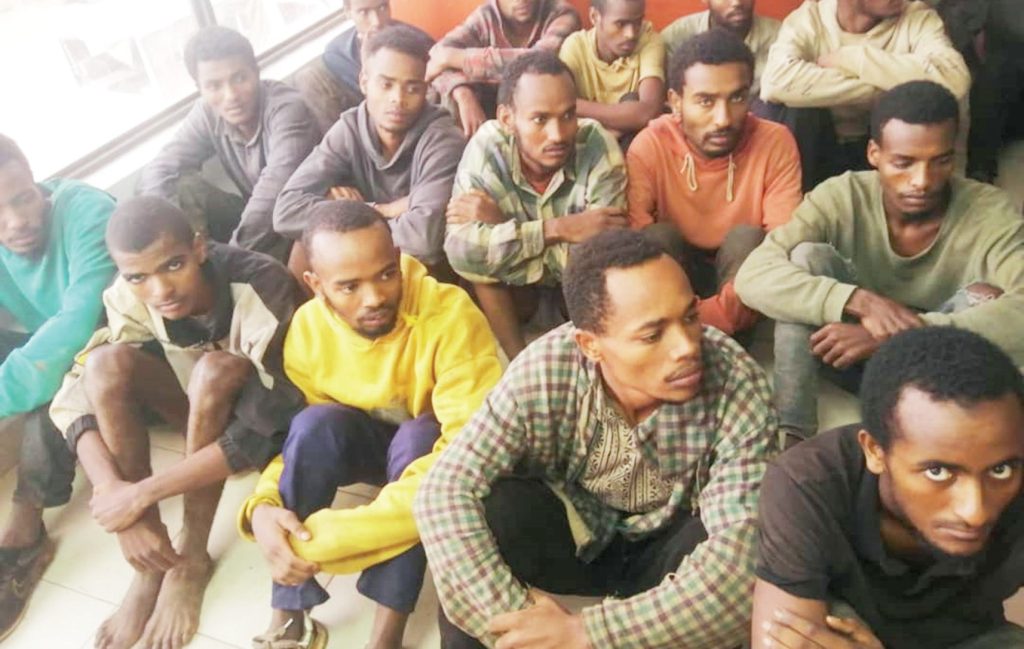
Malawi in this file photo. | Nation
The investigations involved the Malawi Police Service, Interpol and the Regional Operational Centre in Support of the Khartoum Process and the African Union-Horn of Africa Initiative (Rock).
Wudamo, an Ethiopian national known as Adhino in Malawi, was arrested in July and extradited to Ethiopia following a coordinated security operation.
A February 2025 investigation by the Platform for Investigative Journalism (PIJ) found that an Ethiopian smuggling syndicate suspected of being led by Wudamo operated mainly from Dzaleka, using facilitators to move migrants through Malawi and neighbouring countries. It also raised allegations of protection by influential individuals and possible complicity among public officials, including security personnel.
A network spanning continents
EFP said the suspects allegedly organised the movement of Ethiopian migrants to South Africa through Kenya, Tanzania, Malawi, Zambia and Mozambique.
The network allegedly targeted young people, particularly from Ethiopia’s Hadiya and Kembata areas, exploiting their hopes of finding economic opportunities abroad.
Investigators allege that the operation involved deception, coercion, physical abuse and demands for money from migrants and their families.
“Police have confirmed that the victims were forced to walk in the desert and forests for several days. They were beaten with sticks by brokers and their associates. They suffered severe physical and psychological pain, hunger and suffering,” EFP said.
Migrants were allegedly transported in overcrowded, poorly ventilated containers and vehicles. Some were detained when they could not meet payment demands, while others were arrested and imprisoned in transit countries for irregular entry.
“Because of this, many victims have been imprisoned up to two years in prisons in Zambia, Malawi and Tanzania,” the police statement said.
The suspects allegedly charged between 400 000 and one million Ethiopian birr, equivalent to approximately K6.4 million to K10.5 million in the original police statement, for investigated 19 suspects and convicted 17 traffickers in 2021 in connection with trafficking facilitated through the camp.
A deadly southern route
The dangers of the migration route were highlighted in October 2022, when authorities discovered 29 bodies in two graves in Mtangatanga Forest Reserve in Mzimba District.
Police suspected the victims, believed to be Ethiopian men aged between 25 and 40, were migrants being transported towards South Africa. Investigators and campaigners suspected some had suffocated during clandestine transportation.
Calls for accountability
Malawi Police deputy spokesperson Alfred Chimthere told Weekend Nation in August that Wudamo had been arrested in July and transferred to Ethiopia to face criminal charges.
The arrest followed investigations reportedly launched in 2022/2023 into allegations that he organised the movement of young Ethiopians through a network built on deception and coercion.
Innocent Magambi, executive director of Inua Advocacy and an anti-human trafficking campaigner, described the arrest as a significant development in efforts to combat trafficking and migrant smuggling involving Ethiopians.
He said the case demonstrated that law enforcement agencies could hold accountable those who exploit vulnerable people.
“This development deserves recognition because it demonstrates that, with commitment and determination, those who profit from the exploitation of vulnerable people can be held accountable,” Magambi said.