Malawi’s stock market has shed nearly K5 trillion in value in a year, eroding household wealth and pension investments as investors grapple with policy uncertainty, new taxes and regulatory changes.
By close of trading on Thursday, October 22 2026, the Malawi Stock Exchange (MSE) was valued at K27.04 trillion, down from K32 trillion on the same date last year, according to trading reports Weekend Nation analysed.
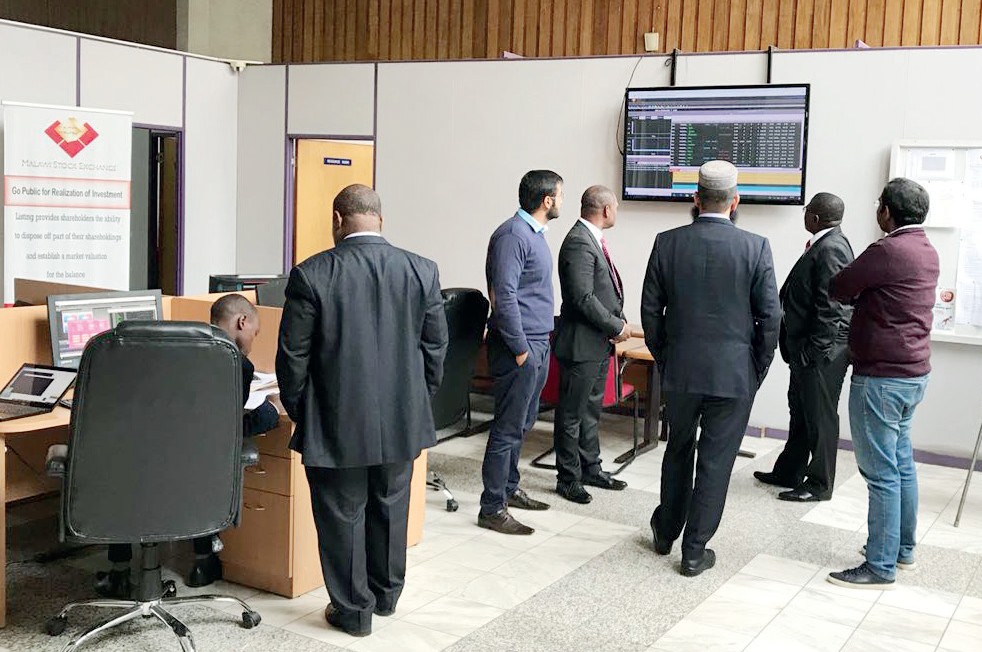
trading details
at MSE. | Nation
The decline has coincided with K571.6 billion in unrealised equity losses reported by pension funds in the first-half of 2026, according to a briefing by the Minority Shareholders Association of Listed Companies (Misalico).
Misalico general secretary Frank Harawa argues that the slide reflects more-than-normal market fluctuations, pointing to uncertainty surrounding government debt restructuring, a new two percent tax on gross proceeds from share sales and a 60 percent ceiling on listed-equity holdings by certain financial institutions.
“This is not a market correction. It is a market reaction to a package of fiscal and regulatory measures that are strangling it,” Harawa said in an interview with No Excuses, a Nation Online podcast, on Thursday.
The market’s decline has reversed some of the gains that made the MSE Africa’s best-performing stock exchange in 2025, when it surged by 248 percent.
The Malawi All Share Index, which tracks share-price movements, fell from 591 103.33 points on October 22 2025, to 485 486.63 points on Thursday—a decline of about 17.9 percent.
The index had peaked at 598 062.80 points at the end of 2025 before falling by about 18.8 percent.
On Thursday alone, the market slipped 0.03 percent, with no counter gaining and six declining, including National Bank of Malawi, TNM and Airtel.
MSE chief executive officer John Kamanga said last month that the exchange offered returns few investment opportunities could match, with performance well above inflation. The subsequent slide has weakened those gains.
Households bear the risk
The losses extend beyond investors who actively trade shares. Pensioners, teachers, nurses and other workers may be exposed through pension funds and other investments linked to equities, Harawa said.
Although falling share prices do not automatically translate into cash losses, investors who must sell to meet school fees, medical bills or household expenses may have to accept lower values.
Reduced dividends can also affect households that rely on investment income, while companies that retain earnings to strengthen their balance sheets may leave shareholders with less income.
Harawa warned that minority shareholders could face a triple squeeze: declining share values, lower dividends and possible demands for fresh capital that dilute their holdings if they cannot participate.
Scotland-based economist Velli Nyirongo said the market’s loss of nearly K5 trillion in quoted value was not equivalent to cash leaving the economy, but could still undermine household wealth, pension security and business confidence.
“As pension funds record unrealised losses, households may feel poorer and become more cautious about spending,” he said in a written response.
Weaker consumer spending could hurt businesses, particularly small traders dependent on household purchasing power. Falling confidence could also constrain companies’ ability to raise capital for expansion and job creation, he added.
Debt uncertainty
Harawa identifies uncertainty over domestic debt restructuring as one of the main pressures on investor confidence.
Malawi’s public debt stands at about K24 trillion, with domestic debt accounting for roughly 65 percent. The World Bank and International Monetary Fund have assessed the country’s debt as unsustainable and called for restructuring to restore fiscal stability and create room for public services.
However, Harawa said Treasury had yet to clarify whether domestic government securities would be included in the restructuring or what the terms might entail.
Possible changes to interest rates, payment schedules, maturities or principal amounts would have different consequences for financial institutions and investors, he said.
Without clear terms, a timetable and an assessment of the effects on exposed institutions, uncertainty itself could prompt investors to sell, putting further pressure on share prices.
Harawa stressed that Misalico was not claiming that a reduction in domestic debt principal had already been decided. Instead, the association wants authorities to disclose proposals and assess their potential impact on financial institutions.
If restructuring weakened the earnings or capital of listed banks and other exposed institutions, shareholders could face lower dividends, falling prices and calls for additional capital at the same time.
Tax on losing investments
The second concern is the two percent tax on gross proceeds from share sales introduced in the 2026/27 national budget.
Harawa said the levy could penalise investors even when they sell at a loss because it is calculated on the sale proceeds rather than the profit made.
An investor who buys shares for K10 million and sells them for K8 million would still pay the tax despite already losing K2 million before transaction costs, he explained.
Investment expert Benedicto Nkhoma said the tax could deepen losses for investors forced to sell to meet urgent expenses.
“For someone facing an urgent medical or school bill, ‘hold for the long-term’ offers little comfort,” he said.
Assuming the two percent levy applies as described, an investor selling a K10 million investment for K8 million would receive K7.84 million before other fees. That represents a 21.6 percent loss against the original investment.
Nkhoma said the tax could discourage orderly selling and re-entry into the market, while limited buying demand could magnify the pressure.
Equity limits
The third concern is the Reserve Bank of Malawi’s 60 percent ceiling on listed-equity holdings by certain institutional investors, including insurers and fund managers.
The measure addresses concentration risk and is intended to redirect investment towards other assets, including infrastructure and property. However, Harawa said implementation must take account of the stock market’s limited liquidity.
If institutions holding equities above the ceiling are required to sell substantial positions within a short period, the market may struggle to absorb the additional shares, pushing prices down further.
Thursday’s session, in which no counter gained, illustrated the fragility of demand, he said.
Nkhoma said the decline reflected a combination of valuation adjustments following earlier strong gains, sovereign debt concerns, pension rebalancing, tax changes and liquidity pressures. Investors were also reassessing future earnings and dividend prospects, he added.
He cautioned against treating potential losses linked to debt restructuring as confirmed before the terms are known.
Calls for policy clarity
Harawa urged Treasury to publish its debt restructuring proposals, assess the implications for exposed institutions and explain how financial-sector capital and liquidity would be protected.
He also called for a realistic timetable for implementing the equity ceiling, taking account of the market’s capacity to absorb sales.
On the share-sale tax, he wants Treasury and the Malawi Revenue Authority to consider relief for documented loss-making disposals and consult investors before introducing further capital-market changes.
Companies, meanwhile, should explain decisions to retain earnings, disclose their exposure to government debt and provide details of stress tests.
Where recapitalisation becomes necessary, they should spell out the terms and the risk of dilution for minority shareholders, Harawa said.
Nyirongo said the Mid-Year Budget should restore confidence through predictable policies, clear debt restructuring terms and a review or temporary suspension of measures that risk forcing sales, while maintaining fiscal discipline.
“Protecting domestic savings is essential because pension funds are a critical source of long-term investment,” he said.
Finance, Economic Planning and Decentralisation Minister Joseph Mwanamvekha declined to comment when contacted on Thursday about whether the government would consider reviewing the measures in next month’s Mid-Year Budget, saying it would be inappropriate to comment at this stage.
Harawa acknowledged that investors bear commercial risks and that stock markets fluctuate.
But he said confidence depends on predictable rules and transparent decisions.
“Minority describes the size of our shareholding. It must never describe the importance of our voice. The losses are already here. Hear us before decisions are finalised,” he said.