It took two days, extra experts and careful stitching to make Saulos Chilima’s body presentable for his family.
In other bags at Sunset Funeral Home in Kanengo, Lilongwe, parts did not match names, a spine that could have identified one victim vanished overnight and soldiers washed their dead comrades before pathologists could examine them.
That is what the Parliamentary Ad-Hoc Committee investigating the June 10, 2024 Chikangawa plane crash that killed Vice-President Chilima and eight others heard yesterday from the men who handled the bodies.
Kamuzu Central Hospital senior clinical officer Andrew Master Mwale, who was officially assigned to receive the victims at Sunset Private Mortuary in Kanengo and Goodwill Funeral Service in Area 4, told lawmakers that on June 11, 2024, he arrived to find body bags already tagged with names.
He ordered the bags opened, blankets removed and remains placed in a cold room, with a clear instruction: “No one should tamper with the bodies” until post-mortems the next day.
That instruction, he said, was ignored. When he returned, the body of deputy chief of protocol Abdul Lapukeni was missing, while the other seven had been thoroughly washed and partly dressed, apparently by military personnel to ready them for dispatch to their homes.
Mwale described a grim mix-up at the Nthungwa crash site that continued at the mortuary. Body parts belonging to one victim were found in bags assigned to others—including parts in Chilima’s bag that were inconsistent with the Vice-President.
It is the condition of Lapukeni’s remains that has now raised fresh questions about what really happened at Nthungwa.
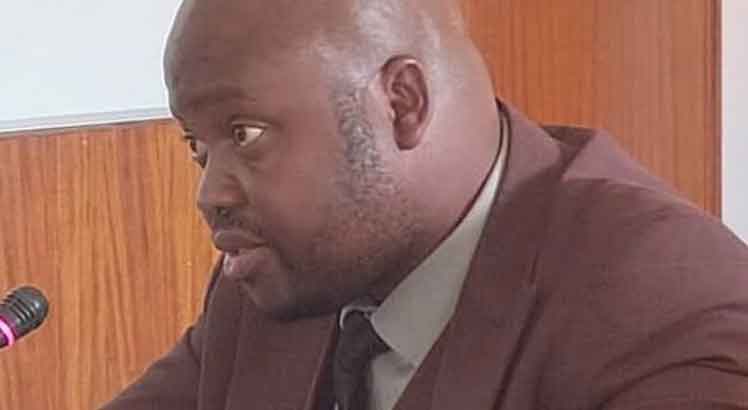
remains briefly.
| Wycliffe Njiragoma
“I saw Lapukeni’s remains briefly on 11 June at Sunset Private Mortuary and it appeared to have exploded. The entire spine and long bones from the limbs were displaced, suggesting the huge force involved in his demise,” said Mwale.
When Dowa Kasangazi parliamentarian George Kadzipatike (Malawi Congress Party) asked whether he would describe Lapukeni as a suicide bomber, Mwale declined to speculate.
He said he was only comfortable explaining his observations without insinuating a cause, adding that exhuming and testing Lapukeni’s body could offer clearer answers.
“But since I was the one who received the body from Nthungwa at Sunset Funeral, I had to indicate the way I saw the body without insinuating anything; just taking a professional responsibility,” he said.
Mwale felt compelled to speak, he said, because Lapukeni’s body was never examined. The family collected the remains before the post-mortem team arrived the following morning.
He said he preserved a large quantity of remains at Sunset, including an entire spine he believed belonged to Lapukeni, whose body was reportedly already released for burial in line with Muslim rites.
When he returned the following day, the spine was gone. He said the same spine was later seen by forensic pathologists Associate Professor Steve Kamiza and Dr Tamiwe Tomoka in another bag and was used to definitively identify Lapukeni.
Mwale said its disappearance, along with that of other samples, had deepened distrust in the handling of evidence.
“We collect samples as a team. The next thing, someone issues an order to have the samples disposed of or destroyed. Samples go missing, even at National Police Headquarters, even at Sunset Funeral. It now becomes dangerous to trust people anymore,” he said.
Mwale also said police photographs taken at the crash scene were missing, which would have helped pathologists to interpret injuries against the position of bodies, distribution of remains and the surrounding scene.
Mwale pushed back against suggestions that his testimony challenged Kamiza and Tomoka, who testified on Tuesday, but did not see Lapukeni’s remains.
“The reaction from the members of the committee was expected in a political setting. Sadly, Malawi’s justice and investigative systems rely too heavily on opinion rather than scientific proof… This is 2026. Opinions can be biased. Opinions can be valid. Opinions can be subject to manipulation,” he said.
Goodwill Funeral Service undertaker Anderson Mankhusu then explained what it took to return Chilima to his family with dignity.
He said the severity of Chilima’s injuries necessitated additional expertise from Mwale to help reconstruct the body.
Police, medical and military personnel conducted the post-mortem on June 13, 2024 at Goodwill and only then cleared it for funeral procedures. Reconstruction and embalming continued until June 14, when the body was handed over.
His account gives a human timeline to what Kamiza—hired by the Chilima family —and Tomoka described in clinical terms a day earlier: that death was instantaneous and all victims were seated at impact.
“The bodies do not agree because the bodies were seated at the point of impact,” said Kamiza, dismissing theories of a cockpit struggle for controls.
Their report listed massive skull fractures, a severed ascending aorta and torn cardiac atria. Red soil and blades of grass from the crater were found deep inside wounds—evidence of staggering velocity.
They also spoke of a final, intimate detail—Chilima’s thumb and fingers were rigidly frozen around his rosary, a cadaveric spasm consistent with sudden, high-stress trauma.
It is why families—including Chilima’s widow Mary—received severely fragmented remains and were barred from conventional viewing.
Mwale’s account brings into focus earlier testimony by Lapukeni’s widow, Sarah, who questioned the circumstances of her husband’s final journey.
She told the inquiry that he made unsettling remarks before the trip, including telling her they should spend time together because he might not return.
The widow also said Lapukeni returned home to collect his passport shortly before leaving for the airport on June 10, 2024. When she asked why he needed a passport for domestic travel to Mzuzu, he reportedly told her it would help her identify him.
She has since questioned how the passport remained identifiable while his mobile phone was severely damaged.
The ongoing parliamentary inquiry follows one by German Federal Bureau of Aircraft Accident Investigation (BFU) and another by the Lazarus Chakwera-appointed Commission of Inquiry led by High Court Judge Jabbar Alide.
After the September 2025 election, Justice Minister Charles Mhango declared earlier reports inconclusive after reviewing them, which led President Peter Mutharika to order a parliamentary probe under Walter Nyamilandu Manda’s leadership.
With the latest testimonies, the committee now has a second wound to examine — how the victims were handled from the moment they crashed to their burial.