At least 74.6 percent of Malawians are drinking water contaminated with faecal matter, despite 91.2 percent of households using improved drinking water sources, a National Statistical Office (NSO) survey has established.
Disseminating the findings yesterday, NSO said contamination increases significantly between the water sources and households, suggesting transportation, handling and storage practices expose communities to potentially unsafe drinking water.
The findings come at a time Malawi joined other African countries in commemorating African Statistics Day (ASD) yesterday under the theme ‘Institutionalising water and sanitation statistics for sustainable and climate-resilient development in Africa’.
The NSO report examined the state of water, sanitation and climate resilience in the country drawing on findings from the Integrated Household Survey (IHS) 2025 and the Malawi Demographic and Health Survey (MDHS) 2024.
Reads the report: “Faecal contamination, which shows that water may have come into contact with human or animal waste, was found in drinking water of 74.6 percent of the population when it was tested in the household, compared with 35.0 percent when it was tested at the source.”
The report further says that although 91.2 percent of households access improved drinking water sources such as boreholes, protected wells and taps, only 8.9 percent enjoy safely managed drinking water services.
“Having an improved source does not guarantee that water is safe, available when needed and close to home,” it says.
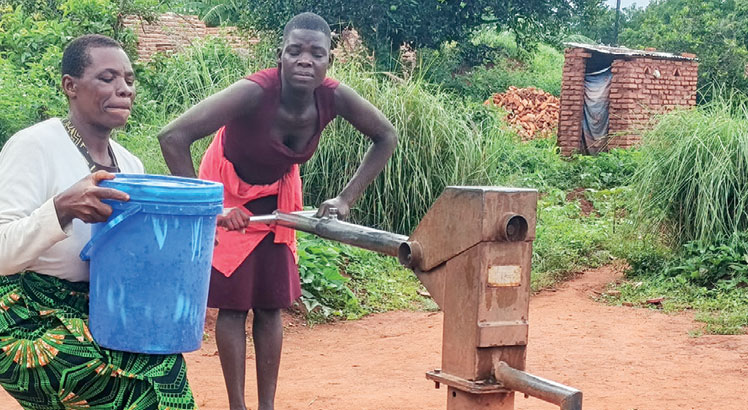
The report also identifies rural communities as particularly vulnerable, with women and girls bearing much of the responsibility for collecting water from distant sources.
The gap between urban and rural areas, according to the report, is wide with at least basic service reaching 93.2 percent of the urban population but 68.9 percent of those in the rural area.
Water Services Association of Malawi (Wasama) executive director Vitumbiko Mkandawire said in an interview the NSO findings should serve as a reminder to Malawians that access to an improved water source does not automatically translate to safely managed drinking water.
“The way forward is to accelerate investment in piped and reticulated water systems, particularly in rural areas, while strengthening water safety plans nationwide to ensure water remains safe from source to consumer,” he said.
On the other hand, water, sanitation and hygiene (Wash) advocate Willies Chanozga Mwandira observed that the findings of Malawians drinking polluted water was alarming.
He called for strict measures to minimise contamination from collection points to consumption.
Mwandira, who is Horizon Action executive director, also hinted that the country’s low coverage of safely managed water services requires increased investment to improve access and reduce contamination risks.
In an interview yesterday, public health advocate Maziko Matemba described the findings as “serious concern of public health”.
He said the statistics highlight a critical gap between having physical access to water infrastructure and actually consuming safe, uncontaminated water.
“While nearly everyone can reach an improved source like a borehole or piped tap, the water often becomes unsafe before it is consumed,” said Matemba.
In 2021, a Ministry of Natural Resources-commissioned drinking water quality audit conducted by Wasama and the Department of Water Resources established that tap water supplied by the country’s five water boards was not safe to drink as it was dirty and contained unacceptable chemical levels.
The audit also detected faecal contamination in water supplied to residents of Chipoka in Salima and Mpira/Balaka in Ntcheu.
In October 2022, a two-month investigation by our sister newspaper Nation on Sunday exposed that some lodge owners in the country’s cities had resorted to providing guests unsafe water from boreholes and shallow wells that they connect to the piped water system.
At one lodge in Blantyre, the expose found, the water contained 800 percent of unwanted colonies of bacteria, according to a sampled specimen Nation on Sunday collected and had it tested at the Malawi Bureau of Standards.