Economists have rued Malawi’s estimated annual expenditure of $25 million (about K43.4 billion) on foreign medical treatment referrals and propose investment in domestic specialised healthcare services to fill the gaps and save scarce foreign exchange.
The foreign referrals bill is equivalent to K3.6 billion monthly and reflects the country’s dependence on foreign hospitals, yet the amount could support domestic healthcare investment, create jobs and stimulate economic growth.
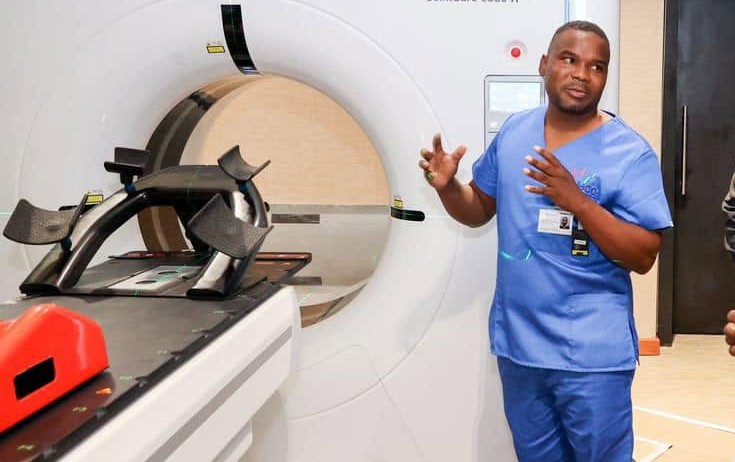
In his remarks at the inaugural Press Economic Forum in Lilongwe yesterday hosted by conglomerate Press Corporation (PCL) plc in partnership with Malawi Confederation of Chambers of Commerce and Industry (MCCCI) to explore investment opportunities in strategic sectors, including healthcare, Minister of Industrialisation, Business, Trade and Tourism Simon Itaye said the country’s reliance on foreign medical facilities was worsening the pressure on the already strained foreign exchange reserves.
“Health is not just a social service. It is a big business. And it is a critical trade issue,” he said.
University of Malawi head of economics Associate Professor Gowokani Chijere-Chirwa said the scale of the financial burden is reflected in Reserve Bank of Malawi (RBM) payment records which show that $9.2 million (about K16 billion) was spent on foreign medical treatment referrals between March and July 2026 alone.
He estimated that the wider economic cost could reach between K17.6 billion and K19.5 billion after accounting for household expenses, accompanying guardians and lost productivity.
Chijere-Chirwa, who is also an Extraordinary Professor at the North-West University in South Africa, submitted that retaining the money spent on medical referrals locally could generate significant economic benefits.
“Redirecting K16 billion towards domestic healthcare services could potentially generate between K8.3 billion and K23 billion in gross domestic product, depending on the proportion retained locally and multiplier effects,” he said.
The projections are illustrative economic scenarios rather than guaranteed savings.
The latest figures come against a backdrop of growing concern over the cost of overseas referrals.
In November 2022, The Nation reported that the Malawi Government was spending about K2 billion annually on cancer and other medical referrals abroad, with more than 400 patients on the waiting list for treatment.
By April 2025, the Ministry of Health and Sanitation said cancer referrals alone were costing the country more than $2 million (about K3.4 billion) annually.
More recently, the ministry also said it spends over K3 billion on referrals to India, South Africa and other destinations.
In her address yesterday, Minister of Health and Sanitation Madalitso Baloyi conceded that limited capacity in cardiac care, cancer treatment, renal dialysis and other specialised services continues to drive demand for overseas treatment.
“The market already exists as we have seen. And it has been demonstrated. What we need is the investment to capture health markets,” she said.
Baloyi identified opportunities in specialised hospitals, diagnostic services, pharmaceutical manufacturing and medical equipment, saying domestic investment could retain foreign exchange while creating employment.
Her ministry is on record as having stated that government typically spends between K50 million and K100 million per patient for specialised heart treatment abroad, particularly in India.
During the forum, PCL plc announced plans to explore healthcare investment as part of its strategy to diversify into commercially viable sectors addressing national economic challenges.
In a presentation at the forum, PCL plc chief executive officer Ronald Mangani outlined a proposed investment model involving the corporation, Nico Holdings plc, development finance institutions and established healthcare operators.
He said the proposed investment would target demand for specialised medical services while potentially reducing expenditure on overseas treatment.
Mangani identified four conditions for investment, notably sufficient demand, credible operating partners, financing arrangements and a conducive regulatory environment.
The corporation also acknowledged risks associated with foreign exchange shortages, financing costs and patients’ ability to pay.
Meanwhile, MCCCI president Ronald Ngwira said businesses were prepared to explore healthcare investments, particularly in diagnostics, medical equipment and infrastructure.
Ngwira, who is also Illovo Sugar (Malawi) plc managing director, urged government to create a conducive policy environment and remove bottlenecks that could discourage investment.
In a swift response, Itaye said government was prepared to facilitate healthcare investments through the Malawi Investment and Trade Centre, including assistance with regulatory approvals and licensing.
In April this year, government said it had saved about K12.6 billion after 126 Malawian patients underwent cardiac surgeries at Blantyre Adventist Hospital (BAH) between 2023 and 2026.
Business moguls and philanthropists Thomson Mpinganjira and Hitesh Anadkat are already investing in specialist healthcare through their various foundations.
Earlier this week, Anadkat, who is founder of First Capital Bank (FCB), through his Hitesh and Meeta Anadkat Foundation launched the construction of the Anadkat Adventist Heart Centre at BAH projected to cost $6 million (about K10.5 billion).
The first of its kind facility in Malawi adds to several projects the FCB founders have implemented in the country, including a K1 billion Children’s Accident and Emergency Unit at Queen Elizabeth Central Hospital.
On the other hand, Mpinganjira, founder of FDH Financial Holdings Limited which owns FDH Bank plc, invested in a multi-billion kwacha private healthcare facility, International Blantyre Cancer Centre and diagnostics facility that has helped cut on foreign referrals for cancer and other ailments through his Thomson and Barbara Mpinganjira Foundation.