

Malawi’s development partners have committed $221 million (about K414 billion) to economic recovery and social protection programmes, signalling confidence in the government’s reform agenda despite persistent fuel shortages and foreign exchange constraints.
The World Bank says the funds are expected to be disbursed within days following the signing of financing agreements in Lilongwe yesterday, with development partners expressing optimism about Malawi’s economic recovery prospects.
The financing, involving the World Bank, European Union (EU), United Kingdom, Germany, Ireland and Iceland, will support two projects under the government’s National Economic Recovery Plan (NERP): Transforming High-Potential Resilient Value Chains (M-THRiVE) and Integrated Social Protection for Resilience and Opportunity (INSPIRE-O).
M-THRiVE seeks to stimulate business growth, particularly among small and medium enterprises in export value chains, through improved access to markets, finance and business support. It will help businesses meet international standards, secure buyers, diversify markets and expand exports.
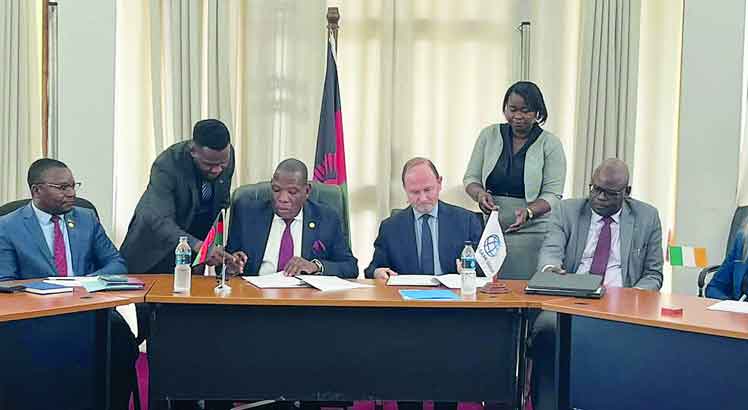
yesterday | Suzgo Chitete
The $165.9 million INSPIRE-O project will strengthen social protection and create economic opportunities for vulnerable households across the country’s 25 districts and four cities. It will combine direct assistance with climate-smart public works and economic inclusion programmes targeting women and young people. The project will also strengthen responses to climate-related shocks in 10 drought-prone districts.
The commitment comes amid persistent fuel queues and foreign exchange shortages that have raised questions about the country’s economic management and recovery prospects.
However, development partners said they remained confident in Malawi’s recovery efforts, citing government’s commitment to reforms, export expansion and private sector development.
Speaking during a meeting with Minister of Finance, Economic Planning and Decentralisation Joseph Mwanamvekha, World Bank country manager Firas Raad said Malawi’s foreign exchange challenges were structural and required long-term solutions, particularly improved export performance.
He urged government to sustain economic reforms and implement Nerp, acknowledging that the adjustment process would be difficult but achievable.
“It is a difficult time and the government needs to think of a cocktail of reforms that the Honourable Minister of Finance has discussed in the past and to push ahead with its economic recovery plan,” said Raad.
He cited Zambia and Zimbabwe as examples of countries that had undergone difficult economic adjustments, saying Malawi could also recover with sustained commitment to reforms.
On the World Bank’s continued support despite fuel and forex shortages, Raad said its financing was guided by accountability safeguards and expected development impact.
“As long as there is compliance with our fiduciary safeguards for project-based financing rules, we have confidence that there is value for money. More importantly, there is development impact that transforms lives,” he said.
Speaking on behalf of other development partners, Ireland’s Ambassador to Malawi Kate Brady acknowledged the economic challenges but said donors believed government was taking meaningful steps to address them.
She said partners were particularly interested in supporting export development, private sector investment and programmes protecting vulnerable populations.
Mwanamvekha described the agreements as evidence of growing confidence in President Peter Mutharika’s administration and its reform agenda.
He said the financing reflected progress in implementing Nerp and the national budget, adding that government was working closely with the World Bank to advance the recovery programme.
The minister acknowledged persistent fuel and foreign exchange challenges, saying the country’s fuel import bill had doubled, increasing pressure on foreign currency resources. He also cited outstanding fuel-related loans inherited from the previous administration, which government must continue servicing.
“There are a lot of loans that were left behind but as government it is like a relay race; we cannot stop paying these loans,” he said.
Mwanamvekha said the $221 million commitment was equivalent to about one month’s import cover but cautioned against relying on external assistance to resolve Malawi’s foreign exchange problems.
He said expanding exports remained the most sustainable way of building reserves.
“We should not bank so much hope on begging to address our forex issues. We need to generate forex through exports and this is what we are working on,” he said.
Raad also emphasised the need to diversify foreign exchange sources, identifying export earnings, foreign direct investment, remittances and foreign aid as key contributors.


