Every day, we see images of long queues at service stations across Malawi. Motorists spend hours, sometimes entire days, waiting for fuel.
Some sleep in their vehicles, others move from one filling station to another, hoping to find petrol or diesel. The frustration is visible, the inconvenience undeniable and the economic losses increasingly difficult to ignore.
But I have been thinking about something else. What if the greatest consequences of Malawi’s fuel crisis are not happening at filling stations? What if the people suffering the most are not even among those queuing for fuel?
We have become so accustomed to discussing the fuel crisis in terms of foreign exchange shortages, import volumes, pump prices and the number of tankers entering the country that we risk overlooking the profound social upheavals taking place beyond those queues.
And perhaps the most disturbing part is that many of these consequences are not immediately visible. Think about a pregnant woman in a rural community who develops complications in the middle of the night. Her family manages to find someone willing to transport her to the nearest hospital, but the vehicle has no fuel. The driver must first search for petrol or diesel, assuming it can be found at all.
For that family, the fuel crisis is no longer about petroleum products. It has become a matter of life and death.
Now think about a patient undergoing dialysis, someone receiving cancer treatment or a child who requires urgent medical attention. These people cannot postpone their medical needs until the country’s foreign exchange situation improves. Neither can they negotiate with their illnesses to wait until fuel becomes available.
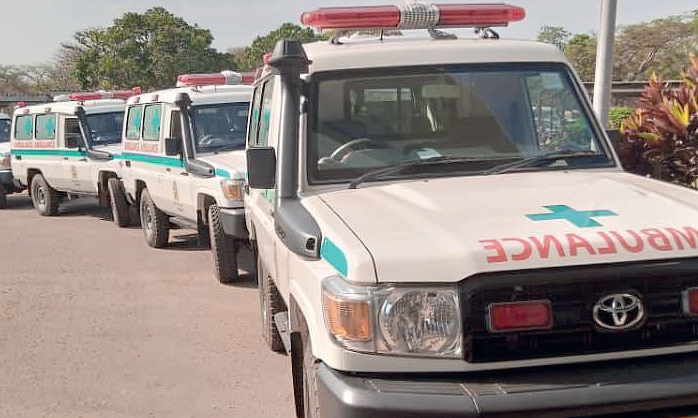
Even where ambulances are prioritised, fuel shortages can disrupt the wider transport arrangements on which patients and their families depend. A hospital may have the necessary medical personnel, equipment and medicines, yet a patient may fail to receive treatment simply because they cannot get there.
And this raises a troubling question. How many Malawians are missing medical appointments because they cannot find transport? How many are experiencing worsening health conditions because they arrive too late for treatment? How many families are borrowing money at exorbitant rates simply to transport a sick relative to hospital?
We do not know. And perhaps that is part of the problem. Our statistics tell us how much fuel has been imported, how much foreign exchange has been allocated and how many filling stations have received supplies. But they tell us very little about the human consequences of fuel scarcity.
And the consequences extend far beyond healthcare. Consider the ordinary Malawian who depends on public transport to get to work. When fuel becomes scarce, minibuses become less reliable, transport fares rise, and journeys that should take thirty minutes can consume several hours.
For someone employed on a daily wage, arriving late or missing work altogether may mean losing income. For someone working in the informal sector, a day without transport can mean a day without earnings.
And for a household that already struggles to afford basic necessities, that lost income may determine whether the family eats that evening.
The consequences are particularly severe for those who have no financial cushion. A salaried professional may be able to work from home, arrange alternative transport or absorb an increase in fares. A market vendor, domestic worker, security guard or casual labourer may have none of these options. The same fuel shortage that inconveniences one person can threaten another person’s survival.
This is why we should be careful when we speak about the fuel crisis as though it affects everyone equally. It does not.
The poor are often the least responsible for the economic circumstances that produce fuel shortages, yet they may bear a disproportionate share of the consequences.
And then there are the children.
Imagine a student preparing for national examinations who repeatedly arrives late for school because public transport is unreliable. Imagine a teacher who cannot report for duty because there is no fuel. Imagine a school whose supplies, examination materials or food deliveries are delayed because transporters cannot operate normally.
A single missed school day may seem insignificant. But repeated disruptions accumulate, particularly for children who are already struggling academically or whose schools have limited resources.
For some families, the problem becomes even more difficult when transport fares increase. Parents must decide whether to pay for their children’s transport, purchase food or meet other essential household expenses.
What economists may describe as household expenditure adjustments are, in reality, painful decisions about which basic needs must be sacrificed.
And what happens when a family can no longer afford to send all its children to school regularly? Who stays home? Does the burden fall equally on boys and girls? Are children with disabilities disproportionately affected when accessible transport becomes unavailable or unaffordable?
These are questions that deserve serious attention because economic crises often deepen inequalities that existed long before the crisis began.
But perhaps one of the least discussed consequences of fuel scarcity is its effect on the informal economy.
Think about the woman who travels to a wholesale market early in the morning to purchase vegetables for resale. Her business depends on moving goods quickly and cheaply. When transport becomes unreliable or expensive, her operating costs rise, her profit margins shrink and the prices she charges customers may have to increase.
Now think about the farmer whose tomatoes, vegetables or other perishable produce must reach the market within a limited period. If transporters cannot find fuel, the produce may deteriorate before it reaches consumers.
The farmer loses income, the trader loses business, and consumers may face higher food prices because fewer goods reach the market.
What begins as a shortage of fuel becomes a disruption in food distribution, household incomes and access to affordable nutrition.
And the consequences do not end there.
Small businesses that depend on generators face additional difficulties when fuel is unavailable. A barber may be unable to operate electric clippers during a power outage.
A welder may lose customers because machinery cannot run. A small food business may struggle to preserve perishable stock when refrigeration is interrupted.
For these businesses, the problem is not simply the additional cost of fuel. It is the uncertainty of whether they can operate at all.
A business owner may have customers, employees and sufficient demand for products or services, yet be unable to function because a critical input is unavailable.
And when businesses operate fewer hours, reduce production or close temporarily, the consequences spread to workers, suppliers and households that depend on them.
There is also another dimension that we rarely discuss: the time that fuel shortages take away from people’s lives.
We often calculate the economic cost of fuel scarcity through lost production, increased transport costs and reduced business activity. But what about the hours that people spend searching for fuel, waiting for transport or rearranging their daily activities?
Time is not an unlimited resource. An individual who spends six hours queuing for fuel has lost six hours that could have been devoted to work, family, education, rest or community responsibilities. A parent who spends an entire afternoon searching for transport may miss important moments with their children. A caregiver who cannot travel reliably may be unable to fulfil responsibilities towards elderly or vulnerable relatives.
These losses may never appear in national accounts, but they are real.
And for women, who often carry a disproportionate share of unpaid care responsibilities, transport disruptions can intensify an already demanding workload. A woman who must travel to purchase food, accompany a sick relative to hospital, collect children from school and manage household responsibilities may find that fuel scarcity makes each of these activities more difficult.
The fuel crisis therefore has implications not only for economic productivity but also for how unpaid work, care responsibilities and household pressures are distributed.
Then there is the psychological burden.
Imagine waking up every morning without knowing whether you will be able to get to work, whether your children will reach school on time or whether the transport fare you paid yesterday will still be sufficient today.
Imagine running a small business without knowing whether your suppliers will deliver goods or whether your customers will be able to reach your premises.
Imagine having to organise every aspect of your life around the possibility that something as basic as transport may not be available.
This uncertainty creates anxiety, frustration and emotional exhaustion. It undermines people’s ability to plan, weakens their sense of security and gradually turns ordinary activities into daily struggles.
And perhaps this is one of the most damaging consequences of recurring fuel shortages: the normalisation of uncertainty.
We have lived with these crises for so long that people sleeping in vehicles outside filling stations, motorists spending entire days searching for fuel and commuters waiting endlessly for minibuses have become familiar scenes.
We discuss them almost casually, as though they were unavoidable inconveniences associated with living in Malawi.
But there is something profoundly troubling about a society becoming accustomed to conditions that continuously undermine the dignity and wellbeing of its people.
When people can no longer reliably plan their working days, attend medical appointments, send their children to school or conduct ordinary business activities, the crisis has moved beyond the filling station into the very fabric of society.
And yet, much of our policy debate remains focused almost exclusively on restoring fuel supplies.
Of course, Malawi must address the foreign exchange shortages, weaknesses in fuel import financing and broader structural challenges that have contributed to the crisis. Without tackling these underlying problems, temporary improvements in fuel availability may simply be followed by another round of shortages.
But the question we should also be asking is what happens to people while we wait for those solutions.
Are essential medical services adequately protected from fuel shortages? Are public transport systems serving workers, students and vulnerable communities receiving sufficient attention? Are we monitoring the effects of transport disruptions on school attendance, access to healthcare, food distribution and informal livelihoods?
And, perhaps most importantly, are we doing enough to protect those who have the fewest resources to cope?
These questions matter because a crisis is not adequately managed simply because the immediate supply problem has been resolved. We must also consider the harm caused while the shortage persisted.
A patient whose treatment was delayed cannot always recover the lost time. A trader whose business collapsed cannot simply reopen because petrol has become available. A child whose education was repeatedly disrupted may carry the consequences for years. A household that borrowed money to survive the crisis may continue servicing that debt long after fuel supplies have returned to normal.
The consequences of fuel scarcity can therefore outlast the shortage itself.
Perhaps this is why we need to reconsider how we define and measure the cost of Malawi’s fuel crisis.
As economists, we can estimate the value of lost production, the increase in transport costs, the effects on inflation and the broader implications for economic growth.
*Fanwell Kenala Bokosi is a seasoned economist writing in his personal capacity