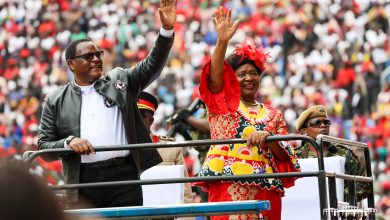
A President is entitled to privacy. The business of the State is not. Yet Malawians are left wondering how executive responsibilities are being discharged while the Head of State remains away from public view for an extended period. Citizens need clear assurances that government is functioning, not rumours to fill the information vacuum.
The President’s absence does not, by itself, establish incapacity or a constitutional crisis. The question is whether executive authority is being exercised lawfully and public institutions are functioning effectively. Government should be able to answer that without disclosing private details.
The Public Affairs Committee’s intervention on October 27 has given the debate fresh momentum. Constitutional continuity is a practical obligation, not a phrase to be dusted off when uncomfortable questions arise. Those entrusted with authority must demonstrate that the State is functioning as it should.
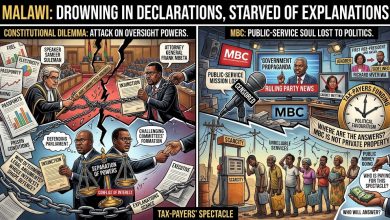
The cancellation of the mid-term budget review meeting raises a different concern. The review provides an opportunity to assess revenue performance, expenditure, implementation failures and emerging priorities before the financial year ends. Cancelling it removes an important chance to identify problems and correct course. Apparently, one way to avoid difficult questions is to cancel the meeting at which they might be asked.
Government says resources are needed to address the looming El Niño threat. The urgency is undeniable: the phenomenon could threaten food security, livelihoods and economic stability. But an emergency is no excuse for leaving taxpayers in the dark about how public money will be used.
Government has reportedly mobilised K163.7 billion for El Niño preparedness against a plan requiring K488.5 billion, leaving a funding gap of K324.8 billion. Yet the public has not received a clear breakdown of how much comes from the 2026/27 national budget, how much is drawn from existing programmes and how much is expected from development partners and non-governmental organisations.
The distinction matters. Mobilised resources are not necessarily new money appropriated by Parliament, just as a funding requirement does not mean the money has been secured. Announcements may inspire confidence, but they do not feed families or finance interventions unless the money is available and properly spent.
Which interventions are funded, and which remain exposed? How will the shortfall be bridged? If additional public money is required, where will it come from? What safeguards will ensure that emergency spending reaches intended beneficiaries?
These are precisely the questions the budget review should help answer. If cancelling the meeting is intended to release resources, government should disclose how much will actually be saved, which expenditure will be affected and how the savings will contribute to preparedness. Taxpayers should not be asked to accept a financial sacrifice without evidence of its likely benefit.
It is difficult to see how cancelling a meeting automatically produces meaningful savings towards a K488.5 billion plan. Unless government demonstrates the connection, the decision risks looking less like a financial strategy and more like creative accounting by omission.
Parliament’s oversight role becomes especially important if the response requires additional spending or budget reallocations subject to legislative approval. The Executive cannot treat an emergency as a blank cheque, expecting citizens to pay while Parliament looks the other way. Urgency may justify swift action, but it does not suspend the rules governing public expenditure.
The cancellation of Parliament’s fourth meeting of the 52nd session is equally troubling, particularly amid strained relations between the Executive and the Speaker. It risks creating the impression that the Executive would rather avoid difficult questions from the opposition than submit its decisions to examination. That is not proof of motive, but closing the door on Parliament invites suspicion through the window.
If logistical or financial constraints necessitated the cancellation, government should explain them and show how legislators will continue examining decisions affecting public resources. If El Niño is the justification, Parliament must have a meaningful opportunity to assess the preparedness plan, the funding gap and proposed spending.
A national emergency should bring the Executive and Parliament together, not deepen their confrontation. Malawians facing possible food shortages need preparedness, funding and results—not another episode in the political drama of institutional mistrust.
Government must explain how executive responsibilities are being discharged, publish a detailed breakdown of El Niño funding and account for the cancellation of both the budget review and Parliament’s meeting. Parliament, in turn, must obtain the information needed to safeguard public resources and ensure that emergency measures deliver results.
The President’s private life is not the issue. The public needs assurance that the State is functioning, money is being handled lawfully and those in power are fulfilling their responsibilities. A government confident in its constitutional arrangements and emergency plans should have nothing to fear from providing answers.
Malawi should not have to guess how it is being governed. Official communication exists to provide facts before speculation fills the vacuum—not to confirm rumours after they have travelled the length and breadth of the country.