Catholic bishops in Malawi on Friday evoked memories of the Church’s role in the country’s transition to multiparty democracy, but criticised persistent failures in governance and public service delivery for extinguishing hopes of genuine democracy.
Malawi Conference of Catholic Bishops (MCCB) president Bishop Martin Mtumbuka said the Church could celebrate its contribution to the 1992 democratic transition, but questioned the country’s failure to make democracy work and alleviate poverty.
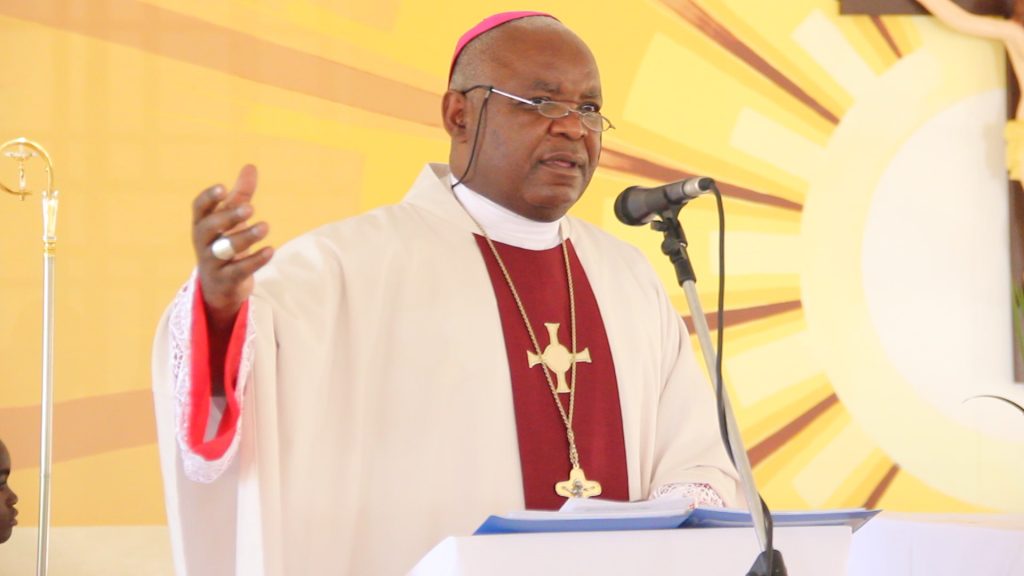
Speaking on Saturday during a Mass celebrating 125 years of the Catholic Church’s footprint in Malawi. During the anniversay held at St Mary’s Nzama Parish in Ntcheu, under the Diocese of Dedza, Bishop Mtumbuka decried continued power outages, mismanagement of public enterprises and what he described as the exploitation of some parastatals by powerful politicians and their cronies.
He also criticised political leaders for devoting too much time to victimise and humiliating each other at the expense of the responsibilities which they were elected.
Said Mtumbuka: “We have played a big role here, especially in 1992 when we moved this country from a very dictatorial kind of way of running things to a democracy. We are not politicians. I think, as much as we as a conference celebrate what was done in 1992, not everything that came after that [the release of a historic anti-regime pastoral letter, ‘Living our faith’] is nice to us.
“Politicians today, over the years, enjoy victimising each other, humiliating each other, instead of doing the work for which they were elected. We don’t enjoy this as bishops. Just do your work.”
The bishop of Karonga Diocese said the Church’s anniversary provided an opportunity not only to celebrate its contribution to Malawi, but also to reflect on shortcomings within its own ranks.
Minister of Finance, Economic Planning and Decentralisation Joseph Mwanamvekha, who was the guest of honour at the event, saying government was working to address the challenges facing the country.
He also commended the Catholic Church for its contribution to national development and urged it to remain a source of hope and unity.
Said the minister: “We do not blame anybody for the challenges, but we just work to ensure that we address the challenges.
“My message to the church today, under the guidance of this celebration, is to remain the beacon of hope and unity that Malawians need.”
Speaking earlier, Vatican’s Secretary of the Dicastery for Evangelisation Archbishop Fortunatus Nwachukwu, who led the Mass, said the growth of the Church should be reflected in the levels of faith among its members. He urged the faithful not to mix traditional beliefs with their belief in God.
Meanwhile, President Peter Mutharika congratulated the Catholic Church in Malawi on the 125th anniversary of its establishment in the country.
In a message, he acknowledged the church’s long-standing contribution to Malawi’s development, particularly in education, healthcare, social welfare and pastoral care.
Mutharika also reaffirmed his commitment to safeguarding freedom of worship in Malawi and said citizens should be allowed to freely practise their faith.
“We deeply value these efforts and encourage the Church to continue complementing the government’s initiatives to promote the integral development of our people,” said Mutharika.
St Mary’s Nzama was the first Catholic parish in Malawi. It was established by the Montfort Missionaries in 1901.
By July this year, the Catholic Church in Malawi reported having 5 647 544 followers.
The church runs 1 806 educational institutions, 93 health facilities and 22 social institutions across the country. It has 220 parishes and 15 875 Small Christian Communities (SCCs).
The church is served by 12 bishops, 675 priests, 72 religious brothers, 1 299 religious sisters and 638 catechists.