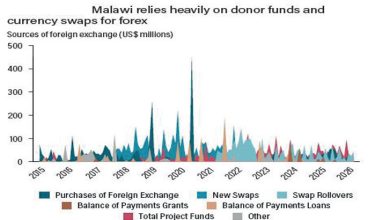
Industry captains and experts have decried the worsening business environment in the third-quarter (Q3) 2026 where foreign exchange and energy challenges require urgent actions.
The Malawi Confederation of Chambers of Commerce and Industry (MCCCI) and economic analysts expressed this after noticing that forex scarcity and energy challenges eroded inflation gains between July and September 2026.
In an interview, MCCCI president Ronald Ngwira observed that while inflation eased from 21.1 to 20 percent and policy rate remained stable, forex and energy challenges coupled with the imminent domestic debt restructuring have increased pressure on businesses.
Credit Facility
“The persistent forex pressure compounded with power issues, and now fuel pressure, are having an increased negative impact on businesses ability to enjoy wins on inflation and policy rate gains.
“The domestic debt restructuring is filtering into pension holders, Malawi Stock Exchange and the banks. The debt restructuring is the right thing but it will cause discomfort,” Ngwira said:
Ngwira, who observed that the Iran war is making the fuel and gas situation look dire, said to address the broader issues, bold decisions need to be made, including the exchange rate realignment.
“We need to land the Extended Credit Facility and also need some alignment of the exchange rate because doing nothing is not an option,” said Ngwira, who is also Illovo Sugar Malawi plc managing director.
In a separate interview on Thursday, University of Malawi economics lecturer Edward Leman said based on several risks that have remained in Q3, it is difficult to remain particularly optimistic about the outlook.
According to Leman, the modest drop of inflation was not enough to create much room for significant monetary easing which coupled with structural issues like forex scarcity and energy challenges have made it difficult to sustain some of the gains during the quarter.
Leman said: “Combination of inflation, forex shortages, unreliable energy supply and expensive credit has made the operating environment particularly challenging. It is also part of the reason several institutions have revised down their growth projections.”
Going into the fourth-quarter, Leman’s forecast remained cautious “because many indicators are still not pointing towards a significant improvement in the short term”.
He, however, advised authorities to prioritize sustaining the gains already made while intensifying efforts to address the underlying constraints to production, forex availability, energy supply and private-sector activity.
Malawi Union of Small and Medium Enterprises president James Chiutsi said while 20 percent inflation and 24 percent policy rates are already too high for Small and Medium Enterprises (SMEs), diesel and forex scarcity have knocked them out.
Chiutsi said: “The biggest pain in Q3 has been forex scarcity and energy..”
Earlier, Minister of Industrialisation, Business, Trade and Tourism Simon Itaye, said “government is targeting to curb foreign exchange leakages as part of immediate measures to ease shortages affecting the economy”.
In May this year, the Reserve Bank of Malawi admitted facing challenges to manage allocations of foreign exchange to the country’s essential sectors due to inadequate forex reserves.