Parliamentary committees on Health, Education, Legal Affairs and the Women’s Caucus have pledged to work together to address policy inconsistencies that limit adolescents’ access to sexual and reproductive health (SRH) services and education.
The committee made the commitment on Wednesday during a meeting on adolescent sexual and reproductive health and rights (SRHR) after researchers presented evidence showing the barriers faced by pregnant and parenting adolescents.

Msilimba. | Ntchindi Meki
The meeting brought together members of Parliament, researchers and development partners to discuss findings from studies by Kamuzu University of Health Sciences (Kuhes), the Centre for Social Research (CSR) at the University of Malawi, the Heard Institute at the University of KwaZulu- Natal in South Africa and the African Population and Health Research Center.
The studies called for stronger implementation of Malawi’s school re-entry policy, increased domestic financing for adolescent health and education, legal reforms to improve access to SRH services and better coordination between government ministries.
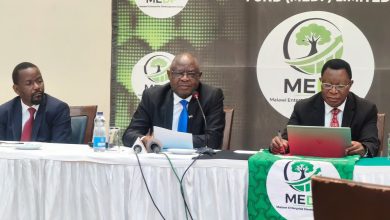
Health Committee of Parliament vice-chairperson Maureen Nseula
said poor coordination between the ministries of Health and Education remains a key obstacle to improving adolescent SRH outcomes.
“The main issue was that the Ministry of Education and the Ministry of Health are not communicating. We have taken it up. We have committed to work together as committees so that we can see improvement because we are talking about 32 percent teenage pregnancies. That is a large figure, and we are hoping to see a reduction,” she said.
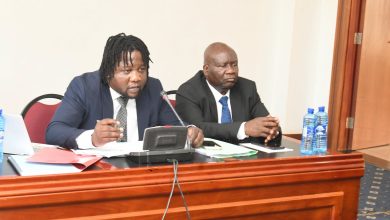
On his part, Education, Science and Technology Committee vice-chairperson Golden Chizimba Msilimba we l come d t h e recommendations, saying they should inform future curriculum reviews.
“The research by the universities should be used to inform curriculum reviews when they take place. There is indeed inconsistency in policy between the Ministry of Health and the Ministry of Education regarding the availability of SRH content,” he said.
The meeting also featured presentations on a political economy analysis of adolescent SRH by Kuhes researcher Adamson Muula, findings on the lived experiences of pregnant and parenting adolescents in Blantyre by CSR researchers Witness Alfonso and Elita Chamdimba and results from the Project Promote pilot intervention, which aims to empower adolescent mothers to improve their sexual and reproductive health.