The United Nations Economic Commission for Africa (Uneca) says currency devaluation is not a quick fix because it delivers modest and delayed export gains for Malawi and other African economies and cannot fix persistent trade deficits.
The Uneca study that covered 54 countries titled ‘Exchange rate fluctuations and external trade balance in Africa’, found that a one percent devaluation of the currency initially reduces exports before any benefit emerges, with meaningful gains taking roughly two to three years to materialise.
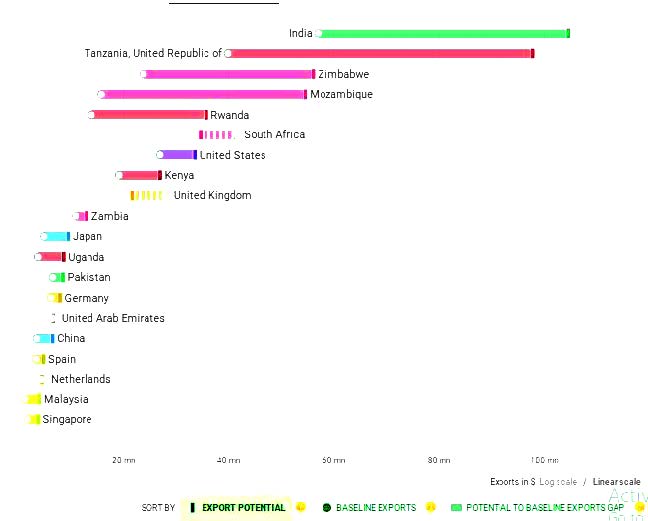
The study also found that non-resource intensive economies such as Malawi see only minimal and temporary gains from depreciation, a pattern Uneca attributes to weak industrial capacity, heavy reliance on imported inputs and underdeveloped trade infrastructure.
Reads the study in part: “For non-resource intensive economies, devalution is shown to be ineffective in generating long-term trade improvements, resulting in a progressive deterioration of external imbalances.
“The effectiveness of exchange rate policy as a tool for trade competitiveness is constrained by weak industrial bases, the dependence on imported inputs, inadequate trade infrastructure and inflationary pressures.”
The findings of the study carry direct relevance for Malawi, which has repeatedly devalued the kwacha in recent years amid chronic foreign exchange shortages and a growing trade imbalance, without the currency moves translating into a lasting turnaround in export performance.
The Malawi Government devalued the kwacha twice in 18 months, first by 25 percent in May 2022 and by 44 percent in November 2023, a cumulative 69 percent, each time on promises that a weaker currency would align rates with market fundamentals and lure hoarded forex into banks.
But by December 2025, the parallel rate was trading around K4 000 to the dollar, more than 150 percent above the official rate of K1 751, with gross official reserves fallingto 1.6 months of import cover.
Meanwhile, the country’s trade deficit kept growing, rising threefold as a share of gross domestic product from six percent to 19 percent over the full period, according to the World Bank data.
Economics Association of Malawi president Bertha Bangara Chikadza said in an interview on Thursday that repeated devaluations have failed to improve the trade balance because Malawi lacks the productive capacity to increase exports while remaining dependent on essential imports.
“Without addressing the structural export challenge, the country risks remaining in a perpetual cycle of devaluations that delivers little economic benefit,” she said.
Bangara-Chikadza, who teaches economics at University of Malawi, cautioned that any devaluation without adequate foreign exchange supply and measures to boost production can only intensify inflationary pressures.
Minister of Finance, Economic Planning and Decentralisation Joseph Mwanamvekha is on record as having said that Malawi needs to have policies that can address foreign exchange shortages both on the supply and demand side as devaluation is not a panacea.