The Reserve Bank of Malawi (RBM) subsidiary Export Development Fund (EDF) has partnered FDH Bank plc to capture more of the couontry’s gold through formal channels and increase purchases from small-scale miners and traders nationwide.
In a statement on Friday, EDF said the Malawi Stock Exchange-listed bank will host the centres at its branches in Karonga, Jenda in Mzimba and Mangochi, while the Blantyre centre will operate from RBM premises.

Currently, EDF purchases gold through centres at RBM offices in Lilongwe and FDH Bank’s Liwonde Service Centre.
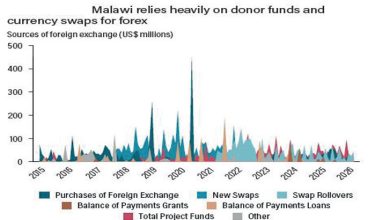
The expansion could have implications beyond formalising the domestic gold trade, with RBM disclosures showing that gold purchased locally is already being used to generate foreign exchange at a time Malawi continues to face forex liquidity pressures.
EDF acting managing director Inglis Nyamilandu said the expansion is intended to bring formal gold-buying services closer to miners and traders and increase volumes flowing through the structured market.
He said: “The opening of the new centres is part of our expansion efforts. We want to reach more people.
“At the moment, we are buying gold from only two locations, Lilongwe and Liwonde, yet there are gold traders across the country.”
Nyamilandu said taking purchasing services closer to areas where gold is mined should enable EDF to reach more traders and increase purchases.
The fund has bought 1.6 million grammes, equivalent to about 1.63 tonnes since government established the formal gold market in 2021.
The significance of increasing formal purchases was highlighted recently when RBM told Parliament’s Government Assurances and Public Sector Reforms Committee that it had started converting accumulated gold into foreign-exchange liquidity.
In a presentation to the committee, the central bank said it exported 589.95 kilogrammes of doré gold on April 29 2026 for $75.09 million (about K131 billion) in its inaugural gold export transaction.
RBM said the transaction followed the establishment of operational, assaying and settlement arrangements and was used as a pilot to assess the pricing and operational structure of the gold export programme.
The central bank had considered either selling the doré gold outright or monetising it while retaining ownership. It eventually opted for an outright sale to generate immediate foreign exchange liquidity amid continued forex pressures.
RBM further told the committee that increasing the number of gold trading centres should bring formal buying services closer to miners, improve supply consistency and traceability, reduce reliance on informal and parallel markets and strengthen confidence in the structured market.
The bank is also establishing a reserves mobilisation division to coordinate reserve mobilisation activities, including gold operations.
FDH Bank plc managing director Noel Nkulichi said in an interview that the partnership aligns with the bank’s growing focus on supporting mining and development of the country’s mineral value chain.
“As a bank with a wide branch network, we see an opportunity to use our existing infrastructure to help bring these services closer to communities,” he said.
The Malawi Government established the formal gold market in 2021 partly to curb losses of gold and gemstones through informal trading and smuggling to neighbouring countries, including Mozambique and Tanzania.
The gold purchase programme is owned by RBM and implemented by EDF, a developmet finance institution, which is wholly-owned by the central bank.