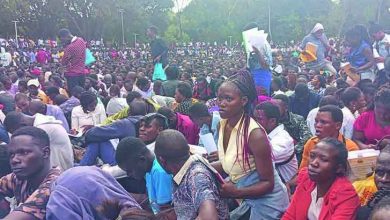
The most visible scars of Malawi’s crippling two-month fuel drought are captured through the winding and endless queues choking filling stations across the country.
But away from the desperate lines of motorists waiting for tankers that rarely arrive lies a deeper and more devastating economic tragedy: the systematic strangulation of the grassroots economy.
For fishmonger Emily Mwalawatsonga, the journey from Lilongwe to Chikombe Bay in Salima District used to be a predictable and profitable commercial routine. Today, it has transformed into an exhausting gamble against a paralysed transport network.
She now pays twice her usual transport fare, while the price of fish at the landing site has quadrupled from K1 000 to K4 000.
“Few fishers go fishing and those who do, sell their fish at very expensive prices. We are not making any profit at all. We are working hard for nothing,” said Mwalawatsonga.

Her experience illustrates how the fuel crisis is affecting businesses beyond motorists and transport operators, disrupting supply chains and threatening livelihoods of small-scale traders.
At Chikombe Bay, fisherman Fredrick Banda said the scarcity of petrol and paraffin, which power fishing operations, has made it difficult to venture onto the lake.
He said some fishers have resorted to buying fuel from informal vendors at more than double the normal price, while others have abandoned fishing expeditions altogether.
Banda said he now goes fishing only after about two weeks, compared with his previous daily operations, affecting his earnings.
He previously expected revenue of about K2 million a day, while each fishing expedition provided employment for at least 10 people.
“We rely on paraffin and petrol, but their shortage has forced us to travel to Lilongwe or Mzuzu, but in vain,” he said.
The crisis is also affecting businesses that depend on customers travelling from neighbouring districts to buy agricultural produce.
In Nkhotakota, a district renowned for rice production, trader Annette Thembachako said business has slowed as fewer customers make the journey to buy the commodity.
She now struggles to sell even one bag of rice a day, against the five bags she previously sold.
“Most of the people who buy rice from us come from Lilongwe, Ntchisi, Dowa and Kasungu districts. With the fuel crisis, traffic has reduced, lowering the number of travellers and potential customers. When they do, they buy only a few bags, saying they spent most of their money on fuel. Our business has really suffered,” she said.
At Jenda Trading Centre in Mzimba District, where roadside vending has flourished over the years, reduced traffic has taken a toll on traders who depend on passing motorists.
Hitler Jere, who has sold chips for the past 20 years, said the decline in the number of vehicles stopping to buy food has significantly reduced his daily income. Jere calls this fuel crisis the worst in years.
He said: “That has, in turn, reduced the amount of money we make in a day,”
Soft drinks vendor Yvonne Magola, who stands next to Jere, is equally struggling, with her daily sales falling from three crates to just one.
“I have three children whom I feed from the profits of this business. What I am making now is minimal and cannot sustain us. I am hoping the situation normalises,” she said.
These experiences emerged during a Nation on Sunday reporting tour between November 3 and 7, 2026, covering Lilongwe, Dowa, Kasungu, Mzimba, Rumphi, Nkhata Bay, Nkhotakota, Salima and Dedza districts.
The most visible manifestation of the crisis was long queues of vehicles outside filling stations, with motorists waiting for fuel or hoping a tanker would arrive.
But beyond the queues was the struggle of small-scale businesses whose survival depends on the movement of people, goods and services.
The team struggled to secure fuel from Lilongwe before setting off for the northern region. Most filling stations in the capital had run dry.
Filling stations along the M1 Road, particularly in Dowa, Mponela and Kasungu were also without supplies, with only occasional sightings of vendors selling fuel on the black market at between K15 000 and K20 000 per litre.
Some relief came at Chatoloma Trading Centre in Kasungu, where a fuel tanker had delivered supplies the previous day.
But after two hours without movement, it became apparent the queue was not as short as it appeared. Some motorists ahead had loaded jerrycans, most holding 20 litres each, further extending the waiting time.
The team offered attendants what appeared to be a ransom. About 40 minutes later, the vehicle was directed to the pump and finally refuelled.
Jenda and Mzimba presented a familiar picture of dry pumps. Surprisingly, motorists in Mzuzu and Rumphi appeared to have an easier time accessing fuel.
The situation changed again along the Lakeshore Road, where filling stations in Nkhata Bay, Dwangwa, Salima and Dedza were also without supplies.
In a telephone interview on Friday, Consumers Association of Malawi executive director John Kapito said the situation remained bleak, warning the country could take a long time to recover from the economic losses.
“And it looks like, as a country, we have also resigned ourselves to doing nothing that can give that glimmer of hope,” he said.
Malawi Energy Regulatory Authority spokesperson Fitina Khonje referred Nation on Sunday to the Ministry of Energy spokesperson Joana Thaundi, who requested a questionnaire, but had not responded by press time.
Minister of Energy Jean Mathanga and National Oil Company of Malawi chief executive officer Emmanuel Matapa did not respond to calls seeking comment.
On his return from South Africa last week, President Peter Mutharika attributed the fuel supply challenges to transportation and logistical difficulties rather than a shortage of the commodity.