Malawi’s public hospitals have run out of 75 percent of essential medicines after the Central Medical Stores Trust (CMST) failed to secure foreign exchange to import drugs.
CMST, which supplies public hospitals, owes international suppliers about $18 million (K31.5 billion), according to a new report.
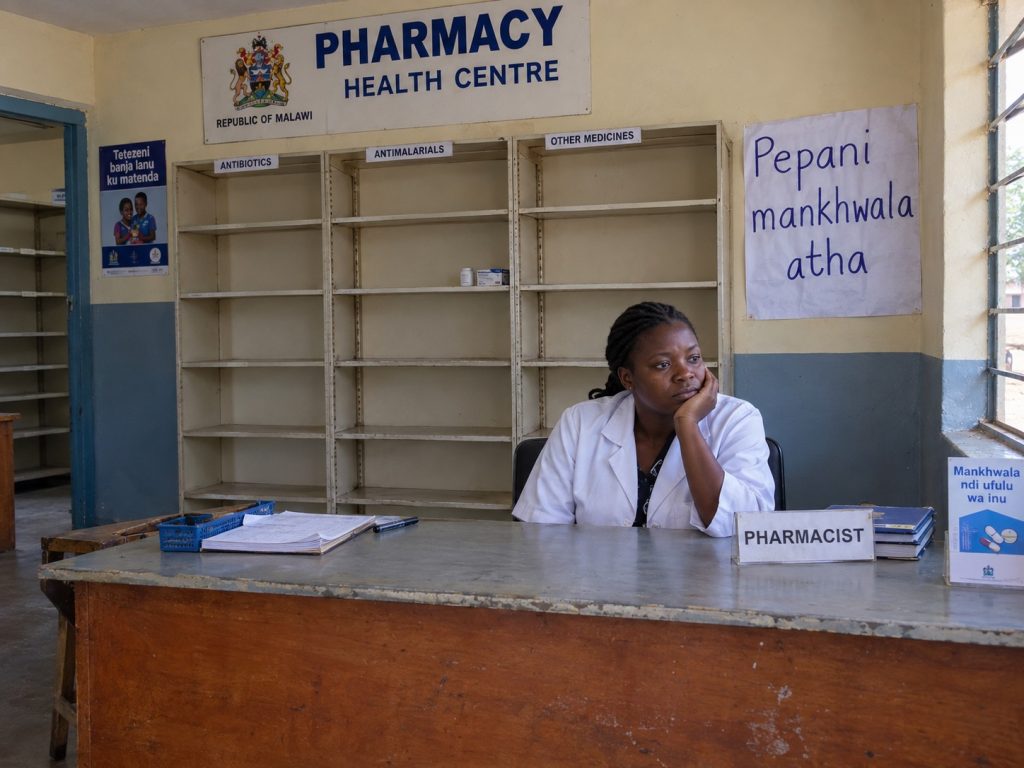
In a report dated September 22 2026, CMST said 62 items, representing 18 percent, are fully in stock, while 23 items or seven percent are at low levels, highlighting the worsening availability of essential medicines across public health facilities.
The medicine availability has steadily declined during the 2026/27 financial year, falling from 51 percent in April to 40 percent in September, well below CMST’s target range of between 55 and 65 percent.
Central hospitals are the worst affected, with availability dropping from 34 percent in April to 18 percent in September with the sharpest decline recorded in August when availability fell from 30 to 19 percent.
District health offices (DHOs) have also experienced a significant deterioration, with medicine availability declining from 66 percent in April to 53 percent in September, placing them below the minimum target set by CMST.
The situation has prompted the Parliamentary Committee on Health to consider urgent interventions, with its chairperson Anthony Masamba saying yesterday that the committee is exploring options to prevent the crisis from deepening.
He said: “I have spoken to the director general at CMST as all this stems from failure to bring in more stocks because the entity owes its international suppliers about $18 million.
“Now these suppliers don’t want to bring us the products anymore unless that bill is cleared. The kwacha is available, but we need dollars. This is a very dire situation.”
Masamba said the committee will formally summon CMST and consider engaging the Ministry of Finance, Economic Planning and Decentralisation to bring an unforeseen vote to Parliament to help address the shortage.
Health Services Managers Network (Hesnet), an affiliate of Malawi Local Government Association (Malga), speaking through Malga executive director Hadrod Mkandawire, said the situation has crippled service delivery.
He said: “These are drugs deemed too common and very essential. Surgical gloves are also not being supplied and that will affect how surgeries are carried out.
“We urge the government to address the situation immediately. This further reinforces our calls for the government to devolve 50 percent of the drug budget to local authorities so that they can easily buy the drugs on their own.”
Some of the medicines missing include paracetamol, Ibuprofen, Ciprofloxacin, Diclofenac, Doxycycline, Flucloxacillin, Adrenaline injection, Atropine injection, and Dexamethasone injection.
Others are Benzathine Benzylpenicillin injection, Furosemide injection, Tranexamic Acid injection, disposable syringes and surgical gloves.
In a separate interview, Human Resources for Health Coalition chairperson Solomon Chomba confirmed the shortages, saying almost all health facilities nationwide are struggling to procure essential medicines, including some of the cheapest and most commonly used drugs.
“It’s a serious problem. Most of the facilities are supposed to buy from CMST, but CMST doesn’t have the medicines,” he said.
Chomba said government provides DHOs with 10 percent funding to procure medicines outside CMST, but argued that the allocation is inadequate to meet current needs when CMST itself has no stocks.
Yesterday, Centre for Democracy and Economic Development Initiatives executive director Sylvester Namiwa also wrote the Parliamentary Health Committee, saying the country is facing critical persistent drug stockouts that will shortly culminate into a full-blown crisis, if nothing is done to address the situation.
CMST spokesperson Herbert Chandilanga was yet to provide a detailed response by press time, but briefly confirmed the challenges with foreign exchange.
In the 2026/27 fiscal year, K108.3 billion has been set aside for procurement of medicines and medical supplies, representing a 13.1 percent increase from the 2025-26 revised provision of K95.8 billion.