Malawi is seeking private-sector investors to help finance a decade-long forestry turnaround at a time the government budget releases averaged just 40 percent of planned allocations over the past five years, it has emerged.
Business Review calculations show that in the past five years to 2022, the number of export permits fell by about 44 percent between 2022 and 2025 while the number of export licences remained stable.
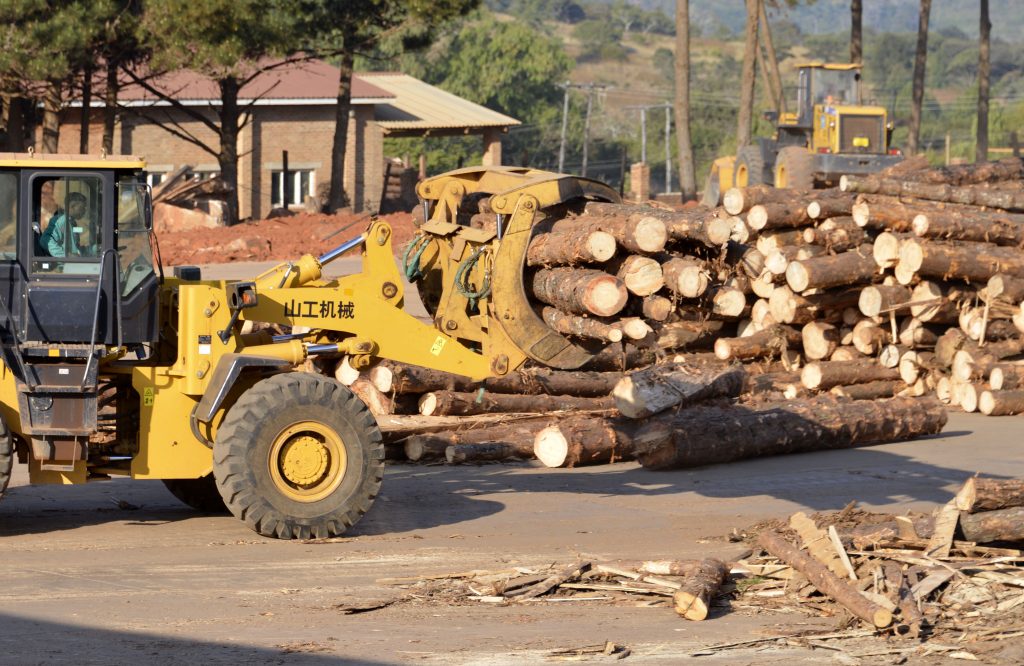
The Draft Malawi Forestry Sector Turnaround Strategy 2026/36 shows that inadequate funding has constrained forest protection, plantation development, research and law enforcement while the country continues to lose 11 565 hectares of forest annually.
In the 2024/25 financial year, the Department of Forestry received 30 percent of its approved budget requirement.
The draft strategy has identified commercial plantations, replanting and tree nurseries as investment opportunities, with scope for businesses to expand timber production and supply.
Investors are also being targeted for timber processing, modern sawmills, furniture manufacturing, bamboo processing and other wood-based industries that could create jobs and increase value addition.
Minister of Natural Resources Patricia Wiskes said in an interview on Tuesday that the strategy recognises forests not merely as natural ecosystems, but as strategic national assets and natural capital that underpin economic development, climate resilience and human well-being.
She said: “Malawi’s forests are among our nation’s most valuable natural assets.
“Their contribution to national development extends far beyond the forestry sector, making them indispensable to the realisation of Malawi 2063 (MW2063)and our broader aspirations for sustainable economic growth and environmental stewardship.”
Treasury data show that in 2025, the government issued 38 export licences and 478 export permits to various exporters, including Raiply Malawi Limited, Vizara Timber Plantations and other small-scale exporters to export medium-density fibreboards, shutter ply, plywood, natural rubber and rubber timber to South Africa, Tanzania, Zambia, Mozambique and Kenya.
However, in 2022, the sector issued 37 forest export licences and 858 forest export permits to exporters, including Raiply Malawi Limited and Vizara Rubber Plantations, to export forest products, including medium-density fibreboard.
The data also show that there is no apparent expansion in the main export markets, with South Africa, Kenya, Tanzania and Zambia remaining among the major destinations for Malawi’s forestry products.
The ministry concedes that forestry has not yet fully capitalised on emerging financing opportunities such as climate finance, carbon markets, biodiversity finance, payments for ecosystem services, green bonds and blended finance mechanisms.
At the same time, existing taxation policies, including value added tax on specialised forestry machinery and equipment, have further discouraged investment in commercial forestry and plantation developments, reducing the competitiveness of sustainable forestry enterprises and limiting expansion of the private forestry sector.
In its policy brief titled ‘Plantation forestry in Malawi: Challenges and policy options’, Mwapata Institute said tax policies on forestry products are discouraging local and international investors from pouring their resources into revamping the sector.
The institute’s research fellow and co-author of the report Maggie Munthali recommended creating a conducive policy and regulatory environment to increase private sector investment in plantation forestry through fiscal instruments such as value added tax exemptions and tax breaks that incentivise sustainable plantation forest management.
The strategy, which covers 2026 to 2036, aligns with Malawi 2063, First 10-Year Implementation Plan, Sustainable Development Goals, the Paris Agreement and the Kunming–Montreal Global Biodiversity Framework and other regional and international commitments to which Malawi is a party.