The World Bank says cash transfers to poor Malawian households can generate long-term economic returns and enhancing socio-economic development, particularly for girls.
Economic analysts say this strengthens the case for treating social protection as investment in human capital rather than consumption expenditure.
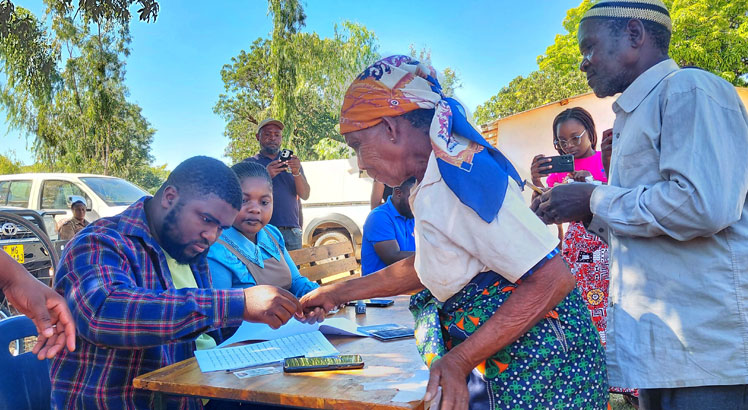
In its report, the World Bank cites a Malawi pilot project in which transfers equivalent to about 10 percent of annual household expenditure, conditional on girls attending school, increased enrolment by 11 percentage points, or 16 percent and generated modest improvements in reading and cognitive scores.
The report further said unconditional transfers produced different economic and social returns.
While they did not achieve similar educational gains, teenage marriage declined by eight percentage points, or 44 percent and teenage pregnancy by seven percentage points or 27 percent.
The findings are significant for Malawi as government scales up social protection while operating under tight fiscal conditions, raising questions about how limited public resources can generate the highest long-term economic returns.
Scotland-based Malawian economist Veli Nyirongo said in an interview on Tuesday that keeping girls in school longer and delaying early family formation could improve their prospects of entering productive employment, with implications for future earnings, labour productivity and household welfare.
“Poverty is not only a lack of income today, it can also limit the ability of households to invest in education, health and the future productivity of their children,” he said.
Nyirongo, however, said the contrasting results should not automatically lead policymakers towards conditional transfers.
He said conditions can improve outcomes where they address specific constraints such as school attendance, but could exclude households unable to comply because of poor transport, disability or inadequate access to public services.
“The policy objective should, therefore, be to maximise human-capital outcomes, rather than make conditions an end in themselves,” he said.
Centre for Social Concern economic governance programme officer Agnes Nyirongo said the results demonstrate that poverty affects household investment decisions, including whether children remain in school.
She said the reduction in teenage marriage and pregnancy under unconditional transfers also shows that easing household financial pressures can produce positive outcomes without necessarily prescribing how beneficiaries use the support.
“There is no single social protection design that will achieve every objective equally well,” said Nyirongo.
She said that increased spending alone will not guarantee lasting economic benefits.
Nyirongo said that cash support needs to be accompanied by functioning schools, healthcare, nutrition programmes and interventions that enable households to build productive livelihoods.
“The objective should be to move from a model of cash alone to cash plus services and opportunities,” she said.
The World Bank findings come as government has allocated K7 billion to the Social Cash Transfer Programme in the 2026/27 National Budget, representing a 58.6 percent increase from the K4.4 billion revised provision in 2025/26 fiscal year.
Minister of Finance, Economic Planning and Decentralisation Joseph Mwanamvekha said the additional resources will support progressive expansion into Mwanza, Neno, Ntchisi and Nkhotakota, alongside development partners.
With Malawi facing limited fiscal space, economists says policymakers should assess cash transfers against longer-term indicators such as school completion, actual learning, health, employment and future earnings, while also considering programme administration costs.
They argue that cash transfers should complement, rather than substitute for investment in quality public services.
The economists said there is for a combination of cash transfers and direct public investment to deliver the largest and most durable improvement in human capital for every kwacha spent.
Last year, Oxfam in Malawi called for the restructuring of social protection programmes to have an exit strategy in view of the economic distress and shocks the country continues to face.