Malawi Government has invested K16 billion in interventions, including solar-powered irrigation systems to boost food security while countering the impact of the pending ‘super’ El Nino in the coming agriculture season.
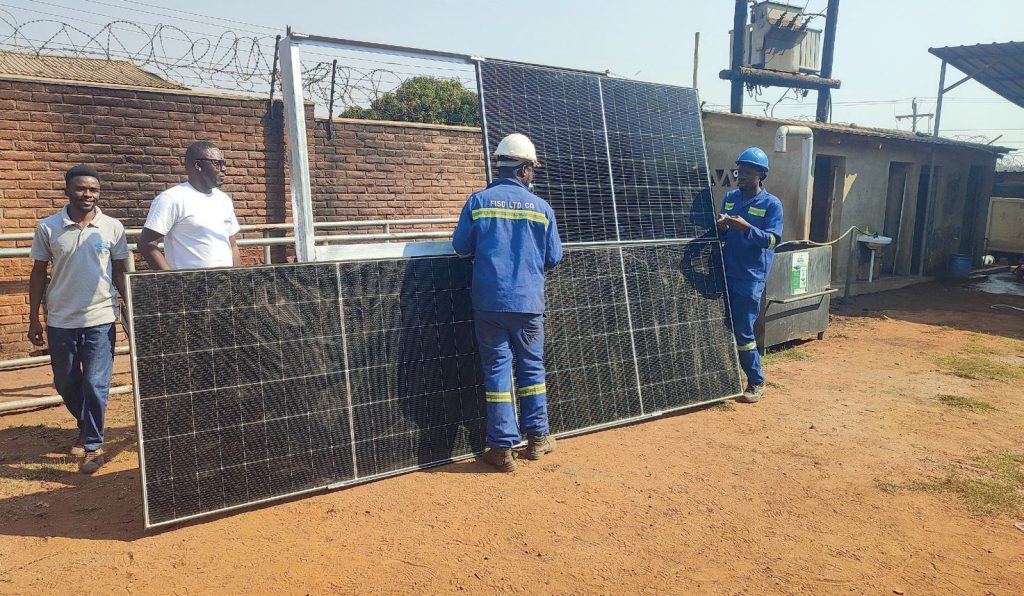
Under the package, Fisd Limited has been contracted to supply 800 solar-powered irrigation systems worth K10.8 billion.
pumps. | George Singini
Ministry of Agriculture, Irrigation and Water Development Principal Secretary (Administration) Bennet Nkasala said in Lilongwe on Friday that the investment will target 8 000 farmers expected to produce 100 000 metric tonnes (MT) of food, mainly maize, during the 2026/27 lean season.
“This is a significant national investment that will benefit thousands of farming households and strengthen Malawi’s resilience against the anticipated effects of El Niño,” he said during training for district engineers on installation and operation of the systems.
Nkasala added that success will depend on implementation, including how many pumps are correctly installed, how quickly they are operational, how effectively farmers utilise them and ultimately, how much food is produced.
Fisd Limited executive director Kondwani Nanchukwa said the home-grown company will deliver the pumps within 30 days.
He said each unit will irrigate five hectares, thus bringing 4 000 hectares under irrigation nationwide.
The remaining K5.2 billion under the programme will fund farmer training, distribution and installation of the equipment as well as fertiliser and seed distribution, according to the ministry.
Nanchukwa said the surface pumps are suited to Malawi’s water sources and will help communities “build resilience so that when El Niño hits, they will have been well prepared”.
He said the company has also set aside K50 million to reward the best-performing district in speedy installation.
Agricultural economist Tamani Nkhono-Mvula said the investment was timely: “With the anticipated El Niño, the number of Malawians expected to face hunger could increase, and the report presents an opportunity for Malawi to prepare.”
The move comes as the 2026 Malawi Vulnerability Assessment Committee report projects 2.6 million people, or 14 percent of the population, will face food shortages between October and March. The food gap is estimated at 97 887 metric tonnes worth about K124.3 billion.
Four million people faced hunger in 2025/2026 lean season and 6.1 million in 2024/2025 lean season. Government bridged last year’s deficit with 200 000 metric tonnes of maize imports from Zambia.