For years, Malawi has pursued industrialisation, export diversification and private sector growth to reap meaningful gains from international trade.
However, the success has been minimal, drawing questions such as: what separates countries that attract investment consistently and economically advanced nations from those that continue to struggle despite possessing significant economic potential?
These issues formed part of the discussions and learning experiences during a Capacity Building Seminar on Trade and Investment Promotion held in Shijiazhuang, Hebei Province in China, which I attended recently.
The seminar brought together 25 participants from various government departments and institutions in Malawi, providing an opportunity to gain insights into China’s trade and investment promotion strategies, industrial development, and economic transformation.
While the seminar covered topics such as accessing the Chinese market, investment promotion strategies, industrial policy, international trade and economic development, the most significant lesson extended beyond the classroom.
It was evident that successful economies do not attract investment simply because resources exist or incentives are available. Rather, they build systems that make investment decisions easier, reduce uncertainty and create confidence among investors.

Behind every successful investment destination lies a network of institutions, policies and partnerships working quietly in the background. Investors may see opportunities, but their decisions are often shaped by factors such as policy certainty, efficient systems, reliable infrastructure, coordinated support mechanisms and the ease of doing business.
These issues formed the centre of discussions throughout the seminar and repeatedly pointed to a critical reality, which is that trade, and investment promotion is no longer about merely marketing a country or organising investment conferences. It is increasingly about institutional capacity, project preparation, market intelligence and the ability to convert opportunities into tangible economic outcomes.
One of the strongest messages from the programme was that investment follows readiness. Countries that successfully attract investment are often those that present clearly defined projects supported by feasibility studies, market data, infrastructure plans and transparent regulatory frameworks. Investors are more likely to commit capital when opportunities are packaged professionally and supported by institutions capable of facilitating implementation.
For Malawi, this lesson is particularly relevant as the country possesses considerable opportunities in agriculture, tourism, mining, manufacturing and renewable energy.
However, many opportunities struggle to attract the required capital because projects are not always prepared to investment-ready standards. The challenge is therefore not necessarily the absence of opportunities, but the systems that transform those opportunities into viable investment propositions.
The seminar also highlighted the growing importance of market intelligence in trade promotion. Export success increasingly depends on understanding consumer preferences, product standards, quality requirements and emerging market trends.
As global competition intensifies, countries can no longer rely solely on producing goods and hoping markets will emerge. Instead, production must respond to demand.
The discussions on accessing Chinese markets unmasked the value of understanding what buyers want before products enter the market. This approach is a key driver of China’s export competitiveness and offers important lessons for Malawi’s efforts to expand export earnings and diversify export products.
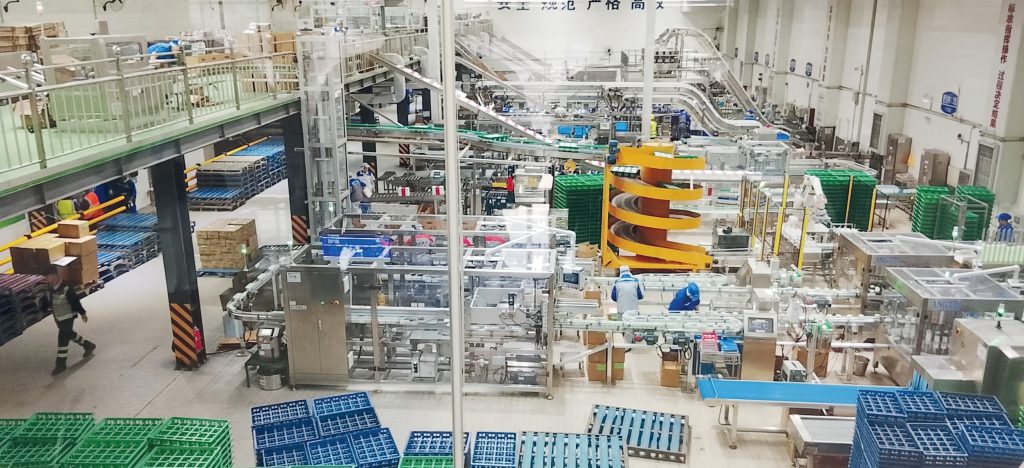
The theoretical discussions took on greater meaning during a visit to HBIS Group Shijiazhuang Iron and Steel Company Limited, which is one of China’s leading industrial manufacturers.
The visit offered a practical appreciation of how long-term planning, technological advancement, infrastructure development and industrial policy can combine to support large-scale production and international competitiveness.
More importantly, the experience illustrated that industrialisation extends far beyond factories themselves. Manufacturing creates opportunities across supply chains, logistics services, technology development and employment creation. It generates linkages that strengthen wider economic activity and contribute to sustained growth.
For Malawi, where industrialisation remains central to the aspirations of Malawi 2063, the key lesson from this is economic transformation will require stronger support for value addition, enhanced manufacturing capacity and greater integration between producers, processors, exporters and investors.
Beyond the economic and industrial lessons, the cultural visits provided equally valuable perspectives on development and nation building.
Visits to Tiananmen Square and the Forbidden City reflected a society that has preserved its historical heritage while simultaneously embracing rapid economic modernisation. The ability to balance tradition with progress has been an important feature of China’s development journey.
Similary, a visit to the Great Wall showed that transformative achievements require patience, commitment and long-term vision. Built over centuries and stretching across vast landscapes, the Great Wall stands as a symbol of what can be accomplished through consistency and strategic planning.
In many ways, the same principle applies to economic development where for example sustainable growth can rarely be achieved through quick fixes, rather through coordinated effort and long-term investment.
Throughout the seminar, another recurring theme was the importance of coordination. Investment promotion agencies, government ministries, regulators, financial institutions, business associations and the private sector all perform different functions. However, their effectiveness depends on how well they work together
When institutions operate in isolation, investors often encounter delays, uncertainty and unnecessary costs. When institutions operate as a coordinated ecosystem, they create a more attractive environment for investment and business expansion.
This lesson is particularly important for Malawi as it seeks to enhance collaboration among key institutions such as the Malawi Investment and Trade Centre (Mitc), the Malawi Confederation of Chambers of Commerce and Industry (MCCCI), sector ministries, local authorities and regulators.
As countries compete to attract increasingly mobile global capital, comparative advantage is no longer determined solely by natural resources or geographic location. The quality of institutions, the consistency of policies and the efficiency of systems that support business growth increasingly shape it.
Lessons from the seminar showed that Malawi’s aspirations for industrialisation, export growth and job creation are attainable. However, progress will depend on strengthening project preparation, improving investor-servicing systems, enhancing market intelligence, investing in infrastructure and fostering stronger institutional coordination.
China’s experience shows that economic transformation does not happen by chance. It is the result of deliberate planning, effective institutions and sustained investment over time.
For Malawi, the challenge is not whether opportunities exist. The challenge is ensuring that the systems surrounding those opportunities are strong enough to convert potential into lasting economic growth, increased investment and meaningful private sector development.