The likelihood of El-Nino weather pattern in the 2026/27 growing season is very high with an 80 percent probability forecasted. This could lead to reduced crop yields, increased failure risk and reduced household income.
Government has since stepped up preparedness, including a national El-Nino response plan estimated at K488.5 billion, to support the preparedness, mitigation and response activities. This plan aims to cover interventions in agriculture, food security, water, energy, social protection, disaster preparedness and early warning systems.
Although this season’s El-Nino is expected to be one of the high-impact ones in over a decade, it is not going to be a lone event for there have been perpetual occurrences of El-Nino and other natural disasters that affect food production, leading to perpetual perennial hunger.
While government and development partners make plans in preparedness and impact-mitigation of the same, especially in order to reduce negative impact on food productivity, experts are advising that another sure way is the adoption of genetically-Modified (GMO) crops that would withstand drought.
In this regard, it is believed that Malawi should reconsider its cautious approach to the adoption of genetically-modified maize as climate change increases the risks of drought, pests and declining agricultural productivity.
Lilongwe University of Agriculture and Natural Resources (Luanar) agricultural scientist Kingdom Kwapata, in an interview with The Nation, said Malawi should consider drought-tolerant genetically-modified maize as part of its preparations for future climate shocks.
He said such varieties are being researched elsewhere but are not, currently, available in Malawi. He added that the country should invest in technologies capable of strengthening food security before severe droughts occur.
“The primary objective for the country should be to feed its people,” Kwapata said.
He pointed out that Malawi’s recurring food shortages and reliance on imported maize should prompt policymakers to weigh food-security considerations alongside concerns about international trade.
Kwapata attributed part of Malawi’s reluctance to adopt genetically-modified crops to concerns about trade, particularly with European markets, where resistance to GMO products could affect African countries with trading relationships with Europe.
He questioned whether those concerns should take precedence over domestic food security.
“Are we talking about trade or are we talking about food security?” he asked.
Kwapata also warned that Malawi could face increasing pressure to reconsider its position if neighbouring countries expand their use of genetically-modified crops, potentially increasing regional trade in such products.
Meanwhile, National Commission for Science and Technology director of research Lyson Kampira said Malawi was losing opportunities by taking too long to adopt agricultural biotechnology.
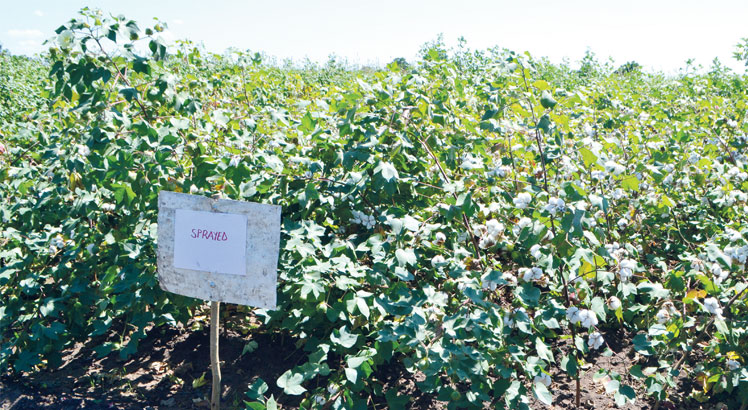
He said Malawi had already completed the process of adopting Bt cotton, but the journey had taken too long.
“There are no drought-tolerant GMOs in the country,” he said, adding that neighbouring Mozambique had adopted drought-tolerant crops.
He said public perceptions that genetically-modified crops were unsafe for human consumption remained one of the obstacles to wider adoption.
Kampira said there was also a lack of consensus among government institutions over genetically-modified crops.
“For maize, we don’t seem to have one voice, and one standing,” he said.
Under Malawi’s biosafety regulatory framework, applicants seeking to conduct biotechnology activities must obtain permission from the National Biosafety Registrar.
Kampira said the research process generally begins with a confined field trial, followed by multi-location trials across the country and then on-farm trials involving farmers.
The results are subsequently submitted to the Agricultural Technology Clearing Committee for evaluation of the research procedures and findings. The application can be rejected, approved with conditions or accepted, he said.
Kampira said the Science and Technology Act provides for biotechnology activities under strict conditions, while the NCST is involved in raising public awareness about the technology.
The debate comes as Malawi continues to face pressure to increase maize production while dealing with climate-related risks, including drought and pest outbreaks.
For now, however, the country’s Bt maize programme remains at research stage. Commercial cultivation will depend on completion of the trials and subsequent regulatory approval.
The issue leaves policymakers facing a choice between maintaining a cautious approach to genetically-modified crops and exploring their potential role in addressing persistent food-security and climate-related challenges.
Malawi has a National Bio-technology policy and a National Biosafety Act which were developed to safeguard or regulate the use, importation and, also, production of GMOs in Malawi.
They were developed around 2001 when there was a major drought around the southern African region, including Malawi and a lot of countries refused food aid from the US on the premise that it was genetically-modified. Malawi didn’t have a policy on issues to do with GMOs; hence, the development of the two policies.
According to agricultural policy expert, Tamani Nkhono-Mvula, although many argue that it is safe for people to eat GMO crops, there are a lot of ethical questions that remain unanswered.
Said Nkhono-Mvula, “The major issue that promote fear is that even in those countries that promote GMO crops, such maize for instance, is fed to animals and not fed directly to humans.
The question is, what is making those countries not to consume and yet they are encouraging countries like Malawi to eatvthe same.”
On the other hand, according to Nkhono-Mvula, in terms of answering challenges to do with drought the GMOs have proven to be a quick solution to that.
He gave an example that, there have been trials for BT Cotton in the country which, has passed the tests, of course cotton is not a food crop therefore the tests may not have been as rigorous as a food crop would be.
He, however, pointed out that there are still challenges in need of being ironed out to do with it, saying: “Let’s say if this cotton is grown in Malawi and then its genes get into our traditional varieties of cotton, what will be the effect on the environment or insects that depend on all these cotton varieties?
“All these questions there is no clear cut answer that is being given. Unless we are assured, unless these ethical issues have been addressed I am not seeing a problem us growing these GMO crops.”