Malawians are set to pay more to access tap water following the government’s approval of new tariffs for the country’s five water boards, leading to increases of between 11 and 69.99 percent.
The Central Region Water Board (CRWB) has the highest increase as the domestic tariff has risen by 69.99 percent while the Southern Region Water Board (SRWB) has increased the same by 50 percent.
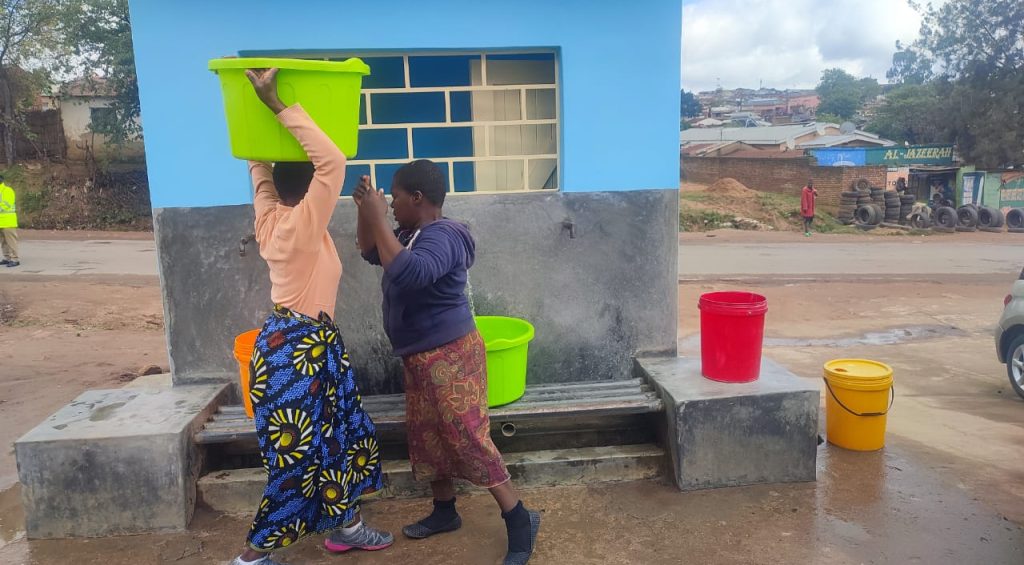
On its part, Northern Region Water Board (NRWB) has raised its kiosk and domestic tariffs by 36.32 percent and 35.64 percent, respectively while Blantyre Water Board (BWB) has implemented a 36 percent domestic tariff hike and Lilongwe Water Board (LWB) 20 percent.
The boards have long justified tariff adjustments, stating that they are necessary to keep pace with rising costs of producing and supplying water and to improve their financial sustainability.
But commentators want the boards to demonstrate that customers will get better services in return.
Increases justified
In a letter to all the water boards dated August 7, Principal Secretary for Water Development Faidess Mwale urged the utilities to explain the new tariffs to consumers and assure them that the increases will translate into improved service delivery.
“The ministry expects that, with the implementation of the new tariffs, the water boards will strengthen their financial and operational performance by reducing non-revenue water, strengthening revenue collection and cost recovery, and ensuring their capacity to meet debt service obligations and honour existing financial commitments,” she said.
NRWB yesterday justified the increase in a statement, saying it is necessary to sustain reliable water supply and improve service delivery.
CRWB chief executive officer Justin Kathumba is on record as having stated that tariff adjustment alone would not restore the board’s financial position, but would be blended with a turnaround programme to ensure that customers benefit while the board improves its financial sustainability.
New tariffs
At CRWB, individual customers will pay K4 577.48 for consumption of up to 4 000 litres per month, up from K2 692.64. This represents a 69.99 percent increase.
Meanwhile, communal kiosks are now charged K480 per cubic metre from K320.96, representing a 49.55 percent increase.
SRWB is charging K5 010.39 for domestic consumption of up to 4 000 litres per month, up from K3 340.26, representing a 50 percent increase. Communal kiosks are now charged K250 per cubic metre, up from K191.28, representing a 30.7 percent increase.
For NRWB, customers sourcing water from kiosks will now pay K942 per cubic metre, up from K691, representing a 36.32 percent increase. Domestic users consuming between zero and 3,000 litres will pay K2 725 per cubic metre, up from K2 009, an increase of 35.64 percent.
At BWB, kiosk water has been maintained at K0.66 per litre, while domestic customers will pay K2.38 per litre for the first 5 000 litres, up from K1.75, an increase of 36 percent.
For LWB domestic customers, they will now pay K4 562 for consumption of up to 5 000 litres per month, up from K3 802, representing a 20 percent increase.
However, LWB has maintained the tariff at K299 per cubic metre for kiosks it manages while e-Madzi kiosks remain at K525 per cubic metre. However, the tariff for community-operated kiosks has increased to K299 from K269, representing an 11 percent increase.
The water boards last received tariff increases on September 1, 2024.
Pinch for low income earners
While the water boards argue that higher tariffs are necessary, concerns remain about their impact on households, particularly amid high living costs.
According to the 2026 Malawi Economic Report, the five water boards recorded an average non-revenue water (NRW) rate of 33.4 percent in 2025, well above the international benchmark of 25 percent.
NRWB recorded 36 percent, SRWB 27 percent, CRWB 29 percent, BWB 43 percent and LWB 32 percent.
Centre for Social Concern economic governance officer Agness Nyirongo said yesterday that where a significant proportion of treated water is being lost before it is paid for, consumers should not be expected to carry the entire cost of those inefficiencies through higher tariffs.
She said: “For households already struggling to meet food, transport, electricity, education and health expenses, an increase in water charges will further squeeze disposable income.
“Tariff increases should come with a social contract between consumers and water boards: if consumers pay more, the quality, reliability and accountability of the service must also improve.”
In a separate interview, agriculture economist Steve Kaira said the tariff increases reflect rising operational costs but feared that hikes exceeding 30–40 percent risk affordability, requiring balance between cost recovery and household incomes.
On his part, Consumers Association of Malawi executive director John Kapito issued a statement yesterday, saying the timing is insensitive, as consumers are already spending a large portion of their income on basic needs.
He said: “You cannot ask a mother in Area 25 or Ndirande to pay more for water that comes twice a week, is dirty, or doesn’t come at all.
“Water boards should publish quarterly service delivery reports — hours of supply, water quality results and complaints resolved. The Ministry of Water should ensure tariff applications are justified and consult consumers meaningfully.”
Financial, operational challenges
The financial position of the boards is equally concerning. NRWB’s net loss increased from K10.3 billion in 2024 to K14.7 billion in 2025 while BWB significantly reduced its loss from K37.8 billion to K10.2 billion over the same period.
CRWB moved from a K1.6 billion profit in 2024 to a K1.7 billion loss in 2025 while LWB recorded a K1.2 billion profit in 2025, although this had fallen to K53 million by September 2025.
The boards are also struggling with unpaid bills, with public institutions among the major debtors.
At CRWB, for example, public institutions owed the Board approximately K9.517 billion, of which K8.5 billion was owed by the Malawi Defence Force (MDF).
For consumers, however, the real test will be whether paying more for water results in more reliable supplies, better quality, fewer interruptions and improved customer service.