Government has ordered members of Parliament (MPs) to stay away from council meetings and has dissolved all village and area development committees (VDCs and ADCs) established under the previous administration, calling for their reconstitution based on performance.
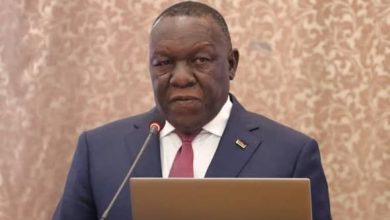
Minister of Local Government and Rural Development Ben Phiri issued the directives in a ministerial statement in Parliament on Monday, saying the reorganisation would enable councils to form new five-year committees aligned with national priorities.

“This reconstitution will enhance transparency, accountability and effective grassroots participation in local development,” he said.
Phiri further outlined a new interim structure that sidelines MPs in the administration of the Constituency Development Fund (CDF), instructing district commissioners (DCs) and chief executive officers to be the ones to oversee the fund.
He explained: “Projects will be identified through the VDCs and ADCs. The chairpersons of ADCs will be responsible for filling out project identification forms, which will be submitted to their respective DCs.”
The minister’s statement, which will see a shift in the administration of local development funds and power dynamics at the grassroots level, follows a May 2025 ruling by the High Court of Malawi sitting as a Constitutional Court. The ruling outlawed a provision in the Local Government Act which handed MPs voting rights at council level as ex-officio members, arguing that the arrangement compromised their oversight role and was unconstitutional.

In the case, which the Attorney General (AG) later appealed, the court effectively ordered legislators off the administration of CDF and Water Resource Fund, citing conflict of interest and breach of separation of powers.
Former AG Thabo Chakaka Nyirenda faulted the court for ordering legislators off local councils, saying the matter was outside the scope of the petition.
In a statement issued at the time, the AG said with instructions from his client, he was going to challenge the decision in the Malawi Supreme Court of Appeal.
But Ministry of Justice spokesperson Frank Namangale yesterday confirmed that the appeal was withdrawn along the way.
Addressing the House, Phiri advised MPs to comply with the court order.
Said the minister: “There is a new direction following the High Court ruling… In compliance with the ruling, I am advising honourable members of Parliament not to attend the council meetings.”
On the dissolution of all VDCs and ADCs, Phiri noted: “The committees were put in place by the previous administration and may have served to the satisfaction of those who established them. For that reason, it is unlikely that such committees can serve our interests as well.”
The new councils started holding their first meetings yesterday to elect leaders and synchronise local governance with broader development goals.
Furthermore, the minister announced that the CDF would remain unchanged in the current fiscal year but would undergo reforms in the 2026/27 financial year that will see the allocation increase from K220 million to K5 billion per constituency.
In an interview yesterday, Malawi Local Government Association (Malga) executive director Hadrod Mkandawire said there should be no problem with the new CDF arrangement.
“Basically, there should not be a problem with this arrangement, because at the end of the day, the controlling officers will still be reporting to the council… So ordinarily, as members of the council, the councillors are not supposed to be managing any development projects… on a day-to-day basis. That’s supposed to be done by managers,” he said.
Mkandawire emphasised that the councillors’ role is to provide oversight.
“So in a nutshell, the councillors will provide oversight to the projects’ delivery and public finance management within the existing framework,” he said.
The sentiment echoes the Constitutional Court’s judgement, which stated that the previous arrangement “undermined the principles of good governance by placing MPs in a position of conflicting responsibilities.”
Meanwhile, governance experts have expressed cautious optimism about the increase in the CDF allocation, urging government to institute mechanisms for efficiency, transparency and accountability in the funds’ management.
In an interview, Centre for Social Accountability and Transparency executive director Willy Kambwandira said the proposal to reform CDF, especially with massive increase from K220 million to K5 billion per constituency, raises both hope and concerns.
“If properly managed, this can empower communities to drive meaningful local development. However, without accountability mechanisms, this will be a new frontier for abuse and political capture,” he warned.
Kambwandira also stressed the importance of transparent management of the funds and the need to prevent politicisation.
Commenting on the broader decentralisation agenda, governance expert Wonderful Mkhutche welcomed the move but called for further reforms.
He said: “The increased allocation of K5 billion is an exciting change in the decentralisation process. But for this to be effective, we need new structures to handle this. The reconstitution of the village and area development committees, based on performance, is one way to ensure this. However, we need more reconstruction of the local government.
“We also have to think of making strong regional governments that have their own leadership, with the central government overseeing their operations. This will quicken the process of development in our local areas.”
While the reforms are seen as steps toward stronger decentralisation, Mkhutche warned that much work remains, citing capacity constraints at the local council level.
Observed Mkhutche: “We need enough personnel at the local government level to ensure we enhance the capacity to handle the increased CDF. As we stand, the present structures have too many holes and leakages due to shortage of capacity and personnel.”
On his part, political analyst Clemence Alfazema said the reconstitution of ADCs and VDCs is a necessary step, but cautioned that sometimes politicians can utilise them to have people in place who sympathise with them.
He, however, faulted the minister’s focus on CDF, arguing: “A constituency is simply for political mobilisation as it doesn’t have structures for managing public resources and the court ruling ordering MPs’ hand off the CDF was relevant. Continued existence of the CDF makes the situation complex as it won’t have ownership, hence making it irrelevant.”
The new guidelines for the reformed K5 billion CDF are currently being developed and will be presented to Parliament after Cabinet approval.
The administration of CDF has been an issue of concern for a long time, with MPs and council officials finding themselves on the opposite side of the law on misuse of the funds.
But even with reports of abuse of funds, the CDF has increased progressively since its inception in 2006.
From an allocation of K1 million in 2006, the fund was raised to K3 million in 2013, K10.5 million in 2016, K19.5 million in 2018 to K30 million in 2019, K40 million in 2020; K100 million in 2022/23 financial year and in the current financial year it is K220 million.