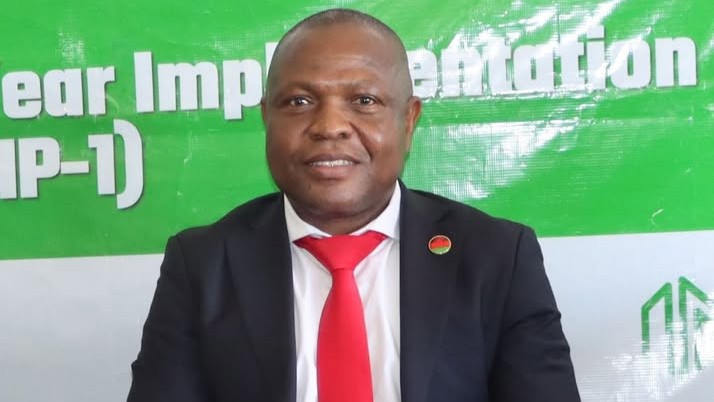
National Planning Commission (NPC) director general Frederick Changaya says the country’s main agricultural problem is not lack of resources, but failure to transform them into economic value.
Briefing the media in Lilongwe yesterday as government prepares to court local and international investors at the National Agri-Food Systems Investment Symposium scheduled for Monday at Bingu International Convention Centre, he said in an ideal situation the private sector should provide capital and commercial expertise while government should ensure policy consistency, infrastructure, land and a conducive investment environment.
a resources problem. | Nation
Said Changaya: “Malawi has never had a resources problem. We have a returns problem. We have soil. We have water. We have the weather; a sun that does not ration itself… What we have lacked is the architecture to turn that endowment into value.”
He cited Vietnam’s agricultural transformation where private investment, supported by public infrastructure, markets and regulation, improved returns from agriculture.
GIZ Malawi country director Inge Baumgarten said private investment was critical to transforming agriculture on the scale Malawi needs.
“We cannot make the big leap… without private investment,” she said, stressing the need for predictable policies, appropriate regulation, infrastructure and efficient investment processes.
Baumgarten said the meeting should go beyond identifying opportunities by developing investment-ready projects and partnerships that can continue after the event.
She noted that increasing production alone would not be enough if Malawi continued to lose value through poor storage, processing and marketing.
NPC acting director of Learning and Development Andrew Jamali listed low productivity, limited mechanisation, inadequate access to finance, climate shocks, post-harvest losses, weak market links and low private investment among the sector’s challenges.
The symposium will showcase investment opportunities in commercial farming, livestock, irrigation, mechanisation, biotechnology, digital agriculture, agro-processing, storage, cold-chain infrastructure, agricultural finance and insurance.
Secretary for Industrialisation, Business, Trade and Tourism Wiskes Nkombezi said investment in these areas should help Malawi move away from exporting mainly raw agricultural commodities.
“For us, agri-food systems investment is industrial investment,” he said.
Nkombezi said government wants to build value chains linking farmers and cooperatives to processors, manufacturers and markets to increase local processing, create jobs, generate foreign exchange, reduce imports and expand exports.
About 250 people, including investors, commercial farmers, agribusinesses, financial institutions and development partners, are expected to attend the symposium.
The symposium is expected to result in investment partnerships and commitments in priority agri-food value chains.
Malawi 2063, the country’s long-term development strategy that seeks to transform Malawi into a wealthy and self-reliant industrialised, upper middle-income country by the year 2063, is anchored on three pillars of agriculture productivity and commercialisation, industrialisation and urbanisation.