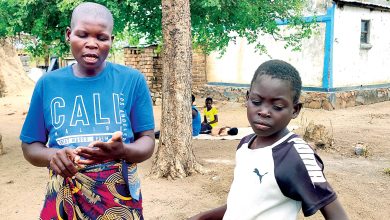
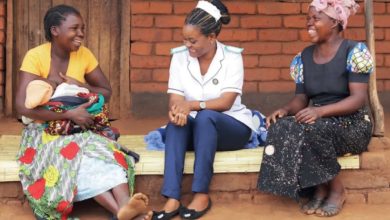
They are among the lowest-ranking cadre of the healthcare workforce, but disease control and surveillance assistants, formerly known as health surveillance assistants (HSAs), are the eyes and ears of the country’s war on public health threats. Our Staff Writer JAMES CHAVULA tracks how their increasing numbers on the ground are transforming the provision of life-saving services in Chikwawa.
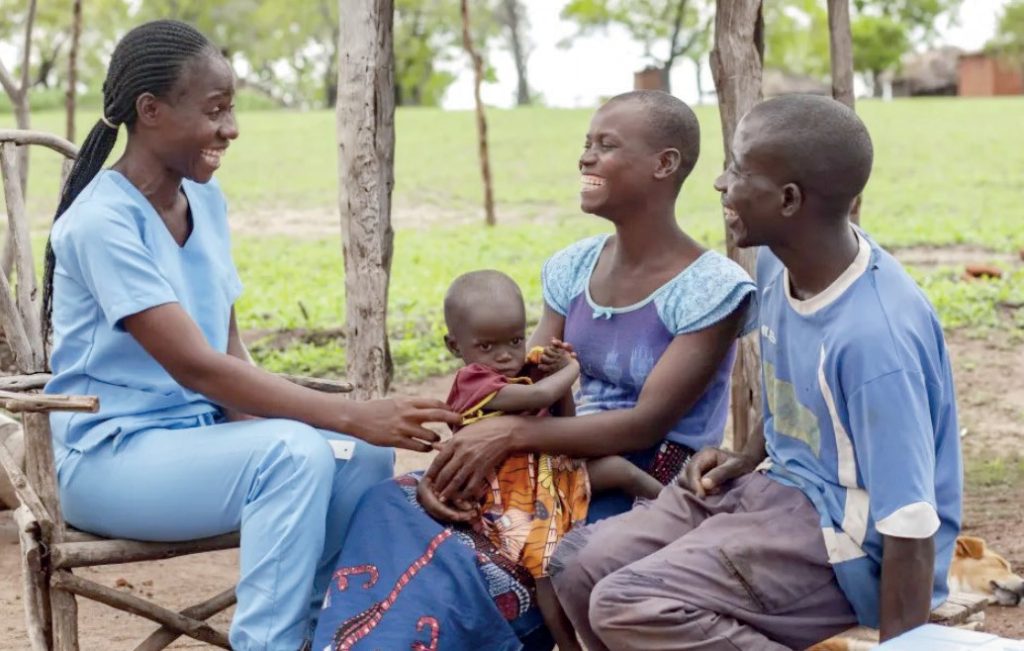
Health surveillance assistants (HSAs) are the foot soldiers of Malawi’s healthcare system.
The allure of the community health workers’ sky-blue uniform is rising, with hopefuls filling community grounds to attend walk-in job interviews convened by the government last year.
The growing popularity and public confidence lured award-winning radio journalist Kabisa to hang up her microphone in favour of serving a hard-to-reach community, particularly women and girls.
Since September 1 2024, Kabisa has been going door-to-door in Chamanga Village in Chikwawa District, taking life-saving services and health tips closer to the rural population that fondly calls her “their doctor” on behalf of Therere Health Centre.
“The growing interest in health services and the smiles I encounter everywhere I go assure me that the people we serve appreciate our contribution to their health and well-being,” says Kabisa.
She is one of 30 HSAs that Chikwawa District Health Office recruited with Unicef Malawi support to improve service delivery in areas with overwhelmed clinics and caregivers.
The newly recruited HSAs were deployed across Chikwawa to strengthen the delivery of healthcare services with support from the UK’s Foreign, Commonwealth and Development Office (FCDO). They received bicycles, essential supplies and training on integrated primary healthcare services to improve their capacity to provide quality services in communities.
District environmental health officer Lewis Tukula says this is a significant boost for the district, where nearly a quarter of vacancies for HSAs were unfilled in 2022.
“Staffing gaps emerged as a big issue when we assessed bottlenecks to efforts aimed at accelerating health and nutrition outcomes. The district requires 650 HSAs, but we had only 495 in place. The workload was too high because a few HSAs used to serve large areas, and some villages had none. Unicef helped us narrow the gap in 30 of our 33 health facilities,” he says.
Tukula salutes the community health workers as the healthcare system’s “eyes and ears on the ground.”
“HSAs play a crucial role,” says Tukula. “They detect diseases and risk factors at the source, reducing congestion in health facilities.”
Kabisa holds diplomas in journalism and special needs education.
She uses her skills to serve her community with joy, empathy and attention to detail. The area is home to nearly 1 300 people, including 100 boys and 110 girls under five.
“I left Blantyre City because hard-to-reach communities deserve quality healthcare too. I want to make an impact where my contribution is needed most. I had written several news articles about the problems faced by rural women and children, but I wanted to be part of the solution on the ground,” Kabisa says.
She is one of 10 HSAs at Therere Health Centre along the boundary between Malawi and Mozambique. Previously, nine used to serve about 16 000 people, including Mozambicans.
Eric Mathewe, clinician in charge at Therere Health Centre, says Unicef support has reduced the area each HSA used to cover.
He states: “HSAs are trusted primary caregivers. Community members trust them and we need more like Kabisa. She takes essential health services and information to communities where some patients and pregnant women were shunning our health centre due to long distances and lengthy queues.
“As the HSAs increase, fewer children miss out on routine immunisation and households now receive health talks on the importance of diversified diets, sanitation, hygiene and other health behaviours. They no longer worry about long walks to the health centre as they receive essential services right in their villages.”
All the HSAs in Therere jointly conduct village clinics that attract over 150 clients a day. They weigh children under five, provide immunisation, treat minor illnesses and screen for malnutrition.
Cuddling her 14-month-old third-born baby, Mary Masautso of Chamanga Village said: “Our health worker explains health issues clearly and with a smile. She is a role model for girls to stay in school instead of getting married and becoming mothers too young.
“Before her arrival, the village clinics used to take long, leaving us with little time to care for our homes, children and crops. With more hands at work, we sometimes come back by 10 am.”
And Kabisa keeps working harder.
“I want to be remembered as a public servant who selflessly served a remote community and gave children a healthy start to become reliable citizens instead of dying from preventable conditions fuelled by poor sanitation, malnutrition, malaria and low immunisation.”