Four in five Malawian children aged 10 cannot read with understanding while nine in 10 lack expected mathematics proficiency, a report has shown.
Data in the revised National Education Sector Investment Plan (Nesip) 2026-2030 show that only 18.9 percent of 10-year-olds meet the expected reading proficiency standard, while mathematics proficiency stands at an even lower 12.6 percent.
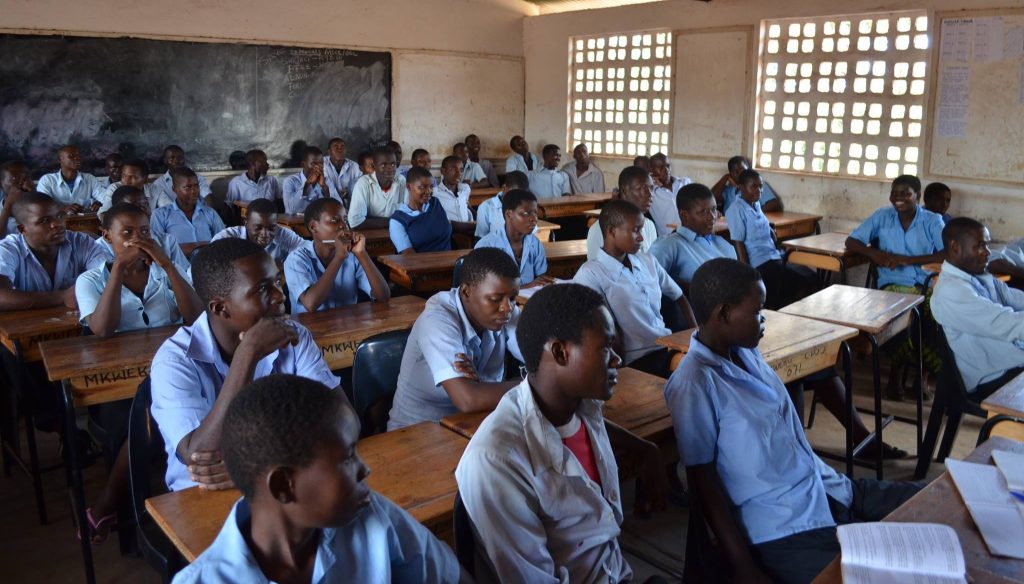
The figures underscore a widening gap between getting children into classrooms and ensuring they acquire the foundational skills needed to progress through school and contribute meaningfully to the economy.
Minister of Education, Science and Technology Bright Msaka, speaking in Lilongwe yesterday at the opening of the 2026 Education Joint Sector Review, said Malawi must shift its focus from school enrolment to measurable learning outcomes.
“Malawi needs an education system that equips learners with the knowledge and skills required to contribute meaningfully to national development. As government, we are now prioritising foundational literacy and numeracy through the Malawi Foundational Learning Programme, preparatory instruction and continuous professional development for teachers,” he said.
During the function, the minister also launched the revised Nesip, which sets out the government’s education priorities and targets for the next five years.
Under the revised plan, government aims to increase reading proficiency among 10-year-olds from 18.9 percent to 40 percent by 2030, while mathematics proficiency is expected to rise from 12.6 percent to 27 percent.
However, even if these targets are achieved, most children would still fall short of expected proficiency levels.
The challenge extends beyond classroom performance. The Nesip’s 2025 performance scorecard puts the primary school completion rate at 44 percent, against a target of 50 percent. This represents a decline from 56 percent in 2022 and 48 percent in 2023.
The plan further shows that only 45 percent of learners entering Standard One progress through to Standard Eight, while repetition stands at 25 percent and average dropout at 3.7 percent.
Resource constraints compound the problem. Malawi has a pupil-qualified teacher ratio of 67 to one and a pupil-classroom ratio of 87 to one, while primary schools average seven learners per textbook.
Unicef country representative Penelope Campbell said the scale of the crisis was reflected in separate findings showing that only one in five early-grade learners attained age-appropriate literacy.
“Success is not only how many children enter school, but it is also what they learn and the skills they gain. Improving learning outcomes requires investment in teachers, teaching and learning materials, school leadership and regular assessments to establish whether children are acquiring the skills expected at their level,” she said.
Campbell, who chairs the Education Development Partners Group, said shortages of school places, long distances, safety concerns and hidden education costs continued to keep children out of school, particularly girls and learners with disabilities.
She also called for stronger links between education and employers to equip learners with technical, entrepreneurial, digital and green skills relevant to the changing labour market.
University of Malawi Associate Professor Chikumbutso Manthalu said the learning crisis demanded a broader rethink of the purpose of education and its contribution to national development.
He said the education system should produce individuals capable of applying knowledge, thinking critically, innovating and developing practical solutions rather than merely accumulating academic qualifications.
“Education should not just be about mastering facts and content. We should be asking what kind of individual we are developing and what capacities we are giving them to transform our society,” said Manthalu.
He warned that failure to develop such capabilities could undermine productivity in sectors such as agriculture, industry and technology, where economic transformation increasingly depends on innovation and problem-solving.
Civil Society Education Coalition executive director Benedicto Kondowe said Malawi had focused heavily on expanding school enrolment since the introduction of free primary education in 1994, without giving learning outcomes comparable attention.
The financial implications of the crisis are also significant. The Nesip estimates that repetition, dropout and under-age and overage enrolment cost the country $161 million annually.
Of this amount, $67 million is attributed to repetition, $10 million to dropout and $84 million to underage and overage enrolment, resources that could otherwise support improvements in teaching, learning materials and school infrastructure.
Secretary for Education, Science and Technology Ken Ndala said the revised framework shifts the sector’s priorities towards foundational learning, teacher quality, access to secondary education and stronger pathways into technical, entrepreneurial and vocational training.
Proposed interventions include strengthening teacher preparation and professional development, improving the supply of teaching and learning materials, expanding digital learning and reviewing aspects of the Grade Promotion Policy to support remedial learning and reduce repetition.
The learning crisis carries implications beyond the education sector. Children who cannot read with understanding or apply basic mathematics are less equipped to acquire advanced knowledge, develop technical competencies and participate productively in the economy.