The flagship $315 million (about K546 billion) Salima-Lilongwe Water Supply Project is at risk of missing its January 2027 deadline after a K372 billion funding gap left construction less than one-fifth complete.
The delay threatens efforts to address worsening water shortages affecting households and businesses across the Central Region.
A progress report on the project which is being implemented by Salima-Lilongwe Water Supply Company (SLWSC) with Khato Civils-South Zambezi Joint Venture serving as the engineering, procurement and construction contractor shows that physical works are at just 18.9 percent despite 91.7 percent of the contract period having elapsed.
The project, which commenced on January 20 2025 is scheduled for completion on January 19 2027.
According to the report, government has so far secured $100 million (about K173 billion) through loans from local commercial banks, leaving $215 million (about K372 billion) yet to be mobilised.
Of the amount raised, approximately $95 million has been disbursed to the contractor to finance engineering designs, procurement, mobilisation and ongoing construction activities.
The report indicates that engineering designs are approximately 90 percent complete with only final reviews, including an alternative water abstraction design solution, pending.
It further states that procurement progress stands at 20 percent, largely due to foreign exchange shortages.
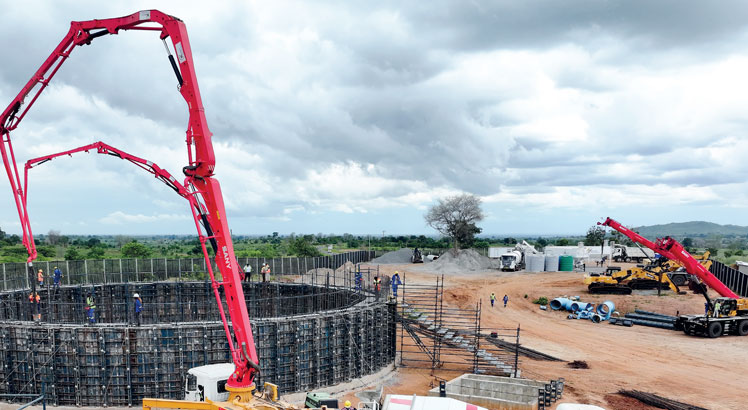
The report further indicates that once the necessary funding is secured, the contractor may require approximately 14 months
to complete the remaining works, raising the prospect of the project extending into 2028.
Resettlement Action Plan which is being handled separately by the Ministry of Lands and Urban Development is also progressing slowly with only K901.8 million, representing seven percent of the estimated K12.835 billion requirement having been paid out in compensation.
Centre for Social Accountability and Transparency (Csat) executive director Willy Kambwandira said it was unacceptable that the Salima-
Lilongwe Water Supply Project continued to stall while citizens endured a worsening water crisis.
Kambwandira said the prolonged delays, lack of transparency and persistent funding challenges raised serious concerns that the project risked becoming a conduit for siphoning taxpayers’ money rather than delivering essential public services.
“It is particularly disturbing that parliamentary oversight appears compromised, with little meaningful accountability demanded from those responsible. Government must publicly account for every kwacha committed and spent on this project, and an independent audit must establish whether public resources have been misappropriated. Malawians cannot continue financing a project that delivers neither water nor value for money while those responsible escape accountability,” said Kambwandira.
Water and Environmental Sanitation Network (Wesnet) executive director Safari Mbewe said the situation was unfortunate for residents of Lilongwe and the wider Central Region who were already struggling to access reliable water supplies.
“Lilongwe is currently facing a water crisis. Taps cannot run 24/7 and Lilongwe residents were looking forward to this project to ease their water woes. Remember, water is life. I call upon government to do everything possible to fund this project,” said Mbewe.
When asked about possible sources of funding to complete the project, SLWSC chief executive officer Valentine Kaupa referred this publication to the Ministry of Agriculture and Water Development.
Khato Civils spokesperson Daniel Mababa also declined to comment on whether the funding impasse could lead to an increase in the contract price or affect the project’s completion timeline.
Principal Secretary for Water in the Ministry of Agriculture and Water Development Faides Mwale had not responded to our questionnaire by the time of publication, despite several reminders and follow-up calls.
Ministry of Finance and Economic Planning and Decentralisation, however, said government remained committed to ensuring that the project was completed.
Although the ministry did not outline specific interventions to address the financing gap, its spokesperson Williams Banda, said government was committed to securing the necessary funding, describing the project as a critical investment.
“The project is an SPV (special purpose vehicle) and it is an important project. It is financed through the SPV. Government only caters for compensations, which are way above 50 percent. It is an important project and commitment has been made,” said Banda.
Mzuzu University based economist Christopher Mbukwa said the project remains bankable but that political factors continue to affect its progress despite the years
that have elapsed since its inception.
Mbukwa said government, together with the project implementers, should engage potential funders to secure the financing needed to complete the project.
He warned that further delays could plunge the capital city, Lilongwe, into a water crisis.
“Drawing from experience, the project is bankable and can attract investment that would cover the remaining funding deficit. It will only require serious engagement with potential investors beyond what has happened so far,” said Mbukwa.
He further warned that delays in completing the project could result in additional costs, particularly due to the possible deterioration of equipment and materials already installed.
Parliamentary Committee on Statutory Corporations and State Enterprises chairperson Sylvester Ayuba James said the committee will invite relevant parties to explain circumstances surrounding the project’s implementation and explore ways of ensuring its completion.
James said the committee had already met SLWSC officials, adding that discussions had revealed an increasingly serious problem requiring urgent attention.
The project is expected to provide potable water to 1.5 million people in Lilongwe, Dowa and Salima districts at a time water supply challenges are worsening across the Central Region.
Lilongwe Water Board chief executive officer Daniel Chaweza admitted in an interview this week that the board was currently producing 115 million litres of water per day against a daily demand of 157 million litres for the city and surrounding areas.
Chaweza said the resulting deficit of 42 million litres per day was contributing to intermittent water supply in parts of the city leaving residents struggling to access water.
Central Region Water Board chief executive officer Justin Kathumba also said in a recent interview that annual water production had declined from 9.7 million cubic metres in 2023 to 8.6 million cubic metres in 2026, despite a steady increase in the number of customers connected to the system.
Kathumba said the decline meant water availability for residents across the region remained erratic
Access to safe water remains a nightmare for most Malawians, especially those in rural areas, with many resorting to unprotected water sources and risking waterborne diseases.