Healthcare workers in Malawi’s top hospitals often require you to step on a weighing scale as well as have your blood pressure checked before they attend to your pain points. Some will measure your height, but seldom do they run a tape measure around your waistline.
New evidence shows that the standard scales are not telling diabetes patients the whole truth about deadly fats.
Nearly a quarter of adults attending diabetes clinics in three of the country’s four central hospitals carry dangerous belly fat that weighing scales fail to detect, show the finding published this month in Disease, an international journal.
The study examined 1 356 men and women with Type 2 diabetes at Mzuzu, Kamuzu and Zomba central hospitals between November 2024 and January 2025.
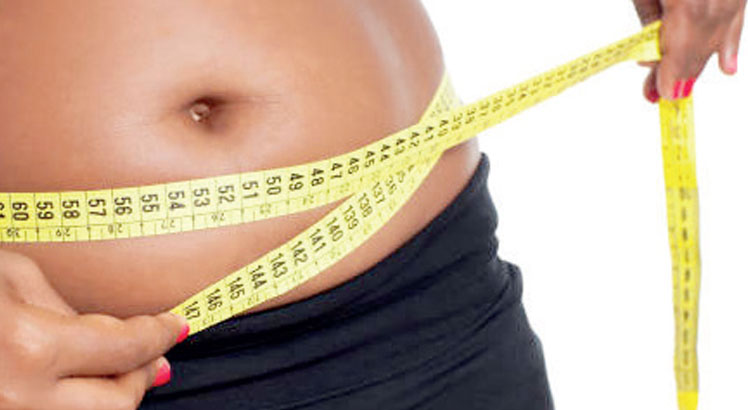
It measured body mass index (BMI)—which measures weight and height to determine whether one is overweight—and waist-to-height ratio to gauge whether a person has too much abdominal fat, also called central obesity.
The weight-for-height measurements do not tell clinical staff where the fat is concentrated in the body.
While BMI classified 61 percent of patients as overweight, the ratio, measured by a simple tape measure and height board, put the figure at 80.1 percent.
Crucially, 23.7 percent—322 people—had central obesity by waist ratio despite recording a normal BMI.
“Those patients would have been recorded as a healthy weight had the diabetes clinic relied on the scale alone,” says lead author Alexander Mboma. “A patient can step off the scale with a perfectly acceptable BMI and still be carrying the fat that does the damage.”
‘A tape costs almost nothing’
The Doctor of Philosophy (PhD) candidate at Taipei Medical University in Taiwan conducted the study along with Professor Alexander Kalimbira, a nutritionist from Lilongwe University of Agriculture and Natural Resources in Lilongwe. Other co-authors are Elias Peter Mwakilama of the University of Malawi and Sub-Saharan Health and Research Institute, Duc Minh Cap of Haiphong University of Medicine and Pharmacy in China and Taipei’s Tuyen Van Duong and Rong-Hong Hsieh.
The co-authors warn that ‘belly fat’ increases the risk of heart disease, high blood pressure, kidney failure and poor blood sugar control.
“A tape measure costs almost nothing and our data suggest it is telling clinicians something the scale is not,” Mboma explains.
In the study, older patients and women carried the heaviest burden due to physical inactivity and frequent eating, including late in the evening.
Women showed markedly higher odds of central obesity than men in both measurements. Women aged 50 and above had higher central obesity than younger participants on all three waist-based measures, consistent with the shift in body fat that accompanies menopause.
According to the findings, patients below physical activity levels recommended by the World Health Organization had about twice the risk of obesity based on the weight-for-height test.
“We are not asking for new equipment or laboratory tests. Many clinics already take height and waist circumference [measurements]. What we are proposing is that the waist-to-height ratio be recorded and acted on alongside BMI and older patients and women be prioritised for counselling on diet and physical activity,” Mboma says.
The study did not measure patients’ blood pressure, cholesterol or other clinical endpoints to predict which patients could develop complications.
Kalimbira, who supervised the work in Malawi, said the waist-to-height ratio constitutes a simple way of finding the location of the fat.
“Too much fat in the abdominal region, widely known as ‘kukula mimba’, increases the risk of complications among people with diabetes as they fail to manage their high sugar levels even when on medication or dietary interventions,” he stated.
However, Kalimbira decried low access to diabetes information and checkups, as many die without knowing their status.
Public health scholar Alison J Price’s study published in The Lancet in 2018 shows that 41 percent of Type 2 diabetes patients in Lilongwe and Karonga districts were undiagnosed before. However, two in every five diabetics on medication could not control the disease, raising the risk of deadly complications.
“The new results are particularly useful in clinical settings, where healthcare workers should not depend on BMI alone to make decisions, as that would miss individuals who need counselling regarding their body fat status, which is a risk factor for complications and early death,” Kalimbira warns.
The research, approved by Malawi’s National Health Sciences Research Committee, received no external funding.
‘Prioritise older women’
It recommends that the tape measure and a height board should be added to routine assessments to capture serious hidden risks.
“Where priority is required because of multiple constraints at the point of service delivery, older and female patients should be prioritised with screening and lifestyle support,” Kalimbira states.