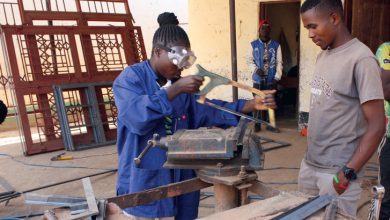
What good can come from self-taught skilled hands as certified artisans struggle to find jobs? This question makes sense until someone without a certificate springs up to fix a sudden or stubborn fault.
The unlikely messiah could be a rural Jim or Jane who expertly repairs a car radio that bamboozled well-trained electronics repairers in your town.
It may as well be an underrated roadside fellow who pinpoints and resolves with remarkable ease and experience a fuel pump fault of your misfiring vehicle that compelled certified mechanics to replace at a high but needless cost that spark plugs or sensors.
Such are the unsung heroes that soon you wonder: “What good does formal certification provide for those with proven skills to practice for years without receiving any?”
In 2021, Malawi embraced a policy shift to start providing certificates to deserving workers who gained skills outside the formal technical, entrepreneurial and vocational education and training (Tevet) system.
‘We need to recognise skills’
Minister of Labour, Skills and Innovation Joel Chigona says Recognition of Prior Learning (RPL) opens limitless possibilities for hidden talent long denied lucrative jobs, public contracts and other proceeds of skills.
He states: “Tens of thousands of young Malawians complete secondary education every year, but very few go to universities, technical colleges and other tertiary education institutions.

“We need to recognise skilled people who obtain competencies outside the formal Tevet system, while expanding access to technical colleges and creating pathways for those with Tevet certificates to pursue higher learning in our universities.”
The certificates confer status on underrated and underpriced informal artisans who help you keep going when your vehicle jerks to a sudden stop.
Their informal skills put you back on the road and work when the going gets tough and trusting an experienced local artisan to urgently come to your aid far outweighs the temptation to call certified geeks from town.
However, a majority of them toil for a rip-off as credible certification for hands-on knowledge remains hard to get for self-taught workers.
“Many Malawians have valuable skills as mechanics, tailors, builders or welders through everyday experience, but do not know how to get certification,” said Secretary for Labour Nwazi Mnthambala.
The initiative aims at recognising all artisans “regardless of when or where they acquired the skill, whether from a relative or on the job”, her statement shows.
The Tevet Authority (Teveta) requires interested skilled persons to complete an application form at their nearest regional trade testing centre and take applicable tests.
Examination fees range from K15000 for Level 1 certificate to K25000 for Level Two and K35 000 for Level three.
“If successful, they shall be awarded a certificate of competence in the modules achieved. If they pass all modules per level, they will get a full Malawi Tevet Certificate for that level,” says Teveta spokesperson Carol Magaleta.
The flexible certification process targets excluded artisans to penetrate the formal labour market, unlocking human capital for transforming Malawi into an inclusive, industrialised upper-middle-income economy by 2063.
Living no onebehind
At least 80 percent of Malawi’s labour force works in the informal sector, where many potential beneficiaries remain excluded from opportunities that require certification.
“Certifying existing skills creates a labour market where no one is left behind,” said International Labour Organisation national coordinator Patrick Makondetsa during a stakeholders meeting held in Salima in April this year to discuss a communication strategy and assessment guidelines.
Teveta quality assurance director Patrick Mputeni said RPL significantly enhances employability, improves productivity and promotes lifelong learning, particularly pronounced among “the youth and workers without formal technical and vocational education”.
Teveta developed an assessment and competence certification tool in collaboration with Employers Consultative Association of Malawi, Malawi Congress of Trade Unions and other industry captains.