Stepping into Nkhata Bay District, chances are high that the word Honala can surely be heard.
Honala is an iconic dance of the Tonga in Nkhata Bay.
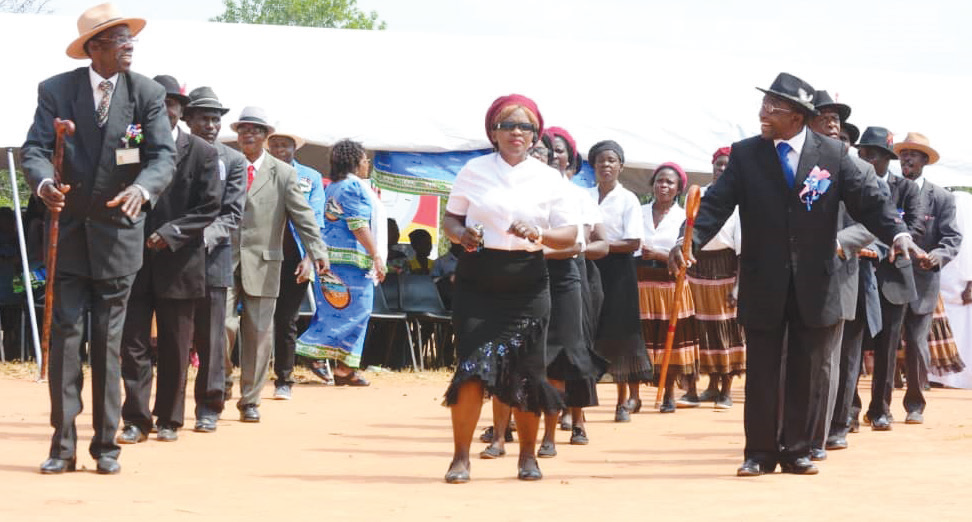
However, the Park Town Band is one of the few remaining honala dance groups, aiding the existence of the dance in the country and among the Tonga people.
Having performed in various venues, their songs are more often broadcast in most airwaves in the country.
Top events hardly pass by without a Park Town Band performance, be it a political rally, cultural festival or any other entertainment gathering.
Honala is a secular dance performed mainly in wedding ceremonies by men and women in elegant clothing dancing to the melodic tunes of live accordion music.
Clocking 93 years, Park Town Band still generates great enthusiasm as it entertains the populace in various events that feature dancing.
Anywhere the group performs, it entertains the gathering with its pleasant acoustic display.
Singing, playing instruments, dancing, masquerading and dramatising are part of the band’s conceptual music package.
According to the band’s general secretary Chester Mangwe, Park Town Band was formed in 1933 by Sheck Phiri.
The band owes its origins to the time many Tonga men were used to travel to South Africa to work in mines.
While in South Africa, most of them were meeting at Park Station. The band’s name was then created in commemoration of Tonga men’s life in South Africa.
So far, the band has lost many of its founding members. As of now, it exists with one long-serving member, Kaligogo Manda, who joined the group in 1947.
“Most of our founding members are not alive. We only have Mr Manda who joined the band in 1947,” said Mangwe.
Meanwhile, the band recruits new members annually and at the moment it has 21 members, including eight women.
“It will not be easy for the band to end, we routinely recruit new members, we also encourage those interested to apply if they want to join the band in the middle of the year,” said Mangwe.
During performances, each member plays his or her role. Some dance while others play instruments and sing.
“Not all are involved in dancing; we have some members that are especially allocated for singing and playing instruments. For instance, we have Wonders Longwe, Typis Salima and William Banda who play instruments, the eight women add colour to the dancing crew,” said Mangwe.
Taking into account all traditional dances celebrated in the country, honala has its share of recognition.
Mangwe said the band has performed in more than 15 000 functions.
“We have performed in countless functions and occasions across the country, be it political, national celebrations such as Independence Day or ceremonial events. To date, a week does not pass without someone calling us to perform even during the reign of founding President Hastings Kamuzu Banda, we were invited to perform at State functions” he said.
Mangwe said when they are invited to perform at a function, they strive to educate the gathering through the songs.
“When we are performing we contribute a lot by attracting the crowds. Just recently, we performed during the Tonga Cultural Festival; we welcomed the guests with our singing and dance. We often interpret the complex message through the songs,” he said.
The band also promotes tourism by performing at various tourism venues for free.
“Knowing that the dance can assist in attracting tourists in the country, we do perform at various lodges in Nkhata Bay and Chintheche for free, hence these lodges are located close to our homes,” said Mangwe.
As a way of trying to maintain the liveliness of the dance, the band has recruited youthful members this year.
“Our youths shun dances like honala fearing that they would be labelled old-fashioned. However, we have to recruit youthful members so that they motivate others to love this dance,” said Mangwe.
Immediate past national chairperson of Mdawuku wa aTonga, Professor John Kalenga Saka, who served in the position for nine years, recognised the band for taking part in promoting Tonga cultural values.
“The band has been part and parcel in promoting Tonga culture. We recognise their impact towards spearheading what the Tonga heritage promotes,” he said.