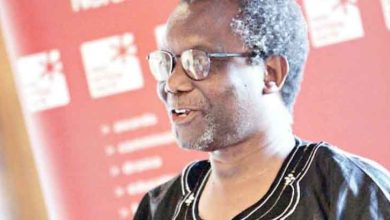
I am deeply saddened by the passing of Jack Mapanje, my former colleague, mentor and friend. He remains, without doubt, Malawi’s finest and most accomplished poet, a literary giant whose death leaves an enormous void in our cultural and intellectual life. His passing is also a deeply personal loss. I learned a great deal from him and only a few weeks ago we were still exchanging messages and speaking on the telephone. In those conversations, we shared jokes about the past. He even recalled, with a touch of self-deprecating humour, how some people in Malawi had circulated rumours of his death two years earlier.
What I will remember alongside his literary achievements is his character. Jack was humble, gracious and gentle, wearing his immense learning lightly. His humour could be disarmingly gentle and devastatingly sharp.

An old photograph takes me back to Chancellor College, then a cobstituent college of the University of Malawi (Unima) now standalone university, in the 1980s, especially the Senior Common Room, where lecturers gathered over coffee, tea and, on Fridays, beer accompanied the usual intellectual discourse. Later, in the darts room, conversation continued between throws, with warnings about who had fallen out of favour or might be reporting to the Special Branch.
The darts room looked innocent enough, but it became a venue for subtle subversive discourse. Under a dictatorship, even an ordinary conversation among friends could acquire political significance. Humour was one way of negotiating that strange world of fear, suspicion and absurdity. Those evenings taught me that laughter under authoritarianism can be serious business.
Jack’s influence on me extended beyond poetry and technique. I admired his ability to turn irony and sarcasm into instruments of criticism. His humour invited readers to look again at familiar things and discover the hypocrisy or cruelty concealed beneath respectable appearances. Of Chameleons and Gods made a lasting impression on me and Jack helped sharpen my appreciation of humour as a way of questioning authority.
Perhaps nowhere is his gift for combining humour with political criticism more striking than in The Chattering Wagtails of Mikuyu. In one of my favourite passages, men who had occupied positions of immense authority and helped sustain repression are brought low. Jack writes:
The Chief eventually went bonkers and is
Quietly lodged at Zomba Central Prison
And the Secretary General opted to hang.
The passage is chilling, mischievous and devastatingly economical. The Chief “went bonkers” and was “quietly lodged” in prison. “Lodged” sounds like a hotel arrangement, making the horror more striking. Then comes the line that has stayed with me: “And the Secretary General opted to hang.” “Opted” suggests a calm choice, applied here to a terrible death. That collision is darkly comic and deeply disturbing. Jack needs no long denunciation; he lets language do its work. The men who helped sustain a system of fear become casualties of the world they created. Power turns upon itself and ridicule proves more devastating than anger.
His treatment of these men raises a wider question: Why has power so often feared poets and independent thinkers? The poet sees beyond the official account; the satirist exposes the ridiculous beneath the solemn. Shakespeare captured this suspicion in Julius Caesar: “He thinks too much: such men are dangerous.” Rulers who demand obedience are wary of independent thought, and sometimes even of laughter.
Jack experienced this hostility under Dr Hastings Kamuzu Banda. His detention without trial at Mikuyu Prison formed part of a wider persecution of intellectuals, journalists and writers. The establishment could not tolerate ambiguity or criticism. In a society built around rituals of reverence, suggesting that the powerful were ordinary human beings, subject to vanity and error, could be treated as subversive.
Jack eventually made his home in Britain, far from the country that shaped his imagination. He left after persecution and imprisonment made life and work at home deeply difficult. Exile may offer safety, but the old home continues to inhabit the writer’s imagination. Jack was perhaps the best-known of many Malawian intellectuals who suffered under Banda’s purges. We should also remember those whose careers and contributions were diminished or lost.
Have we learned from that history? Malawi now has multiparty politics, constitutional protections and freedoms unimaginable during the dictatorship. These are substantial achievements, but institutions alone do not guarantee tolerance of independent thought. How comfortable are those in power with criticism and satire? Do we defend freedom of expression only when we agree? The temptation to silence inconvenient voices is not confined to dictators. A free society protects the right to say what those in authority would rather not hear.
We no longer whisper about the “Life President” or fear Special Branch informers in quite the same way. That is progress. Yet the struggle to value independent thought remains unfinished. Literature helps a society examine itself and confront its contradictions. Sometimes the poet’s service is to ask what everyone else has learned to avoid.
In recent years, Jack and I reconnected. We exchanged messages, spoke by telephone, and he sent me copies of his latest work through my daughter who visited the family in the UK. A few weeks ago, I called him, but he did not answer. The following day he returned my call, apologised for missing it and told me he was in hospital. That apology was typical of Jack: even in a hospital bed, he was concerned about returning a friend’s call and even apologising!
We spoke briefly. I wanted to revive our never-ending debate over whether he or I had won our last game of darts, so many years ago. But I reminded myself that I was speaking to a patient whose strength I could not judge, so I restrained myself. I did not know this would be our last conversation.
As we ended the call, Jack said: “Please keep on writing.”
Those words have stayed with me.
I will remember Jack as Malawi’s outstanding poet, a courageous intellectual, a gracious colleague and a man whose humour illuminated political absurdities. I will remember the darts room, the laughter and conversations, and that final call from a hospital in Britain.
“Please keep on writing.”
I shall try, Jack. I shall try.