The Department of Disaster Management Affairs (Dodma) has repatriated 56 723 Malawians who fled xenophobic attacks in South Africa and will close the voluntary repatriation exercise on Wednesday.
According to Dodma, the returnees, comprising 38 866 men and 17 857 women, arrived through Mwanza Border Post as of Friday. They include 3 988 children under five and 694 pregnant women. Seven deaths were recorded during the exercise.
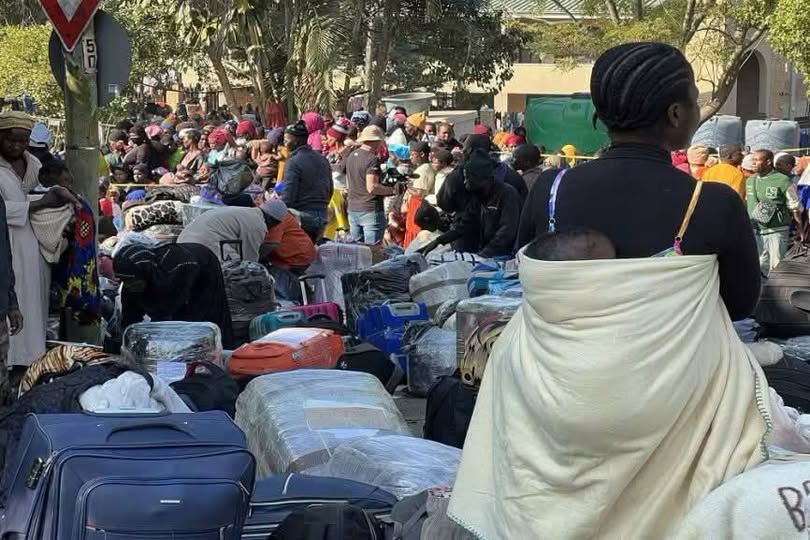
Dodma Commissioner Wilson Moleni said the last buses under the government-funded programme will depart from the Malawi Consulate in Johannesburg and the Malawi High Commission in Pretoria at noon on Wednesday, after which the reception centre in Mwanza will be decommissioned.
“Following the conclusion of the government-funded Voluntary Repatriation Programme, Malawian nationals who wish to return home will be required to make their own travel arrangements,” Moleni said.
The High Commission and Consulate will, however, continue providing consular services, including emergency travel documents.
For many returnees, reintegration poses fresh challenges after they abandoned jobs and businesses in South Africa.
Chisomo Kabazale of Nsanje, who returned in June after seven months working for an Indian employer, said he does not intend to go back.
“I want to rebuild my life here and become financially stable,” he said.
Tereza Banda of Mzimba, a former shopkeeper, said she hopes to start a small business.
“After the struggles in South Africa, my desire is to start afresh and be self-reliant,” she said.
A Dodma assessment of 11 664 returnees found that 83 percent want to remain in Malawi, four percent are undecided, and 13 percent plan to return to South Africa.
Their skills include farming (16 percent), retail and trade (15 percent), business management (12 percent), tailoring (11 percent) and construction (10 percent).
By the end of July, 173 male returnees had secured jobs with a local company.
NGO Ashraful Aid is also piloting support for more than 500 women returnees in Mangochi, with each expected to receive K90 000.
Moleni said government will launch the National Reintegration Strategy for Repatriated Malawians (2026–2030) to coordinate support. Implementation will be through a National Reintegration Secretariat and District Reintegration Committees.
Planned interventions include vocational training, employment placement, agricultural recovery, enterprise support and financial inclusion.
Parliament’s International Relations Committee vice-chairperson Frank Mwenifumbo recently called for a temporary ban on undocumented travel to South Africa until reintegration plans are finalised.
“There is need to harness the skills of returnees and provide development loans to support their economic reintegration,” he said.
As of end-July, over K12 billion had been spent on the exercise.
Dodma spent $5.1 million (about K9 billion) on operations in Malawi and South Africa, while development partners contributed about K1.1 billion in cash. Total partner support, including in-kind, reached approximately K3 billion.
Dodma said it will issue final expenditure figures next week.