It is just about 4.30 pm when a truckload of maize arrives at Kasasile Church of Central African Presbyterian where about 1 200 people displaced by the Malawi Defence Force (MDF) are camping.
There is silence in the air, not much celebration. The leafy prayer house along the boundary between Mzimba and Nkhata Bay districts exiled from the homes where they once lived, farmed and kept livestock.
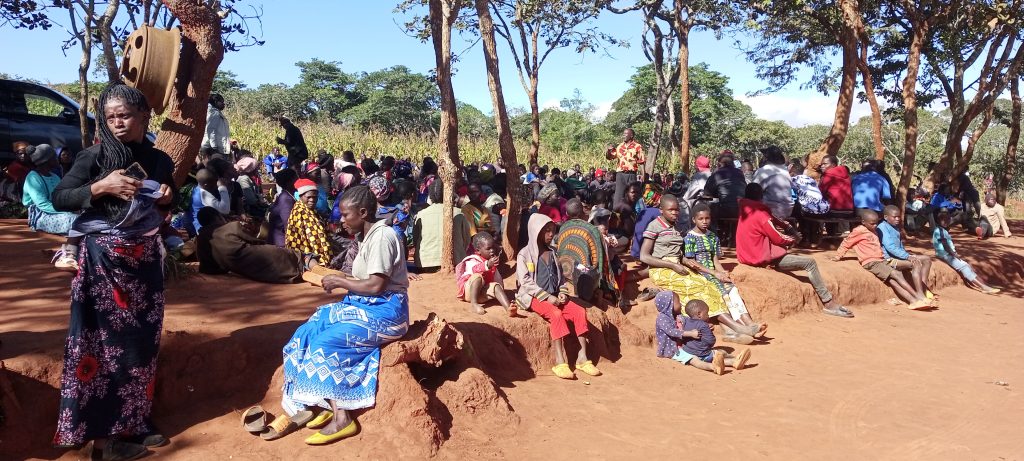
Now they are living on alms in an overcrowded church.
Their predicament began on December 6 2024 when soldiers stormed the villages, torching homes and crops and ordering the entire community off the land some families had occupied for generations.
Moses Phiri, 43, lost property worth millions of kwacha during the raid.
“Now we live like dead people with no food, no hope or plan,” he says. “The soldiers burned everything, leaving everything I built for my six children go up in flames.”
The overcrowded church cannot accommodate everyone at night.
Gift Mwale, 19, sleeps on a bare ground without a blanket. The lucky few use women’s wrapper cloth pieces (zitenje) for warmth and privacy.
Two makeshift pit latrines and two bathrooms serve the displaced population, forcing many to go in the bush.
“Since the invasion, we don’t go to school anymore,” says Grant Hawuli, 19.
Inside the church, clothes, sacks, kitchen utensils and threadbare beddings are bundled in a corner like veils of lost dignity. A basinful of murky water from a nearby well can be seen. There is no safe water.
In a darkroom without bednets, Iness Msongole, 47, lies shivering and vomiting on a thin mat without a blanket. Her guardians beg visiting drivers for a lift to Mzuzu.
On March 26, John Chisale fell seriously ill and died before he could get to a nearby clinic.
At the camp, children eat twice a day—at 11am and 5pm—on a good day.
“Beans and vegetables is our common relish,” says one woman.
Men and boys often walk long distances to tobacco farms in search of piecework to feed their families
“It’s hard to watch my three children slowly lose weight due to malnutrition,” says Esther Milanzi, 25.
For her, there is no privacy.
“My husband and I sleep like strangers in public,” Milanzi laments.
Donarose Nyasulu, 56, was visiting her son in Monkey Bay when the soldiers arrived.
“When I heard my house was burnt, I thought they were joking,” she recalls. “Everything gone.”
Her loss includes goats, chickens and 20 bags of maize.
Conference of Catholic Bishops in Malawi chairperson Bishop Martin Mtumbuka terms the soldiers operation cruel.
In April, he said in the presence of President Lazarus Chakwera, during the consecration of new Mzuzu Diocese bishop, that no one is above the law and urged the soldiers to stop treating civilians as if the country is being ruled by a military junta.
“Nobody is above the law,” he said.
In Kasasile, the displaced families’ leader, Albert Mtungambera Harawa, says some families have lived in Kasasile for three or four generations.
“We didn’t come to Kasasile yesterday,” he says.
The forced displacement has affected at least 40 children in secondary school.
The closure of Bunji Junior Primary School, once run by the Catholic Church, has forced 240 learners to quit school.
“Only a few still go to Kasasile Primary School, but sights of soldiers traumatise them,” Harawa says.
Six months after the military raid, government, through Department of Disaster Management Affairs (Dodma), delivered 656 bags of maize weighing about 32.8 tonnes.
Each day, the displaced community consumes five 50-kilogramme bags.
“In three weeks, this food aid will be gone,” says camp manager Joshua Msiska. “They brought maize, but where is the relish, clothes, blankets and shelter?”
Dodma spokesperson Chipiriro Khamula says the food aid signals that government stands “ready to help”.
“If the council reports more needs, we’ll coordinate further assistance,” he says.
Nkhata Bay District Council spokesperson Chisomo Kambandanga says the initial request only focused on food, “but additional needs would be communicated”.
On April 28, senior resident magistrate Ashford Harawa acquitted two men accused of trespassing on MDF land and ordered authorities to resolve the underlying land dispute within 90 days.
Ministry of Lands, publicist Mphatso Nkuonera says “discussions are underway” and “resettlement appears to be option number one.”
As the clock ticks, Harawa says: “We want a permanent solution. If we are being resettled, do it now. Don’t leave us in the cold.”
Traditional Authority M’bwana says he is working with government “in the process of searching for a new place.”
But for the displaced, every day in the camp is one too long.
Catholic Commission for Justice and Peace coordinator in Mzuzu Diocese Felix Manda, states: “Displacement must follow lawful procedures.
“These people lost homes, livelihoods, dignity. They deserve compensation, whatever the next course of action.”
Benson Kumwenda, who lost five family houses, says the wait feels like “a slow erasure”.