Ministry of Finance and Economic Affairs credit risk assessment shows that majority of the State-owned enterprises (SoEs) that are beneficiaries of government guarantees and on-lending arrangements have limited debt payment capacity, exposing government to higher fiscal costs and risks.
Government guarantees and on-lending arrangements are mechanisms used by government to support public enterprises or other entities in securing financing when private lenders are hesitant.

The assessment was conducted on 10 SoEs between March 2022 through March 2024 and shows that majority of the enterprises are compelled to use loans to augment working capital requirements.
The assessment found that the situation is arising from high operating and administrative costs, delays in financial reporting or audit submissions, weak revenue collection and debt recovery systems.
Other factors that cause risk rating include frequent pipe bursts, leaks and service disruptions, high non-revenue water due to leakage and illegal connections, outdated treatment facilities that cannot meet current demand or standards, inadequate monitoring of distribution systems, illegal connections and tampering with meters.
Among the SoEs, Admarc Limited, Blantyre Water Board (BWB), Electricity Supply Corporation of Malawi (Escom) and Northern Region Water Board (NRWB) have the highest risk while Central Region Water Board (CRWB), National Oil Company of Malawi (Nocma) and Southern Region Water Board (SRWB) had high risk.
On the other hand, Electricity Generation Company of Malawi (Egenco), Lilongwe Water Board (LWB) and Umodzi Holdings Company Limited (UHL) risk were moderate.
The assessment further shows that as at March 2024, the present value of expected losses of the government from the entities, except UHL, was K222.9 billion mostly to be in loan default and subsequent government bailout with challenges on debt repayment highly likely to continue in the coming years.
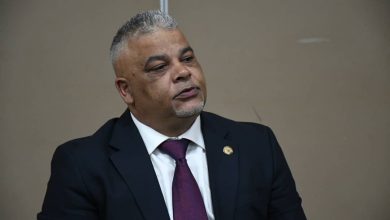
Secretary to the Treasury Betchani Tchereni said government remains exposed to potential fiscal shocks arising from poor financial performance of SoEs, particularly in sectors where service delivery is critical, but cost recovery is inadequate.
He said: “Addressing these risks requires coordinated and sustained reform efforts, including the enforcement of financial discipline, improvement of corporate governance, timely approval of cost-reflective tariffs, and targeted government support for social mandates.”
Published Treasury data show that during the review period, the present value of the government’s total exposure in Escom was K152 billion, with K98 billion of expected losses from guaranteed and on-lent debt totalled.
For Egenco, the present value of the government’s total exposure was at K3 billion with K72 billion expected losses of the government while for Nocma, the present value of the government’s total exposure was K192 billion with K34 billion of expected losses of the government.
BWB’s present value of the government total exposure was K24 billion with K1.4 billion of expected losses of the government whereas SRWB, the present value of the government total exposure is K11 billion with K2 billion of expected losses.
LWB’s present value of the government total exposure is K47 billion while the present values of the expected losses of the government from LWB’s facilities stand at K5 billion whereas NRWB present value of the government’s total exposure is K71 billion and K42 billion present value of expected losses.
Admarc Limited, on the other hand, had the present value of the government’s total exposure of K45 billion with a K27 billion expected losses of the government.
UHL currently has no outstanding guaranteed or on-lent debt from the government.
Scotland-based Malawian conomist Velli Nyirongo said in interview yesterday that heavy dependence on loans for working capital is a clear sign that SoEs’ core business models are not generating enough revenue to sustain themselves.
“The recurring need for government intervention coupled with ongoing losses and poor cash flow, suggests that these SoEs are not on a path to financial independence,” he said.
Comptroller of statutory corporations Peter Simbani is quoted as having said that while SoEs have been looking up to the government for bailouts, which is not sustainable in the long-run, the government has many other priorities requiring resources.
Ministry of Finance and Economic Affairs conducted credit risk assessment as part of ongoing efforts to enhance financial oversight and promote transparency in the management of public resources in public enterprises.