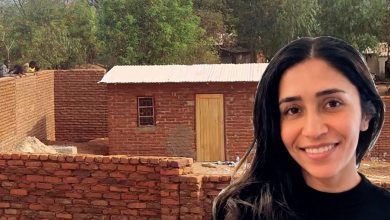
On a Sunday afternoon in Bwapi Village, Traditional Authority (T/A) Mwankhunikira in Rumphi District, Maria Mzembe irons her old school uniform with a charcoal iron. It is worn out and frayed, but clean.
She folds it, opens a math instrument case beside her and pulls out a voter registration slip wrapped in plastic. She handles it with care—not like a ticket to democracy, but something more fragile.
“Part of it gives me hope that I have the power to change the way the country is governed,” says Mzembe, 24. “The other party leaves me with doubt if our votes and aspirations really count.”
The young woman dropped out of Jalawe Community Day Secondary School (CDSS) in 2017 after her father’s death. With no fees, she married young—like almost half of girls in Malawi.
Come September 16, the young might vote.

“I want to,” she says, eyes on the card. “But I also want to believe it matters.”
That’s the story of Malawi’s upcoming general elections. Not the political rallies nor speeches, but the quiet reckoning happening in the minds of first-time voters like Mzembe.
This quiet skepticism is reflected in the numbers.
First-time skeptics
The Malawi Electoral Commission (MEC) reports that at least 7.2 million Malawians registered to vote in the oncoming general election. This constitutes just about 66 percent of the 10.9 million eligible voters—aged at least 18—projected by the National Statistical Office based on the 2018 census.
Although the published figures lack age-specific data to isolate first-time voters, MEC estimates that the youth comprise nearly 60 percent of the registered voters, with about 80 percent of Malawi’s population aged below 35.
This suggests over two million unregistered voters are likely the youth, a quarter of whom actively search for employment but cannot find any, according to the International Labour Organisation.
Even among those registered, many say they may not vote due to deeper skepticism.
Mzembe, now a mother of two, says voting will be nothing if it does not deliver school fees for her return to education, a phone signal to her rural area, jobs and skills for the youth, electricity for rural development and a local clinic for accessible healthcare.
Last year, her colleague fell ill and was pronounced dead on arrival at the nearest clinic, located 15 kilometres away.
She states: “We’re not voting for speeches, but services. We are suffering. We are forsaken.”
Some of her peers have already given up.
“I registered, but I won’t vote,” says Aisha Sinodi, 18, of Lobi, T/A Kachere in Dedza District. “Those who did, regretted it. Nothing has really changed.”
From Monday to Friday, Enala Kondowe, 19, of Jombo Village, T/A Chindi in Mzimba, walks 15 kilometres to Bulala Community Day Secondary School.
“No politician has brought us development,” she says. “So why vote?”
Chisankho Watch board chairperson Gilford Matonga, whose organisation monitors electoral processes, says the drop in voter registration, from 93.2 percent in 2014 and 80 percent in 2019 to 65.7 percent in 2025, shows growing disillusionment.
He states: “A major factor is diminished trust in political leadership. People see elections as failing to deliver.
“Widespread corruption, unemployment, and unfulfilled campaign promises have reinforced voter apathy, making registration seem futile to many.”
Still, some will vote.
Agness Pitoliyasi, 18, of Kapichira Village, T/A Kaphuka in Dedza, is eager to cast her first vote.
“I just want to see what happens,” she says, smiling. “I have never experienced it.”
Steria Siforiano, 22, from the same area, isn’t sure who deserves her vote.
“I didn’t vote in 2020. I was 17,” she says. “Now, life feels harder. Everything costs more than when I was a teenager.”
She’s heard on the radio that voting is a right.
“I’ll vote,” she says, then pauses. “But I feel like politicians just lie.”
Dais Captain, 24, a farmer from Lauji village, T/A Katunga, Chikwawa says he no longer trusts anyone running.
He recalls unfulfilled promises, like one million jobs, and points to rising unemployment, nepotism, and failing public services.
“If I don’t vote, they’ll say we didn’t care,” he states. “If I do, and nothing changes, they’ll still blame us for choosing the wrong leaders.”
Illusion of power
Officially, the country’s future belongs to the youth.
The National Youth Policy, which expires in 2028, promises to “review education curricula responsive to skills demands,” to integrate one million youth into agriculture through soft loans, startup capital, and equipment support.
It also commits to recruit 500 000 youthful Malawians into national service and build their representation in governance
Malawi 2063, the country’s long-term development blueprint, goes even further—calling youth the nation’s “greatest resource,” and pledging a “youth-centric” and “inclusive” model of growth.
But in the rural districts where many of those young people live, the language of policy has rarely materialised into clinics, roads, or jobs.
Programmes like community technical colleges, the National Economic Empowerment Fund (Neef) and the Agricultural Commercialisation Project (Agcom) exist, but are underfunded, poorly advertised and inaccessible to the rural youth they claim to serve.
“I applied for skills training,” says Dedza-based Aisha. “They told me I’d have to go to Lilongwe. I don’t even have the bus fare.”
A 2024 Afrobarometer survey says 53 percent of the youth are unemployed and actively looking for work despite President Lazarus Chakwera’s promise to create one million jobs annually to ease youth unemployment.
According to the opinion poll, only 33 percent approve of the government’s job creation efforts—far below approval ratings for education and health services.
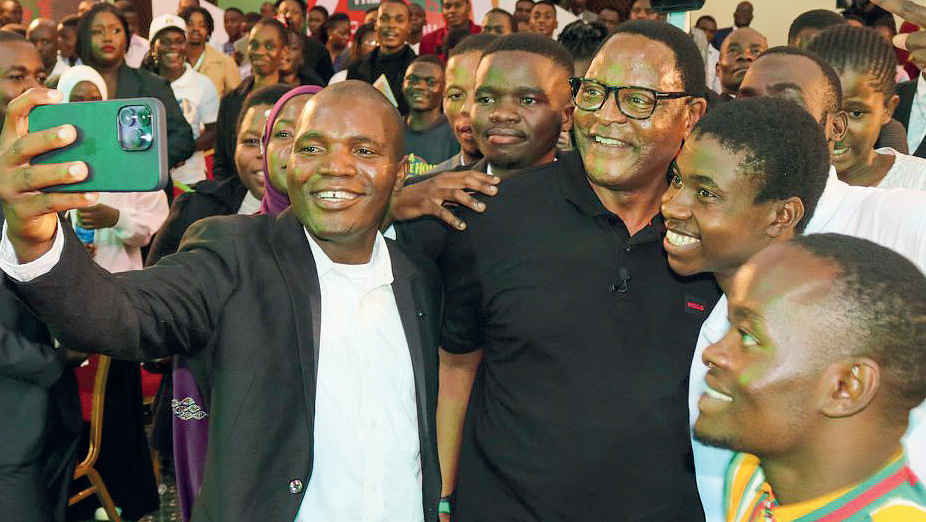
At the National Youth Summit held early this month, the disconnect between policy and reality came into sharp focus.
The youth, despite being the dominant age group in the country, lamented that they have limited influence on national policy. They frequently appear at rallies, but they aren’t influencing national spending, priorities, or outcomes.
“They use us for rallies and political attacks, then keep us silent,” reflects Thabo Phiri, 23, from Masasa Township in Mzuzu. “Our votes are harvested and our needs ignored.”
It is, some argue, a form of false power—a numerical advantage weaponised for elections, then discarded.
Divided majority
Mzuzu Youth Caucus chairperson Gomezgani Nkhoma highlights disunity as a key challenge.
“We are the majority, yet rarely speak with one voice,” he observes.
Personal ambitions, he explains, often overshadow collective goals, weakening advocacy and reducing its political impact.
Nkhoma believes non-voting reflects deep disappointment and frustration.
He states: “To address this, leaders must genuinely involve the youth in decision-making, make specific promises that benefit them, and follow through on commitments.
“Civic groups should educate young people about democracy, their rights, and ways to participate, empowering them to drive change and hold leaders accountable.”
A spark remains
In Mzuzu, Vitumbiko Phiri, a 35-year-old with albinism, is contesting as a councillor.
“If we all stay home, they win without us and continue to lock us out of decision-making spaces,” he says.
Back in Rumphi, Mzembe watches her son chase a ball made of plastic and string as she unpacks her mathematics instrument that she last used the day she dropped out of school.
Again and again, she glances at her registration slip, wondering if her vote carries weight or counts for anything in her ambition to create a better Malawi for the youth.
“If I vote, maybe my son won’t have to endure long walks to school as I did.”
It is not a campaign slogan. It’s a prayer. And in places where trust is rare, prayer may be all democracy has left.