Land degradation and climate change continue to cut crop yields across Malawi, leaving many households haunted by hunger and poverty amid the rising cost of living and farm inputs.
In 2019, the Food and Agriculture Organisation (FAO) of the United Nations introduced a six-year initiative for sustainable land use planning, land conservation and water management for improved agricultural productivity.
FAO supported the Ministry of Agriculture with funding from the Government of Flanders to equip smallholder farmers in Kasungu and Mzimba districts with simple but affordable community-led techniques to manage soil and water.
The farmers joined hands to restore degraded landscapes and boost productivity.
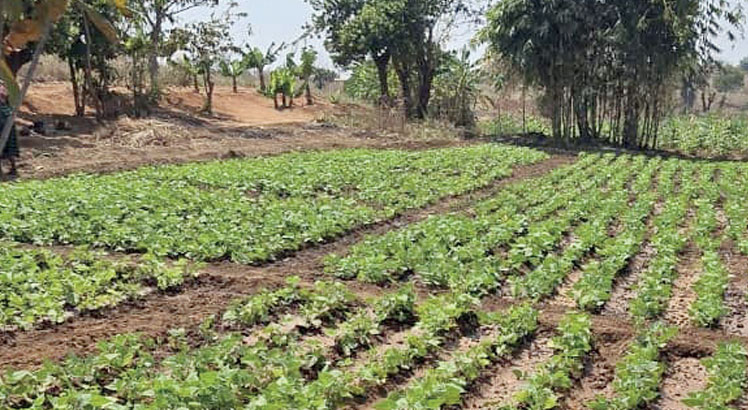
The project has reached about 51 000 families of the targeted 60 000.
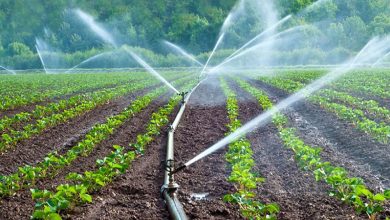
In Kasungu, irrigated fields empowered farmers to get at least two harvests a year.
Lazalo Banda, a farmer from Chivwamila Village, Traditional Authority (T/A) Mduka in Kasungu, says his irrigated maize field provides ample food for his family, guaranteeing them over K600 000 per harvest.
“I now harvest twice a year,” he says. “I sell green maize and use the money to provide for my family. After the rainy season, production doesn’t stop.”
Banda is one of the farmers in Chivwamila zone who are reaping the benefits of a solar-powered irrigation scheme established by FAO.
The farmers, who for long depended on a single maize harvest per year, also grow cabbages, Irish potatoes and bananas.
“We produce diverse crops all year-round and our lives are improving. Farming does not only put food on our table, but also money in the pocket,” says Joyce Misheki.
The irrigation farmers have constructed swales to capture run-off rainwater so that it can sink into the soil.
They also planted vetivar grass on bunds to stabilise soil.
The farming community also protects forests.
The group received goats as a communal enterprise.
In the neighbouring Mzimba, some farmers have embraced mtaya khasu, sustainable farming practices that which encourages minimal tillage to conserves soil health, including fertility and moisture retention.
“An acre where I used to harvest five 50 kilogramme bags of maize now produces about 40 bags,” says Jobidoni Mphande, from Hannock Lukhele Village, T/A Kampingo Sibande in Mzimba.
The farmers also produce organic fertiliser, including bokashi and Mbeya, from manure, to beat the rising cost of chemical fertiliser prices as farmlands increasingly become barren.
“From a 50kg bag of chemical fertiliser, I make five bags of organic fertiliser,” says Anna Soko.
She has also embraced pit planting to trap rainwater and retain moisture for dry periods.
“When rains disappear, the crops survive on residual moisture in pits,” she says.
Soko’s community has reclaimed gullied farmlands by planting bananas and trees
“The bananas trap rainwater, reducing soil erosion. Over time, we have seen the gullies filled up and the green cover returning to degraded spots,” says Mphande.
Mzimba South land resource officer Peterkins Kayira says the six-year project has transformed smallholder farmers’ mindset.
“The project has equipped farmers with practical methods that improve yields while helping them adapt to climate change. Smallholder farmers can be resilient if given the right knowledge and tools,” he says.
FAO land governance specialist Yvonne Mangisa says the cost-effective technologies for improved harvests set the foundation for long-term resilience.
“We hope the farmers who participated in this initiative will share the tips with other farmers in their communities. If these farming technologies are scaled up, it will make a big difference for farmers who feed the nation,” she says.
The project included integrated watershed management, participatory land use planning and systematic rural land registration for the possible scale-ups by the government.
The project has established customary land committees and tribunals that facilitate the provision of land ownership certificates to tackle land disputes and allow the rightful owners to use it as capital for life-changing business.