From 224 parliamentary seats declared so far, the September 16 General Election produced 48 women—falling short of the desired equal representation of men and women in politics. Why does women’s participation remain below the 50:50 line after decades of advocacy? Our News Analyst WYCLIFFE NJIRAGOMA takes the big questions to NGO-Gender Coordination Network national coordinator Maggie Kathewera Banda. Excerpts Q: We have had six elections since 1994 and the 50:50 target remains beyond reach. How do you explain this stubborn gap?

A: The stubborn gap is a result of a number of factors, including social norms. Women’s leadership is not regarded as normal unlike male leadership. Socialisation teaches us that way. The other factor is that as a nation, we do not have affirmative action. Countries that have done well have put in place special mechanisms such as quotas for women in various leadership positions.
The third factor has to do with political parties. In most cases, these parties prefer featuring men as candidates with female candidates regarded as weak and not able to bring in the needed votes. In the just-ended elections, some women from various political parties felt that men were being favoured.
Most crucially, there is the issue of financing. Most women aspirants lack the financial muscle to support their campaigns and costs associated with elections.
Q:Quotas and affirmative action are always flagged as the magic bullet. From where you stand, are these realistic fixes or just lip service?
A:If implemented effectively, affirmative action and quotas yield results, especially when put in legislation as this becomes a coercive tool for all political players to follow.
Q: The push for reserved seats has dragged for years. What resistance is proving hardest to crack?
A: The issue of reserved seats or quotas was there in 2019, but it was not
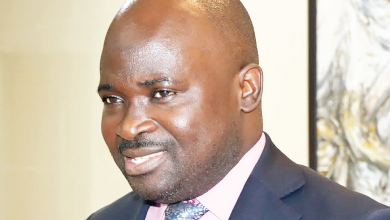
Banda: With a suitable law, all political stakeholders will be forced to do the right thing.
well supported. I think it is high time that government revisits the same. The proposal was to make each district a constituency so that meant in addition to women contesting for the 229 seats they would also compete against each other for 28 districts. What it meant is that we would be guaranteed of 28 seats already taken up by women. This seems feasible in the current electoral system of first-past-the-post.
Q: Despite their few numbers, what tangible wins did the last cohort of women lawmakers achieve in Parliament?
A: It is very commendable that female legislators were able to raise and advocate for gender responsive national budgets. The Speaker of Parliament [Catherine Gotani-Hara], herself a woman, was also able to ensure that her fellow women MPs were chosen as chairpersons of critical committees such as Budget and Finance. The involvement of women in such committees meant that they were able to contribute to decisions with a bearing on Malawian women‘s lives.
Q: What do you expect the new women MPs do differently to build momentum and not just fade into the background?
A: The women in this new cohort need to make their voices heard on issues of national importance. Let me emphasise to them that civil society organisations that advocate gender equality and women’s empowerment are available and ready to work with them to ensure this is done in an impactful way. Apart from making their voices heard, we also expect them to support laws that promote the plight of women one of which is a law on quotas.
Q: Public perception matters. Since 1994, have Malawians truly changed in how they view women in politics?
A: We are moving forward, albeit slowly. If perceptions had completely changed, there would not have been need for a 50-50 campaign. So, we will still need social attitudes towards women’s leadership to change for the better.
Q: Campaigning for equal representation of men and women in decision-making spaces tends to flare up only around elections. What’s your plan to keep the 50:50 fight alive in the ‘quiet years’ ahead of the September 17 2030 General Election?
A: That is a good observation. It’s something that we have planned to tackle head on. Let the nation and the female folk be assured that this time around we will certainly keep the campaign alive, especially by working with government and other stakeholders on affirmative action.
Q: If you had to name the single most urgent reform—whether in law, intra-party politics or culture—that could tip the scales toward 50:50, what would it be?
A: I would say law reform is the most urgent and crucial. Once we have a suitable law in place, all political stakeholders will be forced to do the right thing.