BUDGET
VIOLENCE
JOSEPH MWALE
Mzuzu Bureau Supervisor
Kasungu Municipality member of Parliament No e l M k u b w i (independent) has lamented the damage of Chayamba Secondary School in his constituency after some students went on the rampage and torched facilities in protest.
The incident occurred on Monday night barely days after Chulu Community Day Secondary School (CDSS) in the district was also destroyed during a student protest.
Mkubwi observed that the destruction of the office, library and kitchen at the school was “unfortunate and criminal” that regardless of the motivation such actions are unjustifiable.
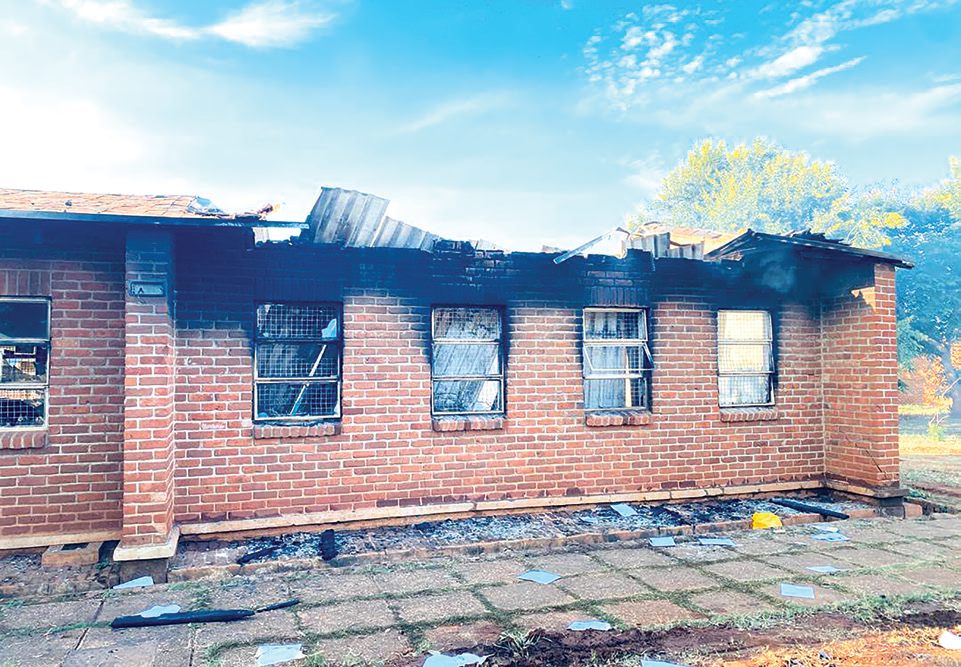
Chayamba Secondary School. | Sangwani Ngulube
From May this year, the country has witnessed at least 19 incidents of violence in both public and private secondary schools, resulting in destruction of infrastructure, burning of teaching and learning materials as well as food items.
Key reasons include complaints by students on the quality of food, administrative misunderstandings between students and teachers, but also restrictions on use of cellphones.
Commentators have said the incidents are a symptom of deeper systemic issues that include weak school governance structures, poor communication between students and authorities, inadequate psychosocial support, and in some cases, deteriorating living and learning conditions.
The affected include Ilinga Private in Chitipa, Likoma, Chikwawa, Mulanje and Rumphi secondary schools as well as Edingeni CDSS, Manyamula CDSS and Luwerezi CDSS in Mzimba.
Civil Society Education Coalition executive director Benedicto Kondowe said where students lack platforms for meaningful dialogue, feel dismissed, or face authoritarian school management styles, violence becomes a misguided expression of agency.
“Physical damage to infrastructure drains already limited education budgets, disrupts learning, and erodes trust between students, teachers, and communities. They create unsafe learning environments,” he said.
On his part, Dr Foster Lungu of Mzuzu University (Mzuni) said rushing to punishing students was wrong, arguing it might affect their future, and the whole country in terms of an uneducated populace.
In a separate interview, St John of God director of service and psychologist Charles Masulani Mwale said the acts do not only affect physical property or school operations, they also leave deep trauma.
He said: “Enhance open dialogue between learners and school managers, develop or review policies, including safeguarding policies and promote justice.”