On a warm Wednesday evening in Lilongwe, the Chinese Embassy marked the 76th anniversary of the founding of the People’s Republic of China with a celebration that echoed far beyond diplomatic protocol.
It was a moment to reflect on a nation’s transformation—from war-torn beginnings to global powerhouse—and to explore the lessons it offers to countries like Malawi.
The evening’s significance harks back to October 1 1949, when founding father Mao Zedong stood atop the Gate of Heavenly Peace in Tiananmen Square and declared: “The Chinese people have stood up.”
That proclamation signaled the birth of a new nation, emerging from decades of civil war and Japanese invasion.
Chairman Mao, as he is also known for his position in the Communist Party of China (CPC), unified China under communist rule, launching radical policies such as the Great Leap Forward and the Cultural Revolution.
Though controversial, these initiatives laid the ideological and structural groundwork for the reforms that would later catapult China into the modern era.
Today, China stands as the world’s second-largest economy, a feat achieved through sweeping reforms, industrialization, and global integration.
At the Lilongwe commemoration, Chinese Ambassador Lu Xu emphasized this transformation, noting that China’s rise from poverty to prosperity offers valuable lessons for Malawi’s own development journey.
“Under the CPC, we have gone through a dramatic transformation,” she said. “Five years ago, we resolved the problem of extreme poverty, achieving our national goal of leaving no one behind. We would like to share the experience with the Malawian Government and people.”
Lu attributed China’s success to choosing its own path and empowering citizens to drive national progress.
Malawi’s Minister of Foreign Affairs, George Chaponda, echoed her sentiments, citing tangible benefits from the bilateral relationship since diplomatic ties were established in 2007. Among them: several important roads, the New Parliament Building, Bingu National Stadium, Bingu International Convention Centre, and the Malawi University of Science and Technology. He also cited cooperation in information, communication and technology, agro-processing and manufacturing.
“We commend China for cancelling our $20 million debt,” Chaponda added. “That means we can use our limited resources for other pressing issues. We can learn from China that through discipline, focus, and zero corruption, we too can prosper.”
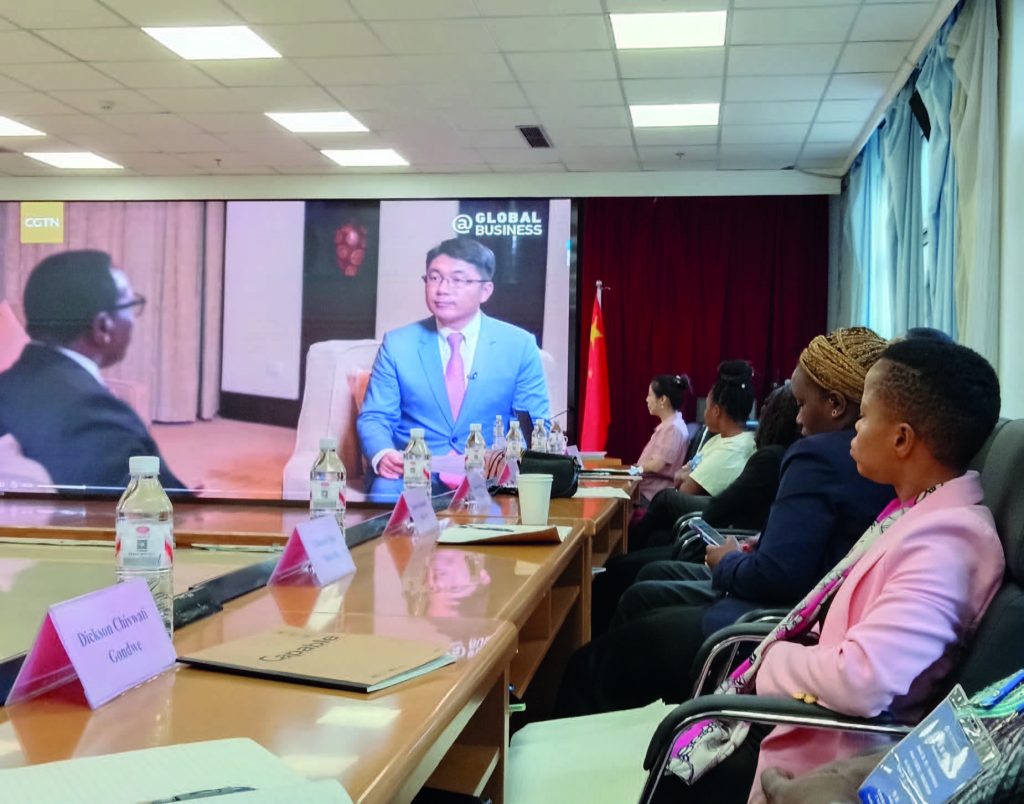
In August this year, 30 Malawian media professionals embarked on a journey to China, attending a news reporting seminar at the National Radio and Television Administration (NRTA) in Beijing. The programme blended classroom lectures with cultural visits and media tours in Beijing and Changsha— the latter being a city deeply intertwined with Mao Zedong’s early life.
It also included visits to various international media houses and bodies offering high-tech digital media solutions using artificial intelligence.
The lectures introduced concepts of constructive journalism, public diplomacy, and international communications, all underlining President Xi Jinping’s emphasis on cultural exchange as a cornerstone for “mutual learning among civilizations and for building a global community with a shared future.”
Chinese philosophy, rather than religion, forms the backbone of the nation’s ideological framework.
Concepts like Yuan Fen—the predestined affinity that brings people together—and Junzi, the ideal person who cultivates moral virtue and benevolence, were explored. In contrast, the Xiaoren represents the petty, selfish individual.
One lecturer distilled China’s development ethos into a single, provocative line: “Democracy without development is of no use.”
Yet, it was not only the lectures that left a lasting impression. The tours to historic and cultural landmarks offered visceral lessons in resilience, innovation, and identity.
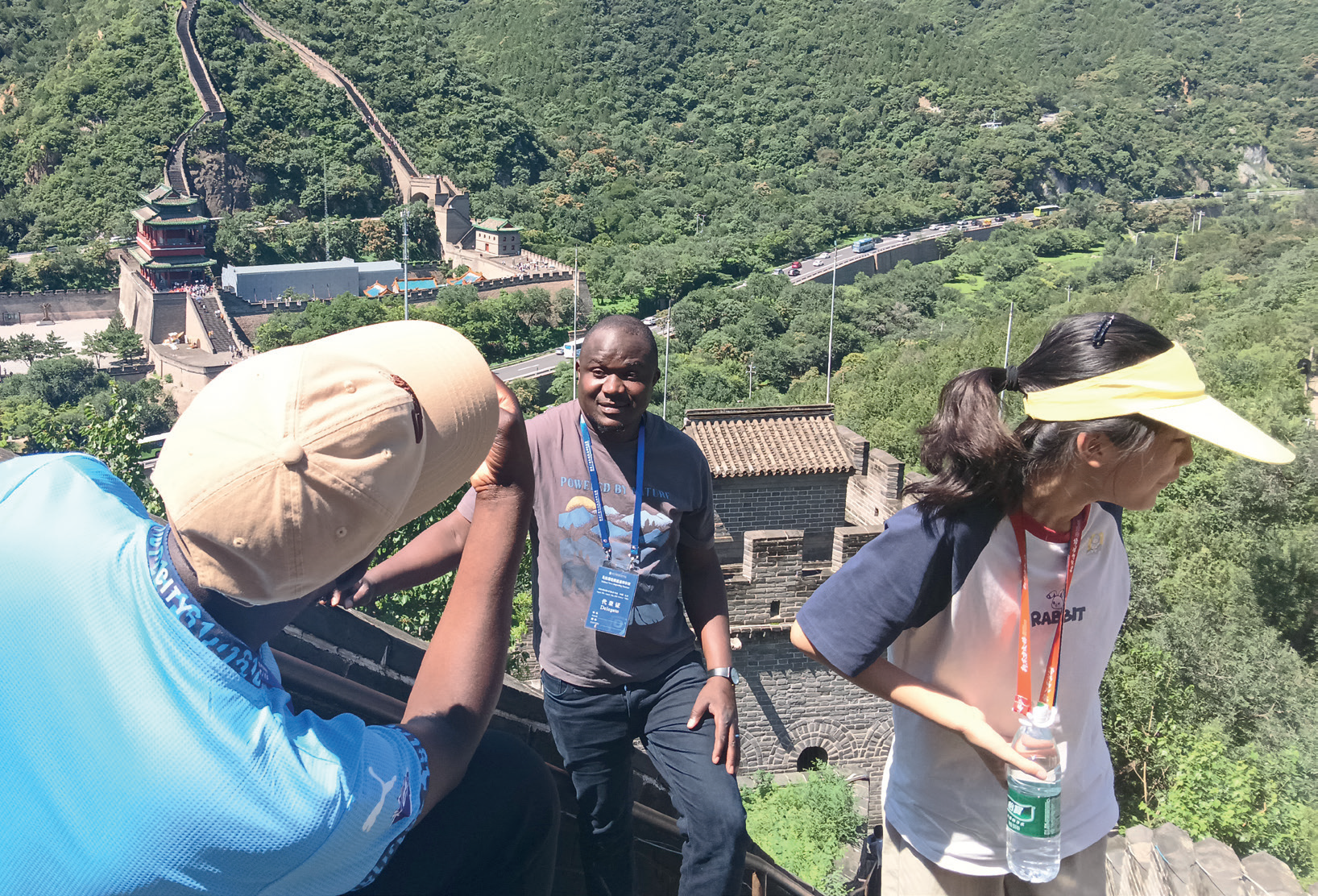
The Great Wall of China, one of the Seven Wonders of the World, proved to be more than a tourist attraction. Built over 2,000 years ago to defend the country against northern invasions, it remains a breathtaking symbol of unity and endurance.
Climbing its ancient steps alongside thousands other visitors, the journalists were reminded of Mao’s famous words: “He that has never climbed the Great Wall is not a hero.”
Another philosophical pillar— Confucianism—came alive during a visit to the Yuelu Academy in Changsha. Founded in 976 AD, it stands as one of China’s oldest academies and a living monument to Confucian education.
Here, the journalists encountered the teachings of Confucius, whose emphasis on moral integrity, filial piety, and social harmony continue to shape Chinese governance and family life.
The group also explored the Beijing Central Axis, a 13th-century marvel symbolizing imperial order, before ascending the 200-meter China Central Tower—a hub for digital technology and a panoramic window into the capital’s sprawling expanse.
They also visited the Bird’s Nest and Water Cube, iconic remnants of the 2008 Summer Olympics that now serve as architectural tributes to China’s modern ambitions.
Each landmark—whether ancient or contemporary—told a story of a nation that reveres its past while relentlessly pursuing its future.
Mornings in China begin with the stirring anthem March of the Volunteers, composed by Nie Er in 1935. Its chorus— “Arise, you who refuse to be slaves! With our flesh and blood, let us build a new Great Wall!”
The lines resonate with the spirit of resistance and unity. A visit to the Nie Er Memorial Hall in Kunming, Yunnan Province, offered deeper insight into the composer’s revolutionary life and enduring legacy.
From philosophy to infrastructure, from history to technology, the journey offered Malawian journalists a mosaic of lessons.
As Malawi’s Ambassador to China, Allan Chimtedza, noted during a dinner with the delegation: “There is so much we have to learn from the Chinese, not forgetting hard work.”
Indeed, the trip underscored three enduring truths: development without integrity is unattainable; cultural heritage provides a foundation for future progress; and technological advancement is the engine of industrialization.