Legal experts are calling for a review of the law on presidential pardons amid growing concern that the clemency power is being misused to shield the undeserving and undermine judicial processes.
Section 89(2) of the Constitution gives the President authority to grant pardons.
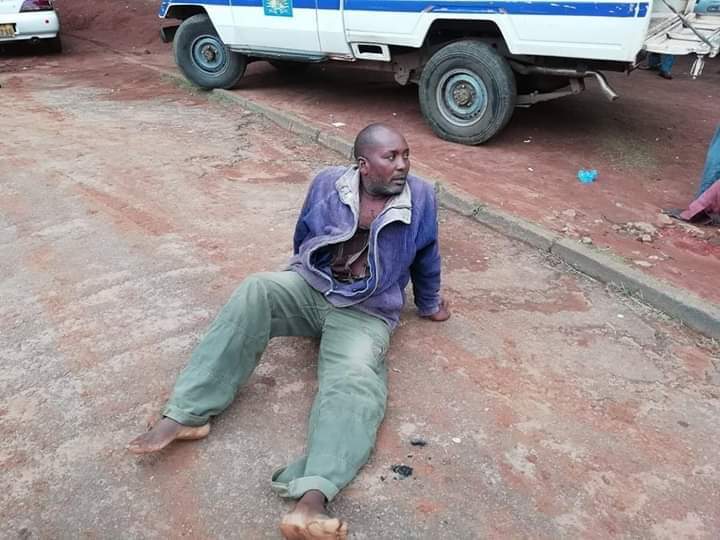
to have been pardoned. I Nation
But lawyers and rights advocates say recent decisions suggest the prerogative is being exercised in ways that erode public confidence in the justice system and weaken judicial independence.
They point to a string of controversial pardons in recent years, including a purported December 2025 decision by President Peter Mutharika to pardon six police officers convicted of murdering Buleya Lule, who mysteriously died in police custody in 2019.
Lule was accused of abducting a 14-year-old boy with albinsim in Dedza District.
According to our sources at prison and others familiar with the system, the six were set free though they were sentenced on 28 February 2025 after a December 2024 conviction. Several were serving terms of 15 to 20 years and had not served half their sentences when the pardons were granted.
The six are Paul Chipole who was serving 20 years, Ikrama Malata; 18 years and Richard Kalawire, Innocent Lwanda, Maxwell Mbuzi and Abel Maseya, who were serving a 15-year jail term.
In July 2025, then President Lazarus Chakwera also pardoned businessperson Thom Mpinganjira while his appeal was pending before the Malawi Supreme Court of Appeal.
Mpinganjira was convicted in September 2021 and sentenced to nine years in a case linked to alleged attempts to bribe High Court judges sitting as a Constitutional Court in a 2019 presidential election petition matter.
Earlier examples cited by critics include a 2012 pardon by former President Joyce Banda for a relative convicted of rape, and a 2004 pardon by former President Bakili Muluzi for a notorious robber, Clive Macholowe, whose release later sparked re-arrest under a subsequent administration.
University of Cape Town professor of law Danwood Chirwa on Friday said although the presidential pardon is a constitutionally granted prerogative, it is generally understood that it should not be exercised arbitrarily or for improper purposes.
“Of particular concern is that the prerogative is being exercised increasingly to undermine the administration of justice, especially the independence of the Judiciary,” said Chirwa.
“We [also] saw this with respect to Chakwera’s pardon of Mpinganjira while his appeal was pending before the SCA [Supreme Court of Appeal].”
Chirwa argued in an email response that such pardons could never have been intended by the framers of the Constitution.
He said: “This current case [of the six police officers] too should have been left to be challenged on appeal and awaited the decision of the Supreme Court of Appeal.
“A pardon just after conviction and sentence and before a chance for the higher court to adjudicate the appeal undermines judicial independence and should not be accepted as regular exercise of presidential power.”
Chirwa, however, said there are cases when pardon is merited, for instance, where there was a failure of justice or when there are compelling circumstances warranting a gesture of mercy.
Criminal lawyer Chikondi Chijozi-Jere in a separate interview on Friday said it is a tricky situation to challenge the pardons through the courts considering that the President is within his mandate.
But she pointed out that it is high time laws governing pardon are reviewed to align with principles of human rights envisaged in the Constitution.
Chijozi-Jere said: “If the President pardons that person [who commits murder], does he not negate the right to justice and effective remedy which was provided by the court during a due process?
“I think there is a need to balance the right to access to justice and effective remedy vis-à-vis the powers the President has in terms of pardon.”
She further said the situation lets people feel that there cannot be accountability for serious crimes such as murder.
When Nation on Sunday was investigating the purported pardon of the six convicted police officers, Malawi Prisons Service spokesperson Steve Meke on January 2 2026, said: “We have no mandate beyond implementation [of the pardons]”.
Ironically, the pardon process starts with the Malawi Prisons Service itself by identifying prisoners who may be eligible.
Their criteria for pardon includes good conduct, vulnerability, rehabilitation potential, prison decongestion and the prisoners having served at least half of their sentences.
In contrast, prisoners that do not meet the eligibility criteria include repeat offenders and those incarcerated for serious crimes like murder.
Thereafter, the proposed pardon list is scrutinised by officials from the Malawi Prisons Service, Ministry of Homeland Security and other relevant authorities.
The names are then sent to the Minister of Justice in his capacity as chairperson of the Advisory Committee on the Granting of Pardons, and the Attorney General as per legal procedure.
The final list is, therefore, sent to the President who makes the final decision but with advice of the Advisory Committee on the Granting of Pardons.
With the President making the final decision, approved names are released from their confinement.
But when we asked Meke on Friday to explain at what stage the names of the six pardoned police officers were inserted onto the pardon list and the rationale behind, he insisted that we speak to the chairperson of the Advisory Committee on the Granting of Pardons.
He said: “I really appreciate your line of questionning, but to get the detailed response to all your questions, you are still referred to the chairperson of the Pardon Committee, the Minister of Justice and Constitutional Affairs.”
Minister of Justice and Constitutional Affairs Charles Mhango did not respond to this particular question, alongside others sent to him on Friday.
Earlier on Tuesday, Ministry of Justice and Constitutional Affairs spokesperson Frank Namangale referred us to Mhango after we had sent him a questionnaire on January 2 2026.
But reacting to the developments, Centre for Human Rights, Education, Advice and Assistance executive director Victor Mhango said there is need for clarity on the purported pardons.
He said: “The public deserves a transparent explanation of the selection criteria, the role of the rehabilitation in the decision-making process, and whether victims’ rights and societal safety were adequately considered.
“Without this transparency, the pardon exercise risks being perceived not as an act of justice or reconciliation, but as an arbitrary or politicised intervention that may weaken trust of the criminal justice system and office that wields constitutional power.”